1563 · Trent, Holy Roman Empire
The final session of the Council of Trent commenced, an important part of the Counter-Reformation efforts by the Catholic Church, addressing issues raised by the Protestant Reformation.
September 15, 1564
The Council of Trent was held which marked a major Counter-Reformation effort by the Catholic Church.
Trent, Holy Roman Empire (present-day Italy) | Catholic Church
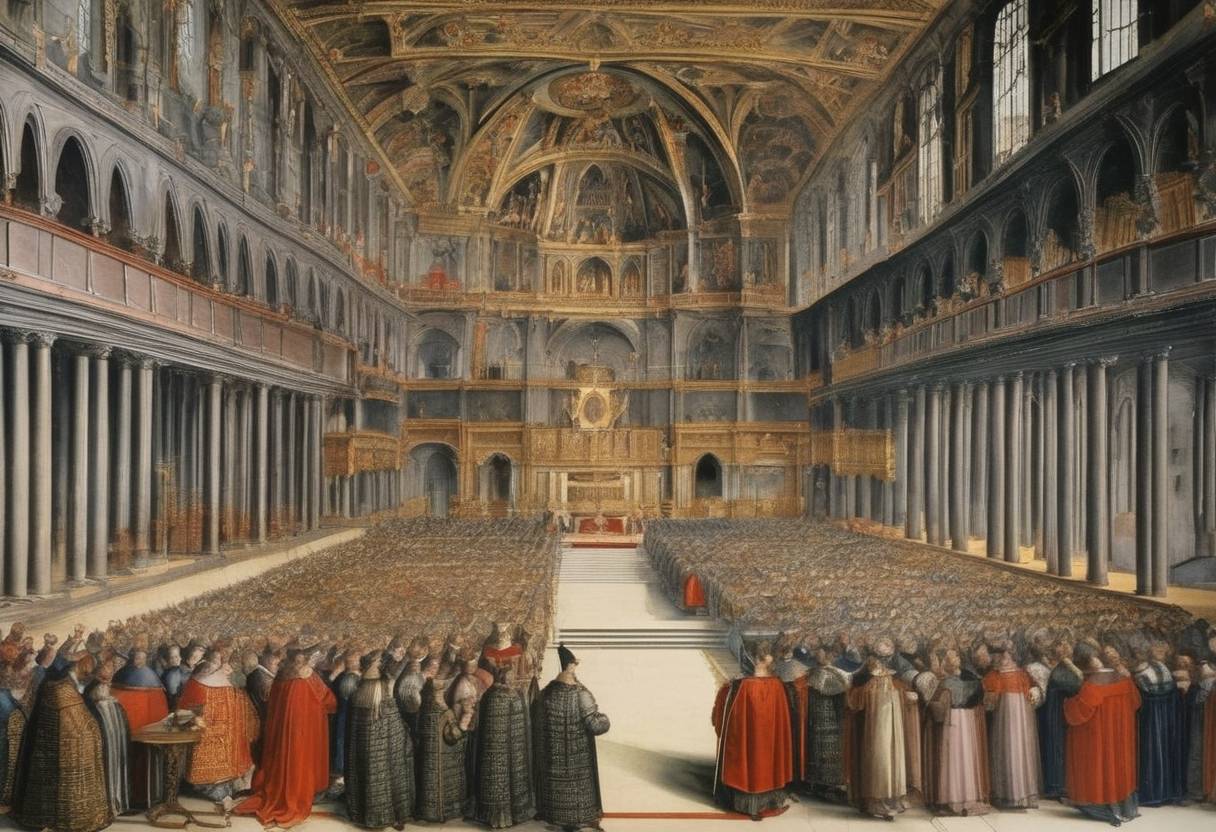
It appears there is a misunderstanding regarding the given date. The Council of Trent, an essential component of the Catholic Church’s Counter-Reformation, did not begin or conclude on September 15, 1564. Rather, the council occurred over three distinct periods between 1545 and 1563. It was officially concluded on December 4, 1563. While September 15, 1564 does not correspond to a specific event within the Council of Trent’s framework, the council itself played a pivotal role in shaping the future of the Roman Catholic Church in response to the Protestant Reformation.
The early 16th century was a tumultuous period for the Roman Catholic Church, marked by widespread calls for reform. Martin Luther’s Ninety-Five Theses in 1517 ignited the Protestant Reformation, challenging the doctrines and practices of the Catholic Church and leading to a significant religious schism in Europe. In response to these challenges, Pope Paul III convened the Council of Trent to address doctrinal ambiguities and reform internal practices.
The Council of Trent was held in the city of Trent (then part of the Holy Roman Empire), now in modern-day Italy, over three periods:
The Council of Trent played a critical role in the Counter-Reformation by:
The council’s decrees had a lasting influence on the Catholic Church, fostering a renewed vigor and disciplinary structure that helped stem the tide of Protestant expansion in Europe. The reforms and doctrines established during the council significantly shaped modern Catholicism, solidifying church principles that endure to this day.
Source: en.wikipedia.org