The Camp Fire: California's Deadliest Wildfire
2018 · Paradise, United States
The Camp Fire, the deadliest and most destructive wildfire in California's history, was fully contained after burning for over two weeks.
October 20, 1991
The Oakland firestorm of 1991, one of the most destructive urban wildfires in U.S. history, reached its peak after starting on October 19. Ultimately, it resulted in 25 fatalities, over 3,000 homes destroyed, and damages exceeding $1.5 billion.
Oakland, United States | California Department of Forestry and Fire Protection
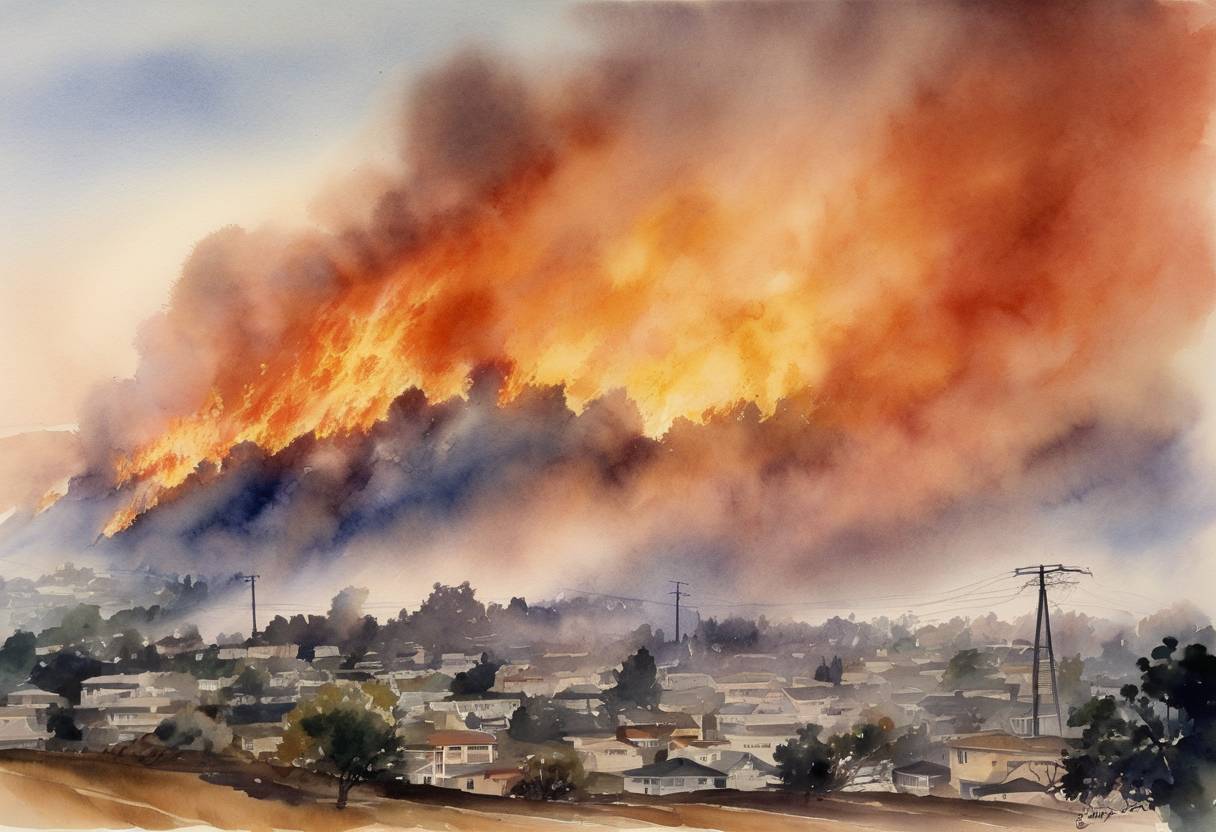
On October 20, 1991, one of the most devastating urban wildfires in U.S. history reached its peak as the Oakland firestorm, also known as the Tunnel Fire, raged uncontrollably in the hills of northern Alameda County, California. This catastrophic event had lasting impacts on the community, resulting in significant loss of life and property.
The fire began on October 19 as a small brushfire in the Oakland-Berkeley Hills but was thought to be under control by firefighters later that day. Unfortunately, the combination of high winds and steep, densely vegetated terrain allowed the blaze to reignite and spread aggressively on October 20.
Re-Ignition and Spread: Early in the morning, the firestorm roared back to life, fueled by hot, dry Diablo winds, reaching speeds of more than 60 mph. These winds fanned the flames, causing them to spread rapidly through residential areas.
Destruction of Property: Within hours, the fire consumed over 1,500 acres, destroying 3,354 single-family homes and 437 apartment and condominium units in upscale neighborhoods such as Piedmont Pines, the Montclair district, and Rockridge.
Casualties: Tragically, the inferno claimed 25 lives. Many victims were unable to escape as the fire spread with unnerving speed.
Emergency Response: Firefighters from multiple jurisdictions struggled to control the blaze due to its intensity and the challenging topography. Efforts to douse the flames were hampered by low water pressure and the sheer magnitude of the firestorm.
Economic Damage: The disaster resulted in damages exceeding $1.5 billion, making it one of the costliest fires in U.S. history at that time.
Policy and Planning Changes: The fire prompted significant changes in fire management and urban planning. Local authorities and communities developed stricter building codes and enhanced early warning systems. Fire departments across the nation refined their approach to urban-wildland interface fires.
Community Resilience: The rebuilding process was arduous and required years, but the community rallied, eventually reconstructing the neighborhoods and honoring the memory of those lost with memorials and commemorations.
The Oakland firestorm of 1991 served as a stark reminder of the potential for devastating wildfires in urban areas, influencing future fire prevention and emergency response strategies nationwide.
Source: en.wikipedia.org