India Gains Independence from British Rule
1947 · New Delhi, India
India gained independence from British rule, marking the end of nearly 200 years of colonial rule.
January 1, 1877
Queen Victoria was proclaimed Empress of India as part of the British Empire's structural reformation.
Delhi, India | British Empire
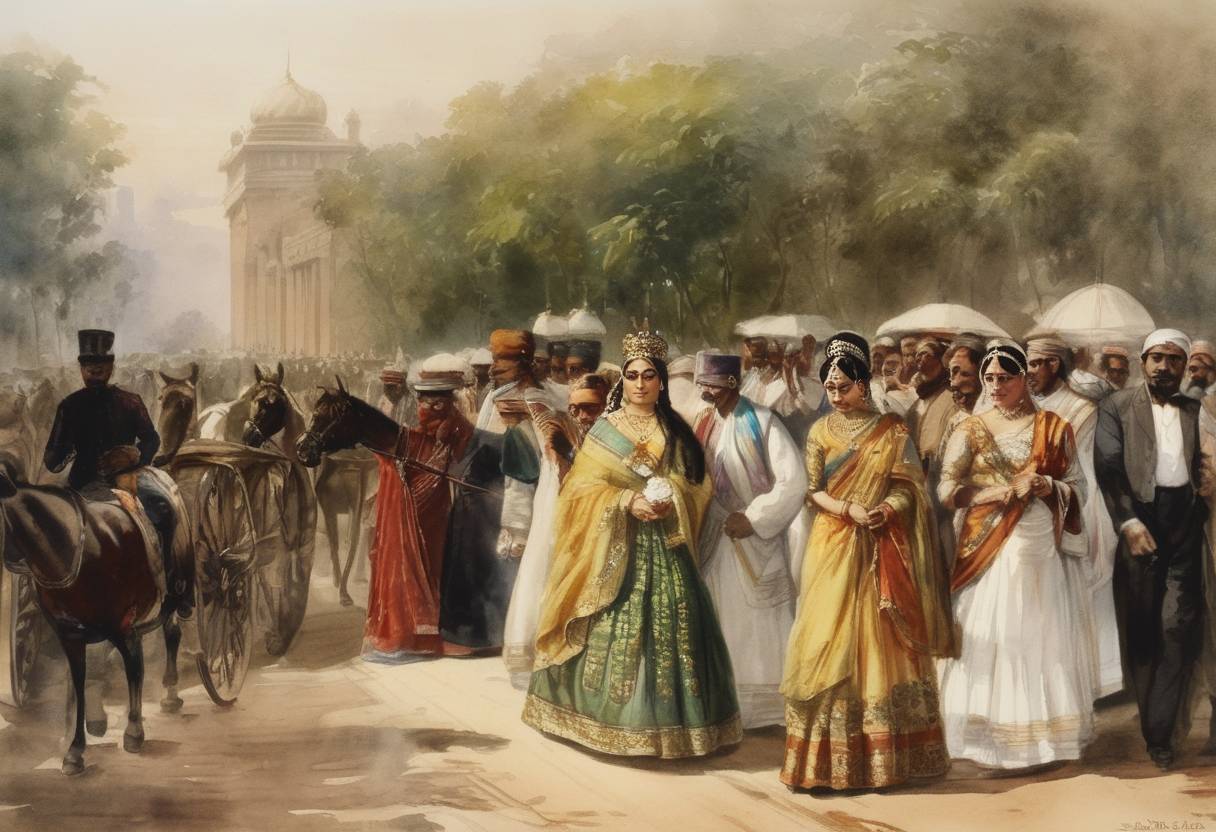
On January 1, 1877, Queen Victoria was formally declared the Empress of India. This event was a pivotal moment in the British Empire’s history, symbolizing the apex of British imperial power and the reformation within its colonial administration.
The proclamation was part of a broader process of integrating the Indian subcontinent more closely into the British Empire. The moment marked the culmination of two decades following the Indian Rebellion of 1857, a significant insurrection against British East India Company’s rule. In its aftermath, the British government assumed direct control over India, ending the Company’s administration in 1858. The Government of India Act 1858 established the British Crown as the ruler of India, represented by a Governor-General (later termed Viceroy).
The declaration of Queen Victoria as Empress of India took place at the Delhi Durbar, a grand ceremony held in Delhi, attended by high-ranking British officials, Indian royalty, and nobility. The Viceroy of India, Lord Lytton, presided over the celebrations, which reflected the grandeur and hierarchical pomp of the British Raj’s new order. The title was promulgated as part of the Royal Titles Act 1876, driven by Prime Minister Benjamin Disraeli’s vision to strengthen the crown’s legitimacy and authority over its vast empire.
Queen Victoria’s new title was not purely symbolic; it sought to solidify the British Empire’s dominion in India and emphasize its status as a global power. By adopting the designation of Empress, Victoria and her government aimed to pacify Indian princely states by recognizing their rulers as legitimate under a supreme British monarchy within the structure of the empire.
The proclamation reinforced the perception of the British Empire as a global imperial power at its zenith. However, it was not without controversy. Critics in Britain argued against the imperial grandeur, questioning the moral and financial costs of empire. In India, the proclamation did little to alleviate the socio-economic challenges faced by its populace, nor did it address rising nationalist sentiments that would eventually coalesce into organized movements for independence in the following century.
Queen Victoria remained Empress of India until her death in 1901. Her designation as Empress had lasting implications, influencing British-Indian relations and the administrative frameworks that governed the Indian Empire during the subsequent decades. This era laid foundations that would ultimately influence India’s path to independence in the mid-20th century.
Source: www.britannica.com