1900 · Dortmund, Germany
The Witte railway accident occurred when a steam engine derailed while attempting to cross a bridge that had collapsed near Dortmund.
July 17, 1856
The Great Train Wreck of 1856 occurs near Philadelphia, Pennsylvania, when two trains collide, resulting in significant loss of life.
Philadelphia, United States | North Pennsylvania Railroad
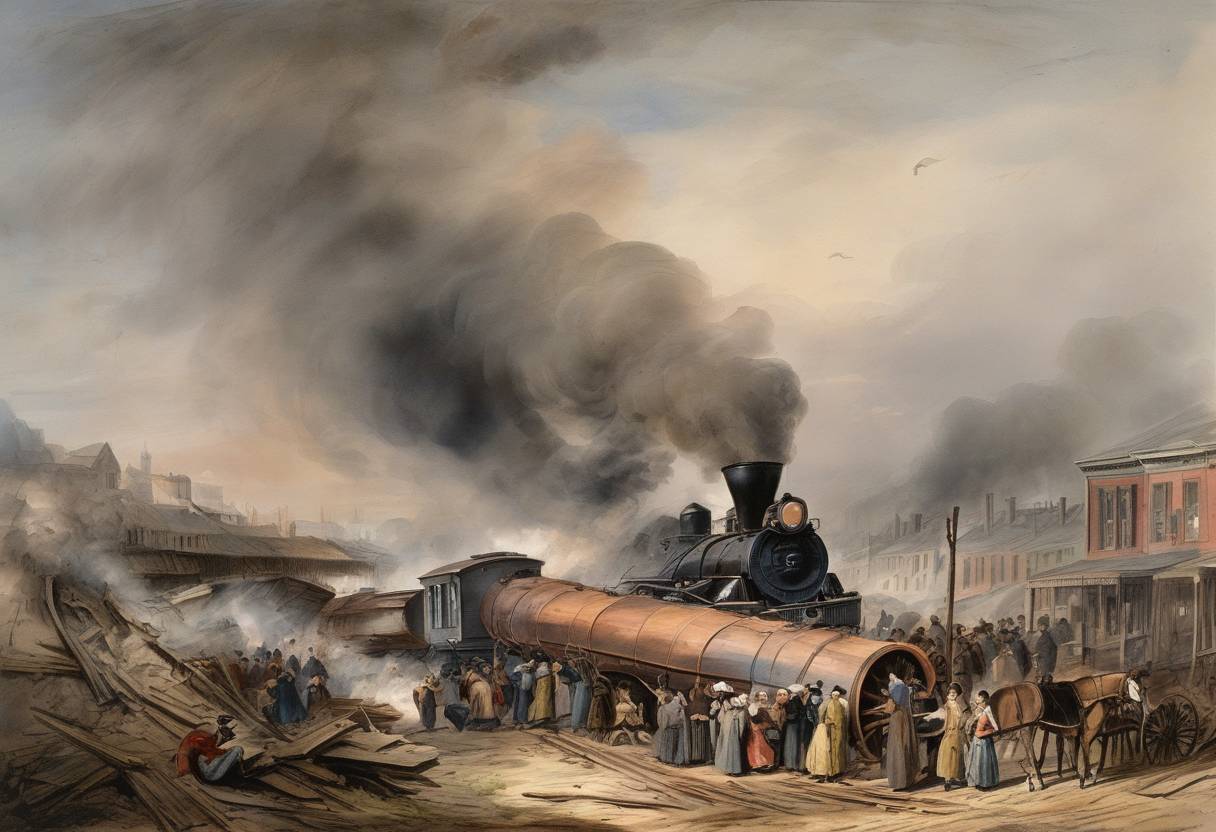
On July 17, 1856, a catastrophic train collision, known as the Great Train Wreck of 1856, occurred near the suburbs of Philadelphia, Pennsylvania, marking one of the deadliest railroad disasters of the time.
During the mid-19th century, railroads became a vital part of American industrial expansion, facilitating travel and commerce across the country. The North Pennsylvania Railroad, like many others, was accommodating the increasing demand for railway services. However, the rapid growth often outpaced the development of necessary safety protocols and technologies, setting the stage for potential disasters.
On that fateful day, two trains were involved in the collision: an excursion train transporting approximately 1,100 passengers—many of them young children from St. Michael’s Roman Catholic Church in Kensington, going on a picnic—and a northbound freight train. The excursion train was running late, and in an effort to maintain schedules, it was allowed onto the single track at a time when the northbound freight train was already en route.
The trains collided head-on at approximately three miles south of Fort Washington, Pennsylvania. The impact was devastating, with both locomotives and a number of passenger cars being destroyed. The collision caused immediate chaos and resulted in a large number of casualties due to the wooden construction of the cars and the subsequent fire.
The Great Train Wreck of 1856 resulted in the deaths of over 60 people, with many others suffering serious injuries. The casualties included numerous children, which magnified the tragedy in the public’s eye. The response involved local residents who bravely assisted with rescue operations, providing medical care and shelter to the injured.
The disaster had significant repercussions for the American railroad industry. It highlighted the urgent need for improved safety standards and better communication systems to manage train schedules. The public outcry led to the implementation of stricter regulations and the eventual development of more advanced safety technologies such as the telegraph for more effective train dispatching.
The Great Train Wreck of 1856 served as a grim reminder of the potential hazards of the industrial age. It underscored the importance of prioritizing safety in the face of technological and industrial progress, paving the way for reforms that would shape the future of railway travel in the United States.
Source: en.wikipedia.org