Émile Zola's Imprisonment on February 23, 1898
1898 · Paris, France
Émile Zola is imprisoned in France after writing "J'accuse," a letter accusing the government of anti-Semitism and wrongfully imprisoning Alfred Dreyfus.
April 18, 1900
The Paris World Exhibition (Exposition Universelle) was opened to the public.
Paris, France | French Government
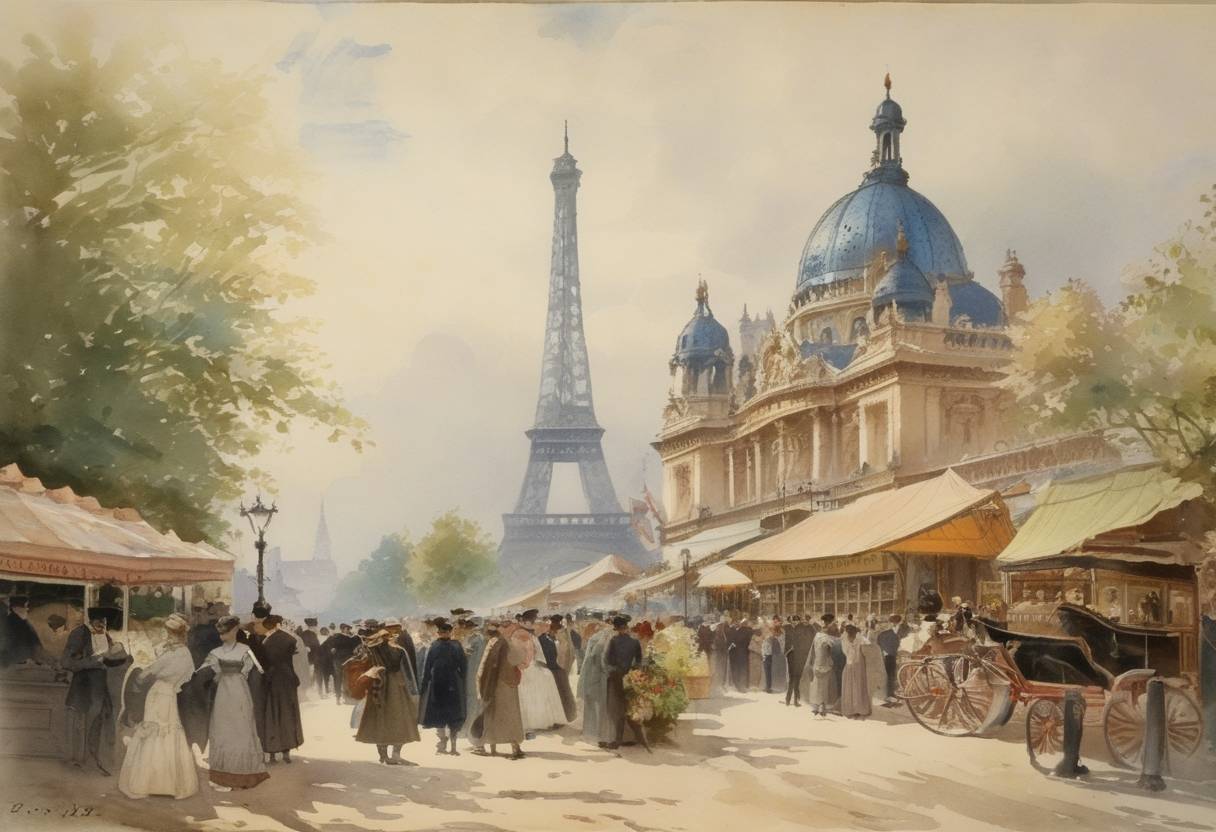
On April 18, 1900, the Paris World Exhibition, officially known as the Exposition Universelle, was opened to the public in Paris, France. This event was part of a series of world’s fairs showcasing global achievements and was designed to celebrate the achievements at the turn of the century (la Belle Époque).
The idea for the Exposition Universelle was rooted in the historical tradition of world fairs, which had been held since the mid-19th century, with Paris hosting similar events in 1855, 1867, 1878, and 1889. As the 19th century drew to a close, there was a desire to mark the transition to a new era by highlighting technological and cultural advancements.
Preparations for the 1900 exposition began years in advance, with significant urban developments undertaken to accommodate the event. This included the construction of notable structures such as the Grand Palais and Petit Palais, which still stand today.
The Paris Exposition of 1900 was pivotal in marking the transition into the 20th century and embodied the optimism and dynamism of the period known as the Belle Époque. The fair not only promoted technological advancements but also served as a reflection of the complex social and political trends of the time, including colonialism, nationalism, and the developments leading to the modern era.
Though the exposition officially closed in November 1900, its impacts reverberated for decades. It influenced urban planning, architecture, and international relations by fostering greater understanding and cooperation between attending nations. Its grandiose vision and execution remain a significant legacy of France’s historical contributions to global cultural and technological advancements.
Source: www.britannica.com