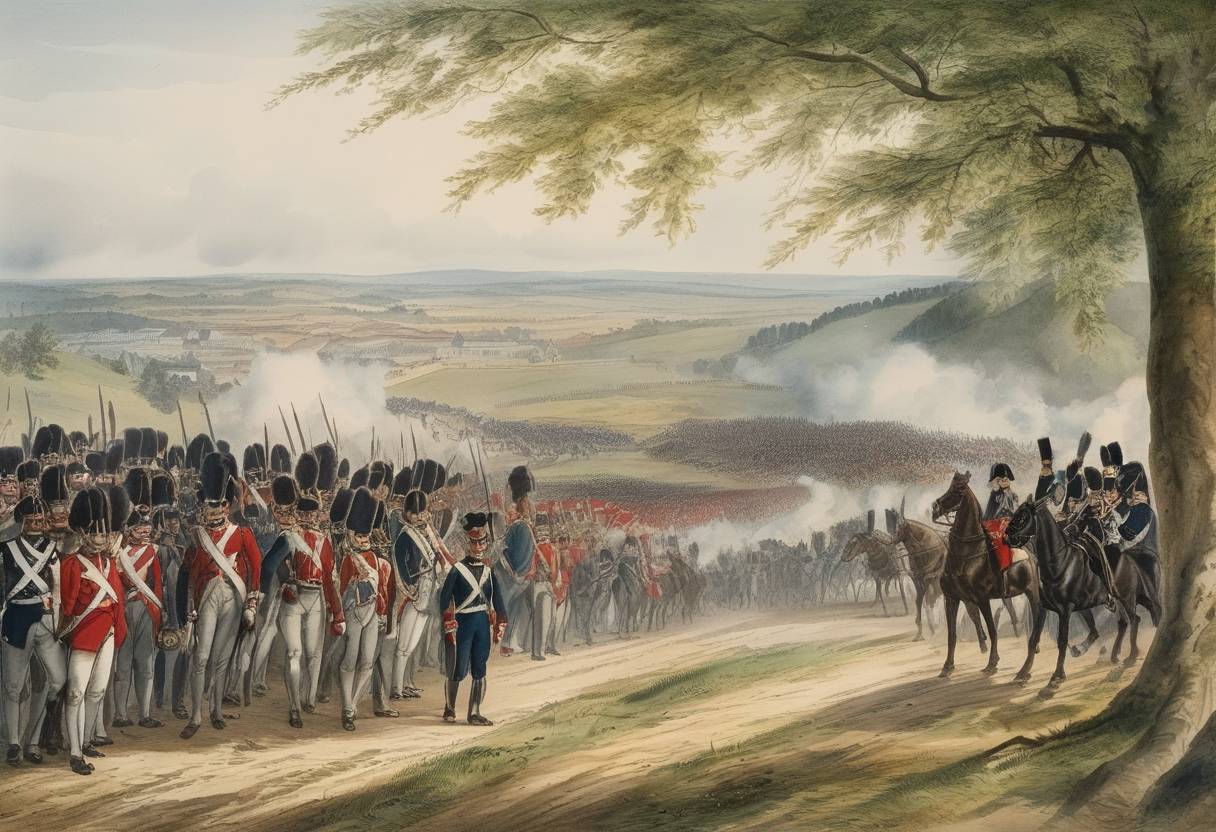
The Battle of Aspern-Essling
Date and Location
- Date: Concluded on May 22, 1809
- Location: Near Aspern and Essling, close to Vienna, Austria
Background
By 1809, the Austrian Empire sought to challenge the dominance of Napoleonic France in Europe. Under Archduke Charles, Austria embarked on the Fifth Coalition against France. The Austrians aimed to exploit Napoleon’s focus on Spain by attacking his forces in Central Europe. After regrouping and preparing their forces, they encountered Napoleon near Vienna.
The Battle
Initiated on May 21, 1809, the Battle of Aspern-Essling marked one of the rare setbacks for Napoleon. This encounter was significant due to several factors:
Forces Involved: Napoleon commanded approximately 90,000 men, while Archduke Charles led about 115,000 Austrians. Despite being outnumbered, Napoleon aimed to cross the Danube River at Lobau Island to strike the Austrians.
Key Events:
- The French army attempted to cross the Danube using pontoon bridges, which were pivotal to their logistics and maneuverability.
- On May 21, the Austrian forces launched repeated attacks on the villages of Aspern and Essling to thwart the French crossing.
- Artillery played a crucial role, with Austrian cannons bombarding French positions and targeting the pontoon bridges.
- On May 22, after intense fighting, the Austrians managed to destroy the main bridge, effectively isolating parts of the French army on Lobau Island.
Outcome
- Result: The battle concluded with an Austrian strategic victory; Archduke Charles successfully halted the French advance.
- Casualties: Both sides suffered heavy losses, with French casualties estimated at around 23,000 and Austrian casualties exceeding 20,000.
Significance
- First Major Defeat: The Battle of Aspern-Essling was Napoleon’s first significant defeat in an open-field battle, highlighting vulnerabilities in his previously unassailable tactics.
- Austrian Morale Boost: This victory emboldened the Austrian military and boosted their morale significantly, demonstrating their capacity to challenge French aggression.
- Impact on Napoleon: Despite the setback, Napoleon regrouped and later defeated the Austrians at the Battle of Wagram in July 1809, reasserting French control temporarily.
Aftermath
While the Austrian victory at Aspern-Essling was notable, it did not decisively shift the overall strategic situation in favor of the Austrians. Napoleon’s forces eventually overcame this obstacle, illustrating the persistent challenges European powers faced when confronting Napoleonic France. The battle remains a study in strategic resilience, effective use of artillery, and the factors influencing battlefield outcomes in the Napoleonic Wars.