The 2014 Ottawa Shooting: A Detailed Account
2014 · Ottawa, Canada
A gunman attacked the Canadian Parliament in Ottawa, killing a soldier at the National War Memorial before being shot by security forces inside the Parliament building.
June 14, 1872
Trade unions in Canada achieve a breakthrough with the Trade Union Act, providing legal recognition to unions and acknowledging their right to collective bargaining.
Ottawa, Canada | Canadian Parliament
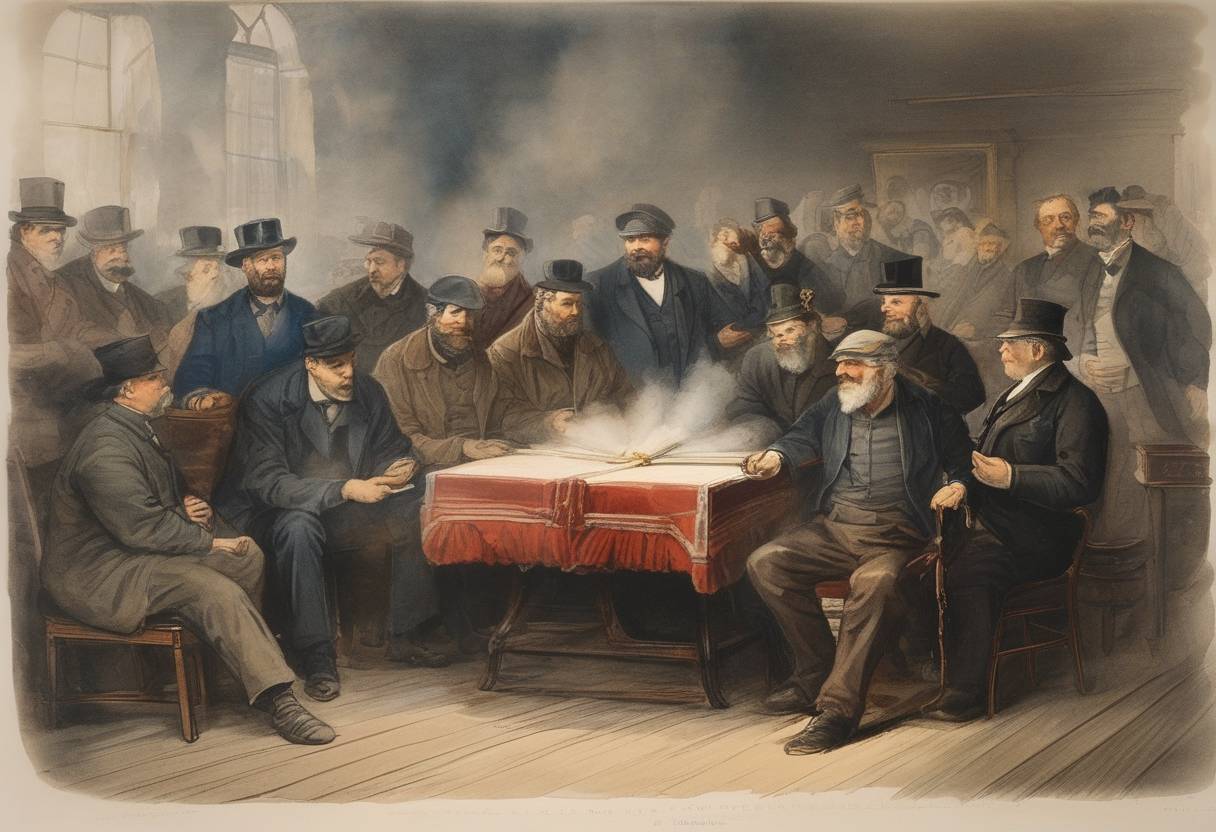
On June 14, 1872, the Canadian Parliament took a groundbreaking step in labor rights with the enactment of the Trade Union Act. This pivotal legislation granted legal recognition to trade unions within Canada, substantially altering the labor landscape of the nation.
Prior to 1872, trade unions in Canada operated in a precarious legal environment. Unions were often deemed illegal under laws that categorized their activities as conspiratorial. Efforts to organize workers and engage in collective bargaining faced significant legal and institutional challenges, stifling the growth of organized labor movements.
The legal atmosphere mirrored that of the United Kingdom, where labor organizations had long struggled under similar restrictions. The Canadian labor movement, however, gained momentum throughout the 19th century, driven by industrialization which brought about harsh working conditions and a demand for better labor rights.
The Trade Union Act of 1872 was modeled after the British Trade Union Act of 1871. Its key provisions included:
Legal Recognition of Trade Unions: The act legitimized trade unions, allowing them to exist legally without the fear of being prosecuted as conspiratorial entities.
Right to Collective Bargaining: This legislation acknowledged the right of unions to engage in collective bargaining on behalf of their members. This was a crucial recognition, empowering workers to negotiate for improved wages, hours, and working conditions.
Protection for Union Activities: The act provided certain protections for union activities, ensuring that participation in union activities could not be prosecuted as a criminal offense.
The passage of the Trade Union Act marked a significant victory for the labor movement in Canada. It laid the foundation for the growth of labor unions, enabling them to organize more freely and effectively advocate for workers’ rights.
The act spurred further legal and social advancements for labor rights throughout the late 19th and 20th centuries in Canada. By providing a legal framework for trade unions, it contributed to improved labor conditions and helped establish a more equitable relationship between workers and employers.
In subsequent years, Canadian labor legislation continued to evolve, reflecting changes in economic conditions and societal attitudes towards labor rights. The Trade Union Act of 1872 remains a landmark moment in the history of Canadian labor, highlighting the essential role of organized labor in promoting workers’ rights and social justice.
Source: www.parl.ca