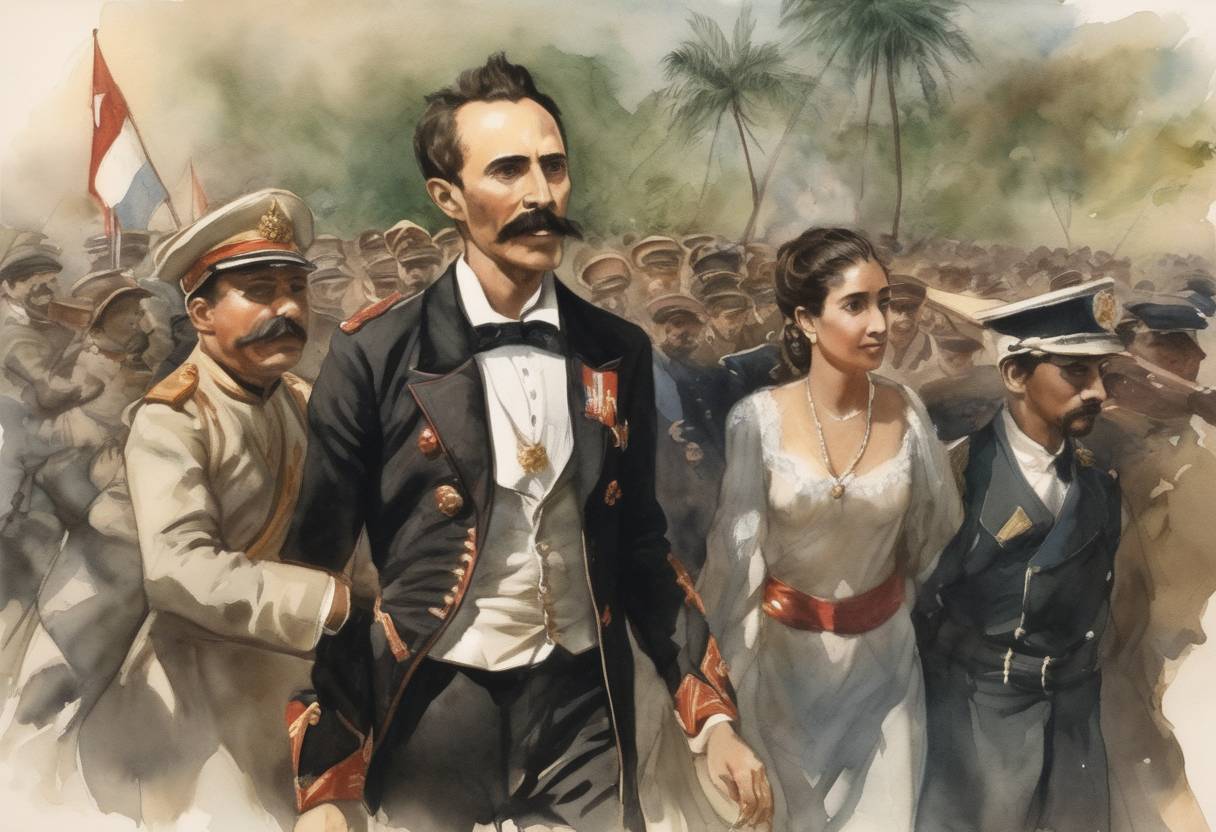
José Martí and the Launch of the Cuban War of Independence
On February 24, 1895, a pivotal moment in Cuban history unfolded as revolutionary leader José Martí departed from Montecristi, Dominican Republic, marking the inception of the Cuban War of Independence against Spanish colonial rule. Martí’s departure was the culmination of years of preparation and dedication to the cause of Cuban liberation.
Context and Preparations
José Martí was a visionary thinker, poet, and nationalist, whose advocacy for Cuban independence had been a focal point of his career. Throughout the late 19th century, discontent with Spanish rule surged in Cuba, fueled by oppressive colonial policies and economic exploitation. Martí’s organizational efforts led to the creation of the Cuban Revolutionary Party in 1892, aiming to unify the various factions fighting for independence and raise awareness and support for the cause internationally.
In Montecristi, Martí and fellow revolutionaries, including General Máximo Gómez, devised comprehensive plans to initiate a coordinated uprising across Cuba. This strategic planning was detailed in the Manifesto of Montecristi, co-authored by Martí and Gómez, which outlined the ideological and operational framework for the upcoming insurgency.
The Departure and Significance
Martí’s departure on February 24 signified the active commencement of hostilities against Spanish forces. The date was carefully selected to coincide with planned uprisings in various parts of Cuba, thus maximizing the impact of the insurrection through simultaneous attacks. The crossing from Montecristi to Cuba launched a series of engagements that would become known as the Cuban War of Independence, lasting until 1898.
The departure was not merely a logistical move; it symbolized Martí’s commitment to leading the fight firsthand. As he set sail, Martí carried with him not only the hopes of the Cuban people but also the weight of a century-long struggle for autonomy.
Consequences and Legacy
The Cuban War of Independence, driven by Martí’s vision, ultimately played a critical role in reshaping the future of Cuba. Although Martí tragically died early in the conflict on May 19, 1895, his ideals continued to inspire the movement. The war concluded with the intervention of the United States in 1898, which led to the end of Spanish colonial rule, albeit introducing new complexities in Cuban politics with American involvement.
Martí’s legacy endures as a foundational figure in Cuban history, revered for his unwavering dedication to freedom and justice. His departure from Montecristi remains a defining moment, exemplifying the courage and resolve necessary in the quest for national sovereignty.