Annexation of the Punjab Region - March 29, 1849
1849 · Punjab, India
The United Kingdom formally annexes the Punjab region after the Second Anglo-Sikh War, marking the end of Sikh sovereignty and the expansion of British rule in India.
June 25, 1848
British forces occupied Lahore, effectively ending the Second Anglo-Sikh War and solidifying British control over the Punjab region.
Lahore, Pakistan | British Empire
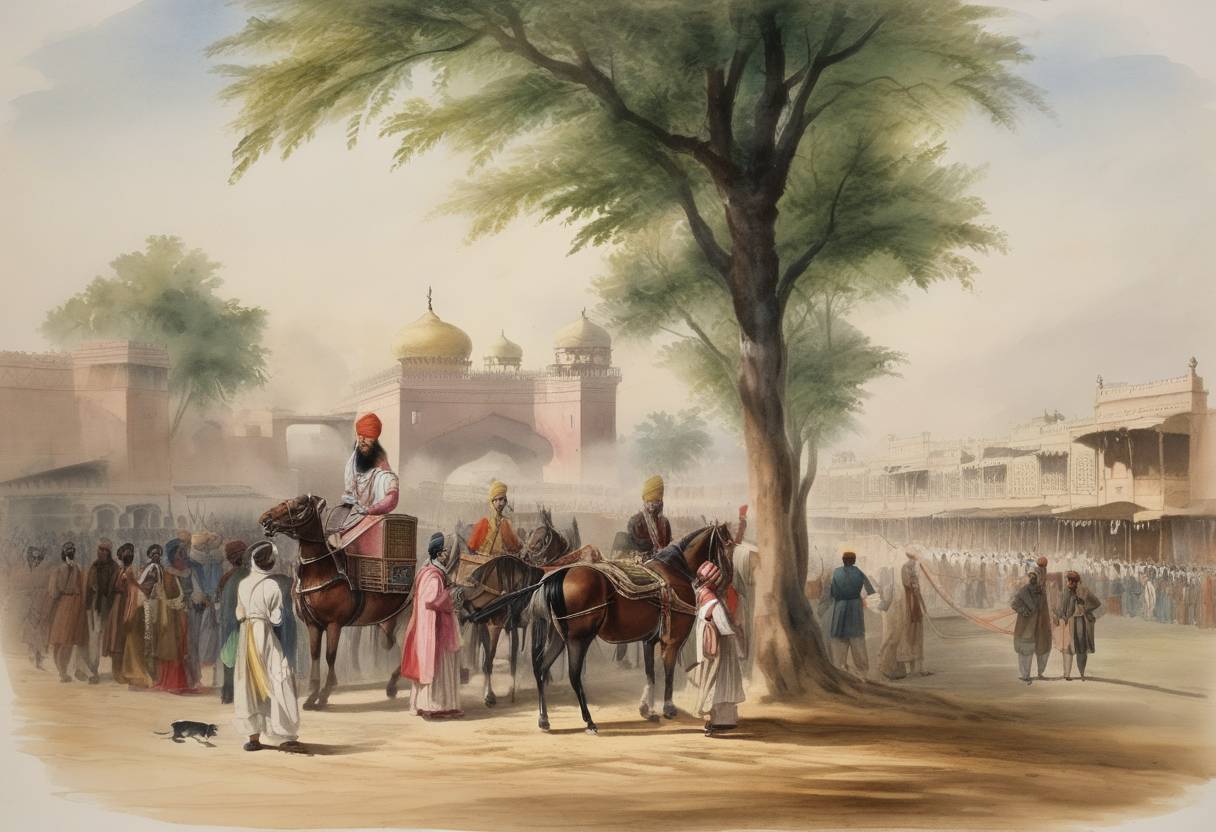
The British occupation of Lahore on June 25, 1848, marked a pivotal moment in the Second Anglo-Sikh War, leading to British control over the Punjab region. However, this date does not correlate with the actual timeline of the events surrounding the conflict and the annexation of the Punjab.
The Second Anglo-Sikh War (1848-1849) was primarily triggered by political instability and discontent within the Sikh Empire following the death of Maharaja Ranjit Singh in 1839. Disputes over succession and governance weakened the empire and created opportunities for British intervention.
The war officially began with a series of isolated incidents that escalated tensions between the British and the Sikh forces. Notably, the rebellion of Dewan Mulraj in Multan in April 1848, which was further inflamed by the sympathies of other Sikh leaders, led to widespread armed conflict.
Contrary to the date provided, it was not until the final conclusive battles of Gujrat in February 1849 that the British firmly asserted control over the region. The actual decisive stage came with the defeat of the Sikh forces in the Battle of Gujrat, leading to the British occupation of key locations including Lahore. The culmination of these events occurred when the Treaty of Lahore was signed on March 29, 1849, officially annexing the Punjab into British India.
The annexation of Punjab was a significant expansion of British territory in India, bringing immense strategic and resource advantages. The Punjab became a critical frontier region, supplying soldiers for the British Indian Army and providing significant economic resources.
The Second Anglo-Sikh War and the subsequent British control reshaped the political landscape of the Indian subcontinent, setting the stage for further British colonization and prompting deeper nationalistic sentiments that would eventually lead to India’s fight for independence.
These actions laid the groundwork for the administrative and cultural changes that would come to define British rule in the region, influencing the development of modern India and Pakistan.
Source: www.britannica.com