1768 · Rome, United States
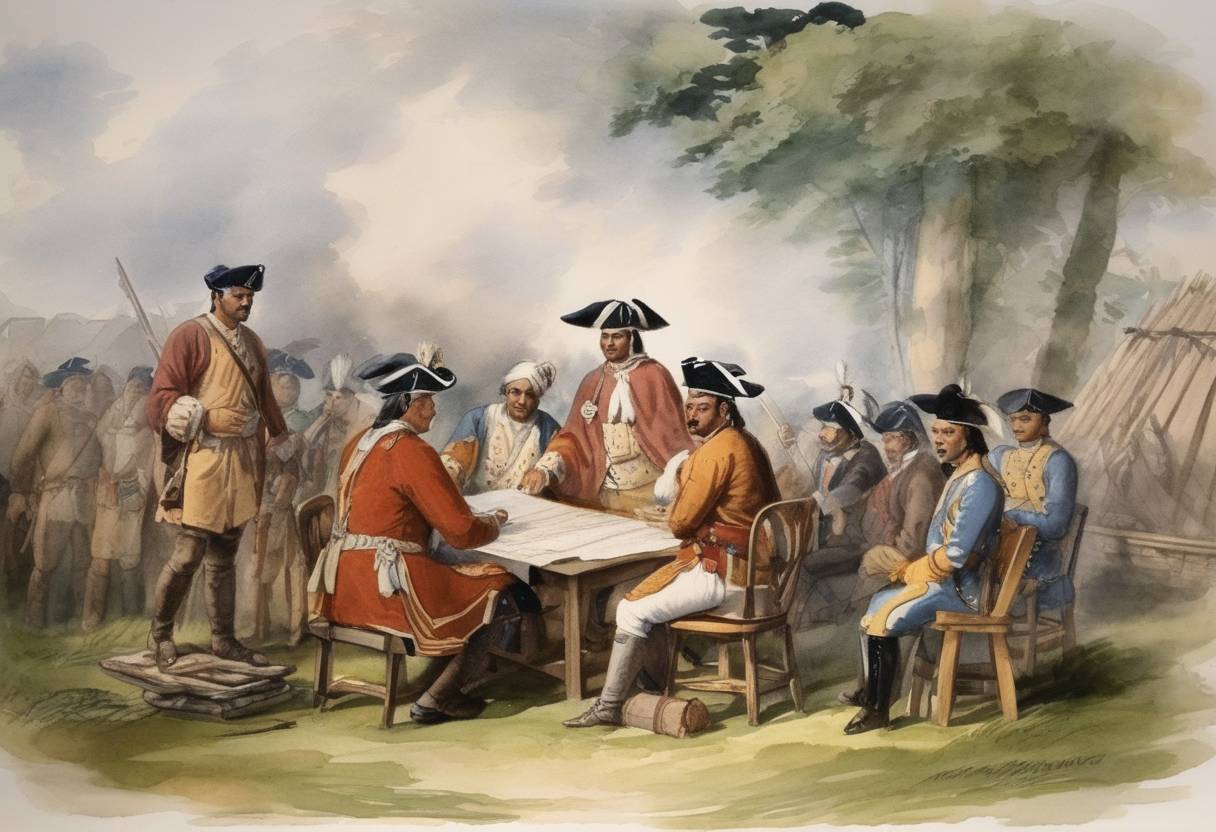
The Treaty of Fort Stanwix is signed between the British government and representatives of the Iroquois Confederacy.
November 23, 1765
The Iroquois Confederacy signs the Treaty of Fort Stanwix with British colonists.
Rome, New York, United States | Iroquois Confederacy
The Treaty of Fort Stanwix was indeed signed on November 5, 1768, and not November 23, 1765. This treaty was a significant moment in the history of British colonial expansion in North America and Native American relations. Here are the details of the event:
The Iroquois Confederacy: The Iroquois, also known as the Haudenosaunee or Six Nations, were a powerful confederation of six Indigenous Nations in North America. By the 18th century, they played a pivotal role in the balance of power between European settlers.
British Expansion: Following the French and Indian War (1754-1763), the British sought to manage and organize their new territories in North America. The Proclamation of 1763 attempted to curb colonial expansion west of the Appalachian Mountains to mitigate conflicts with Native Americans.
Date and Location: The treaty was signed at Fort Stanwix, which is present-day Rome, New York, on November 5, 1768.
Signatories: British colonial representatives and leaders of the Iroquois Confederacy signed the treaty. Notably, Sir William Johnson, Superintendent of Indian Affairs for the northern colonies, was a key negotiator.
Terms and Agreements:
Impacts on Native Americans: While the Iroquois aimed to protect their northern homelands from encroachment, the treaty pressured other Native tribes who lived in the ceded lands and had not been involved in the negotiations, leading to ongoing tensions and conflicts.
Colonial Expansion: The treaty allowed for increased colonial expansion and settlement, contributing to the westward movement of European settlers and laying groundwork that would influence future American expansion.
Historical Legacy: The Treaty of Fort Stanwix is an early example of the diplomatic efforts between European powers and Native American tribes, highlighting both the complexities and imbalances in these relationships. It set a precedent for future treaties and negotiations.
The Treaty of Fort Stanwix stands as a consequential moment in pre-revolutionary American history, exemplifying the intricate interplay of diplomacy, territorial expansion, and the impact on indigenous populations in North America.
Source: en.wikipedia.org