Dissolution of Standard Oil: May 15, 1911
1911 · Washington, D.C., United States
The United States Supreme Court declared Standard Oil to be an unreasonable monopoly under the Sherman Antitrust Act and ordered its dissolution.
January 10, 1870
John D. Rockefeller incorporated the Standard Oil Company in Ohio, which would become the largest oil refinery firm in the world by the end of the 19th century.
Cleveland, United States | Standard Oil Company
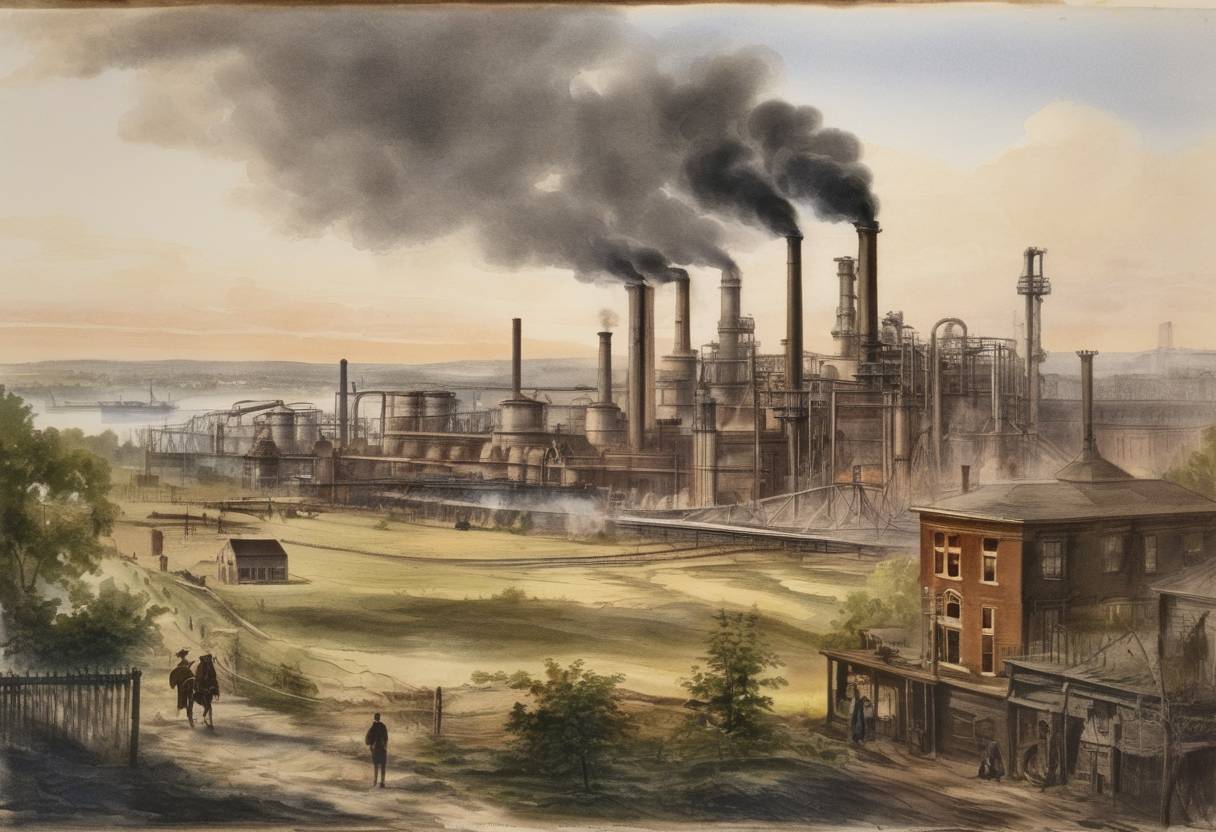
On January 10, 1870, the Standard Oil Company was incorporated in Ohio, marking a pivotal moment in the history of American industry and the global oil market. Founded by John D. Rockefeller along with partners including his brother William Rockefeller, Henry Flagler, Samuel Andrews, Stephen V. Harkness, and Oliver Burr Jennings, Standard Oil primarily aimed to consolidate and streamline the burgeoning oil industry.
During the mid-19th century, the demand for kerosene and other oil products surged, propelling the rapid growth of the oil industry. Small, scattered refineries characterized the landscape, often plagued by inefficiency and fierce competition. Rockefeller, an astute businessman, recognized the potential for centralization and control.
Incorporated with an initial capitalization of $1 million, Standard Oil prioritized efficiency and cost reduction. Rockefeller’s strategy leaned heavily on aggressive expansion and the acquisition of rival firms, employing economies of scale to reduce production costs and improve product quality.
Standard Oil’s successful strategies included:
Horizontal Integration: Acquiring competitors to consolidate refineries under the Standard Oil umbrella, thus eliminating competition and maintaining price control.
Vertical Integration: Controlling every aspect of the production process, from drilling to distribution, to reduce dependence on external suppliers and ensure consistent quality and supply.
Rebates and Railroad Partnerships: Negotiating favorable transport rates with railroads, allowing Standard Oil to outcompete smaller firms.
By the late 19th century, Standard Oil emerged as the world’s largest oil refinery, controlling approximately 90% of the United States’ refining capacity. This dominance drew attention and eventually led to legal challenges, alleging monopolistic practices. In 1911, after a landmark antitrust decision by the U.S. Supreme Court, Standard Oil was deemed an illegal monopoly and was subsequently broken into 34 separate companies, some of which evolved into major entities such as ExxonMobil and Chevron.
Rockefeller’s legacy extended beyond Standard Oil, as his business practices and philanthropic efforts significantly influenced both the industrial landscape and modern philanthropy. The incorporation of Standard Oil set new precedents in corporate strategy and regulatory scrutiny, embedding itself in the complex fabric of American economic history.
Source: www.history.com