Commemoration of the 50th Anniversary of Bloody Sunday in Selma
2015 · Selma, United States
Tens of thousands gathered in Selma, Alabama to commemorate the 50th anniversary of Bloody Sunday, a pivotal moment in the American Civil Rights Movement.
March 21, 1965
Martin Luther King Jr. led 3,200 people on the start of the third and finally successful civil rights march from Selma to Montgomery, Alabama.
Selma, United States | Southern Christian Leadership Conference
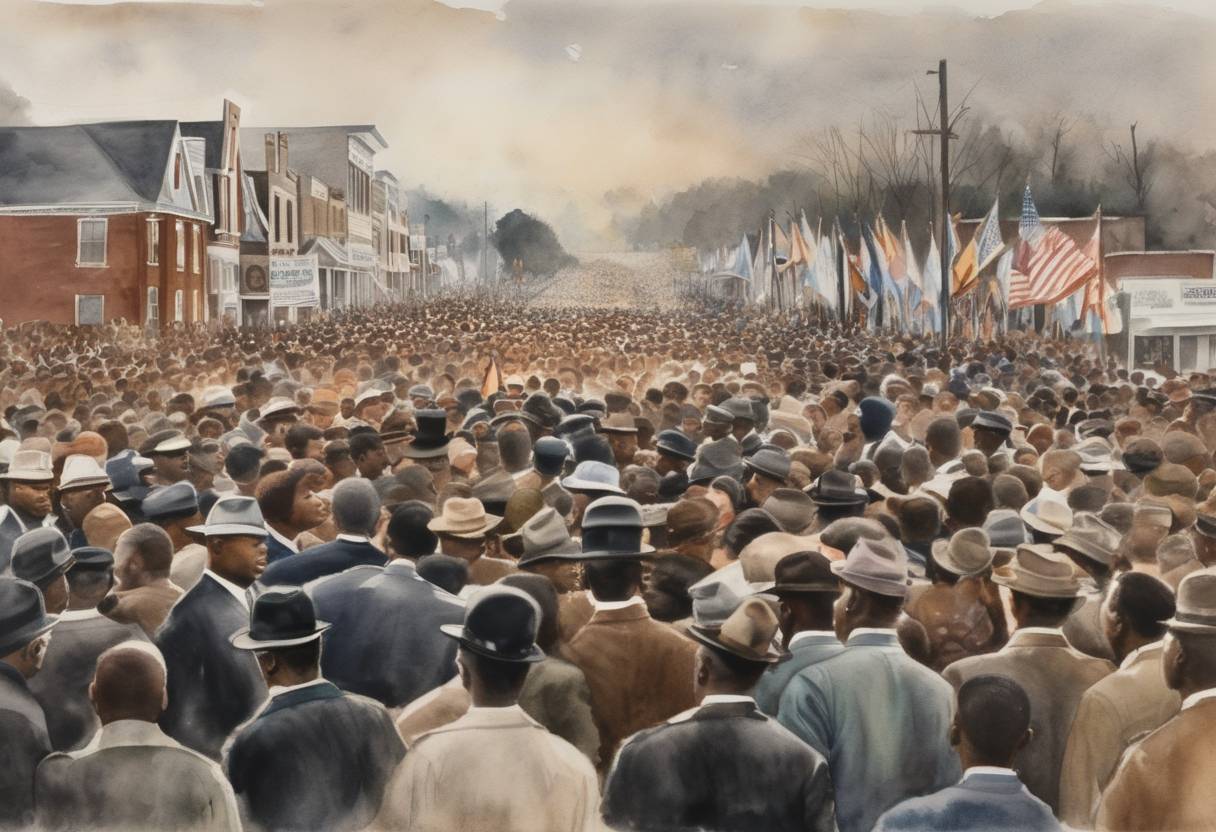
On March 21, 1965, a pivotal moment in the American Civil Rights Movement unfolded as Martin Luther King Jr. led the third and ultimately successful march from Selma to Montgomery, Alabama. This event marked a critical turning point in the fight for African American voting rights and highlighted the persistent struggle for racial equality in the United States.
The Selma to Montgomery marches originated from the broader struggle to combat racial discrimination in voting practices. Despite the 15th Amendment, which granted African Americans the right to vote, discriminatory laws and practices, especially in the southern states, severely restricted their electoral participation. In Selma, Alabama, these injustices were particularly evident.
Two prior attempts to march from Selma to Montgomery had faced brutal resistance, most notably on March 7, 1965, known as “Bloody Sunday.” During this initial march, peaceful protesters were violently attacked by law enforcement officials on the Edmund Pettus Bridge, capturing national and international attention.
With authorization granted by the federal court, Martin Luther King Jr. and leaders from various civil rights organizations, including the Southern Christian Leadership Conference (SCLC) and the Student Nonviolent Coordinating Committee (SNCC), organized a third march. This time, approximately 3,200 participants, both black and white, began the 54-mile trek from Selma to Montgomery.
The march took place over five days, with participants covering approximately 12 miles each day. They camped at night, demonstrating perseverance and solidarity. The sheer number and diversity of marchers underscored the broad support for the civil rights cause.
The successful completion of the march on March 25 in Montgomery was a monumental achievement. It effectively demonstrated the power of nonviolent protest and moral determination. The march culminated in a rally at the Alabama State Capitol, where King delivered a powerful address, reaffirming the movement’s commitment to achieving equality.
This march directly contributed to the passage of the Voting Rights Act of 1965, a key piece of legislation that prohibited racial discrimination in voting. It was signed into law by President Lyndon B. Johnson on August 6, 1965. The act is considered a landmark achievement in the Civil Rights Movement, significantly increasing voter registration among African Americans.
The march from Selma to Montgomery is remembered as a seminal moment in American history, symbolizing the struggle and sacrifice required to achieve civil rights progress. It continues to serve as an enduring reminder of the importance of fighting for justice and equality.
The event remains a foundational narrative in the ongoing struggle for civil rights and serves both as an educational milestone and a profound emblem of hope and change.
Source: www.history.com