The Death of Pope Clement II and the Third Election of Pope Benedict IX
1047 · Rome, Papal States
Pope Clement II dies, leading to the election of Pope Benedict IX for the third time.
December 4, 0963
Pope Leo VIII is elected pope, succeeding John XII, who had been deposed by Emperor Otto I.
Rome, Papal States | Catholic Church
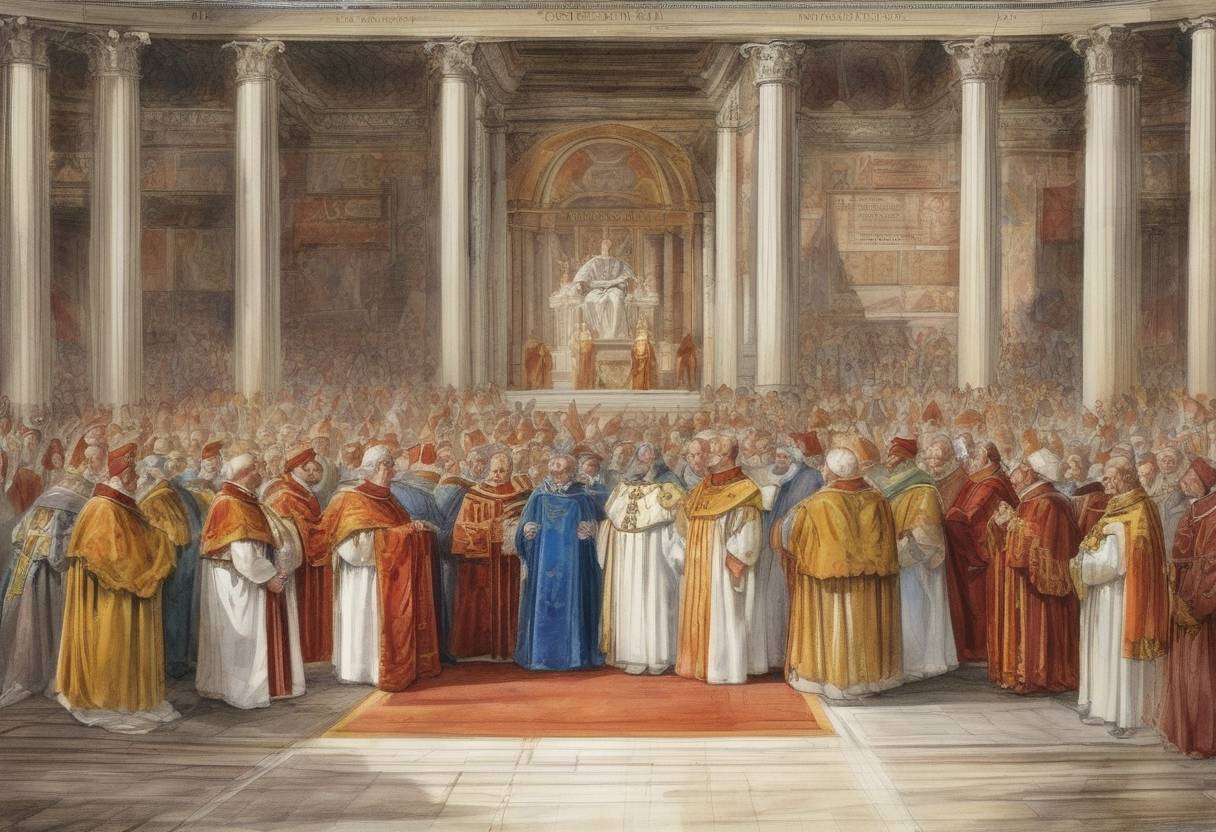
On December 4, 963, Leo VIII was elected as Pope, succeeding John XII, who had been deposed by Emperor Otto I. This event marked a significant moment in the history of the papacy and the relationship between the papacy and the Holy Roman Empire.
Pope John XII: John XII became pope in 955 at a very young age, around 18, and his papacy was marred by allegations of corruption and immorality. His tenure was characterized by political instability and conflicts with various factions within Rome and beyond.
Emperor Otto I: Otto I, also known as Otto the Great, was the Holy Roman Emperor who sought to strengthen his influence over the papacy. His reign was marked by efforts to consolidate power and stabilize the empire, which included intervening in papal affairs.
Conflict with Otto I: Pope John XII’s relationship with Otto I deteriorated over time. Initially, John XII had crowned Otto as Emperor in 962, but tensions arose due to John’s alliances with Otto’s enemies and his attempts to regain autonomy from imperial control.
Deposition of John XII: In November 963, Otto I convened a synod in Rome, where he accused John XII of various crimes, including perjury, murder, and sacrilege. The synod, under Otto’s influence, deposed John XII, although this action was controversial and not universally accepted.
Leo VIII’s Background: Before his election as pope, Leo VIII was a layman and a member of the Roman aristocracy. His appointment was unusual, as he was not a member of the clergy at the time of his election.
Imperial Influence: Leo VIII’s election was heavily influenced by Emperor Otto I, reflecting the emperor’s desire to have a pope who would be loyal to him and support his policies.
Contested Papacy: Leo VIII’s papacy was contested from the start. Many in Rome and the broader church did not recognize his legitimacy, as John XII was still alive and had supporters.
Return of John XII: In early 964, John XII briefly regained control of Rome and resumed his papal duties, further complicating the situation. However, his death later that year ended the immediate conflict.
Legacy: The election of Leo VIII and the events surrounding it highlighted the ongoing struggle between secular and ecclesiastical powers. It underscored the complex dynamics between the papacy and the Holy Roman Empire, setting a precedent for future interactions between popes and emperors.
In summary, the election of Leo VIII on December 4, 963, was a pivotal moment in the history of the papacy, illustrating the intricate interplay of religious and political forces in medieval Europe.
Source: en.wikipedia.org