The Landing of the Mayflower Pilgrims at Plymouth Rock
1620 · Plymouth, United States
The Mayflower Pilgrims landed at Plymouth Rock in present-day Massachusetts, marking a significant event in the early colonization of North America.
September 6, 1620
The Pilgrims set sail from Plymouth, England, on the Mayflower to settle in North America.
Plymouth, England | Pilgrim Fathers
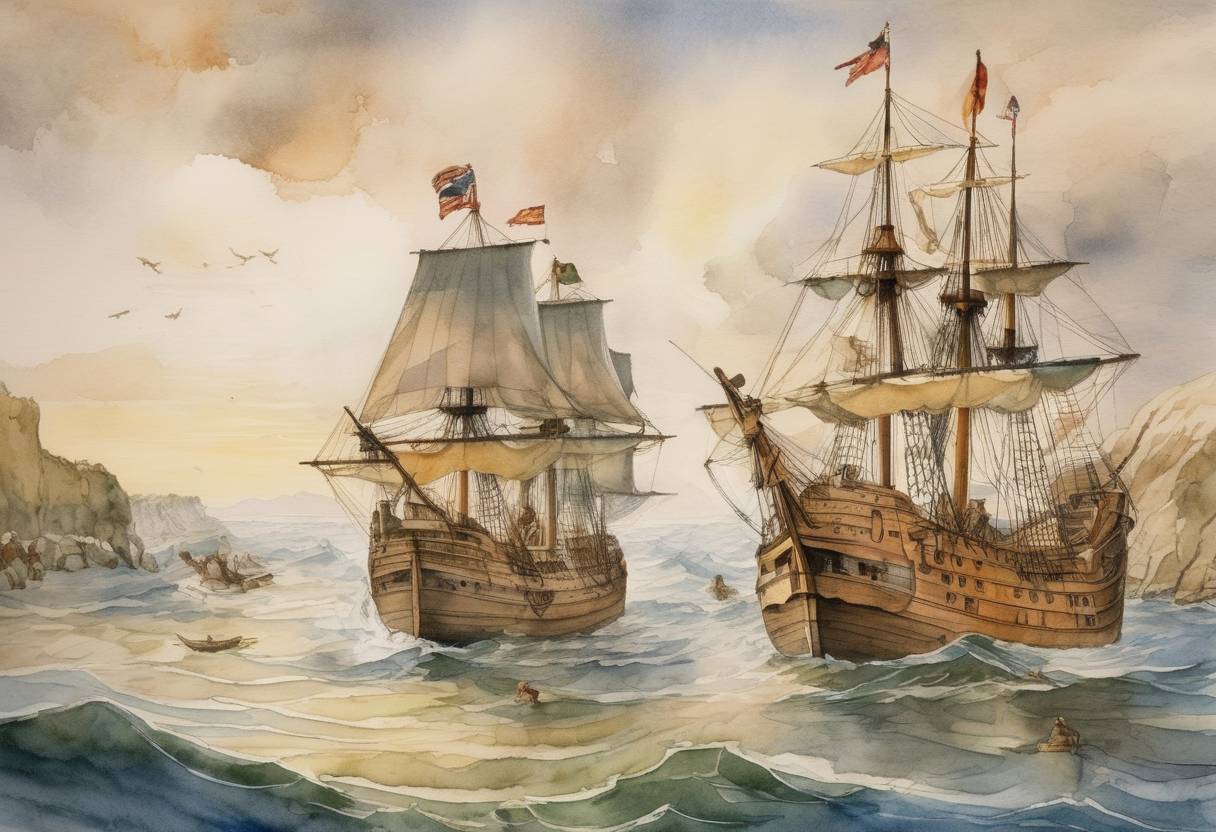
On September 6, 1620, a significant event in early American history unfolded as the Pilgrims set sail from Plymouth, England, aboard the Mayflower. This journey marked the beginning of one of the most famous migrations in history, leading to the establishment of one of the first permanent European settlements in North America.
The Pilgrims were a group of English Separatists who sought religious freedom. Dissatisfied with the Church of England, they initially fled to the Netherlands to escape persecution. However, concerns over losing their English identity and economic difficulties prompted them to seek a new life in the New World.
Departure: The Mayflower, a merchant ship, departed from Plymouth, England, carrying 102 passengers and approximately 30 crew members. The passengers included men, women, and children, many of whom were part of the Separatist congregation, along with other settlers seeking new opportunities.
Challenges: The journey across the Atlantic was perilous. The ship faced rough seas and storms, which caused delays and discomfort. The cramped conditions and lack of fresh food and water led to illness among the passengers.
Landfall: After a grueling 66-day voyage, the Mayflower sighted land on November 9, 1620. They initially intended to settle near the Hudson River, but navigational errors and treacherous seas led them to Cape Cod, present-day Massachusetts.
The Mayflower Compact: Before disembarking, the Pilgrims drafted and signed the Mayflower Compact on November 11, 1620. This document established a rudimentary form of self-governance and is considered a foundational step in the development of democratic governance in America.
The Pilgrims’ journey and subsequent settlement at Plymouth Colony laid the groundwork for future colonization and expansion in North America. Their quest for religious freedom and self-determination became central themes in American cultural and historical narratives.
The first winter in the New World was harsh, and nearly half of the settlers perished due to disease and malnutrition. However, with the help of local Indigenous peoples, such as the Wampanoag, the surviving Pilgrims learned to cultivate the land and eventually celebrated a successful harvest, which is commemorated today as Thanksgiving.
The legacy of the Mayflower and the Pilgrims endures as a symbol of perseverance, faith, and the quest for freedom, influencing the cultural and historical identity of the United States.
Source: en.wikipedia.org