December 28, 1908

A major earthquake struck Messina, Italy, and the surrounding region, resulting in the deaths of approximately 100,000 people.


Messina, Italy | Italian Government
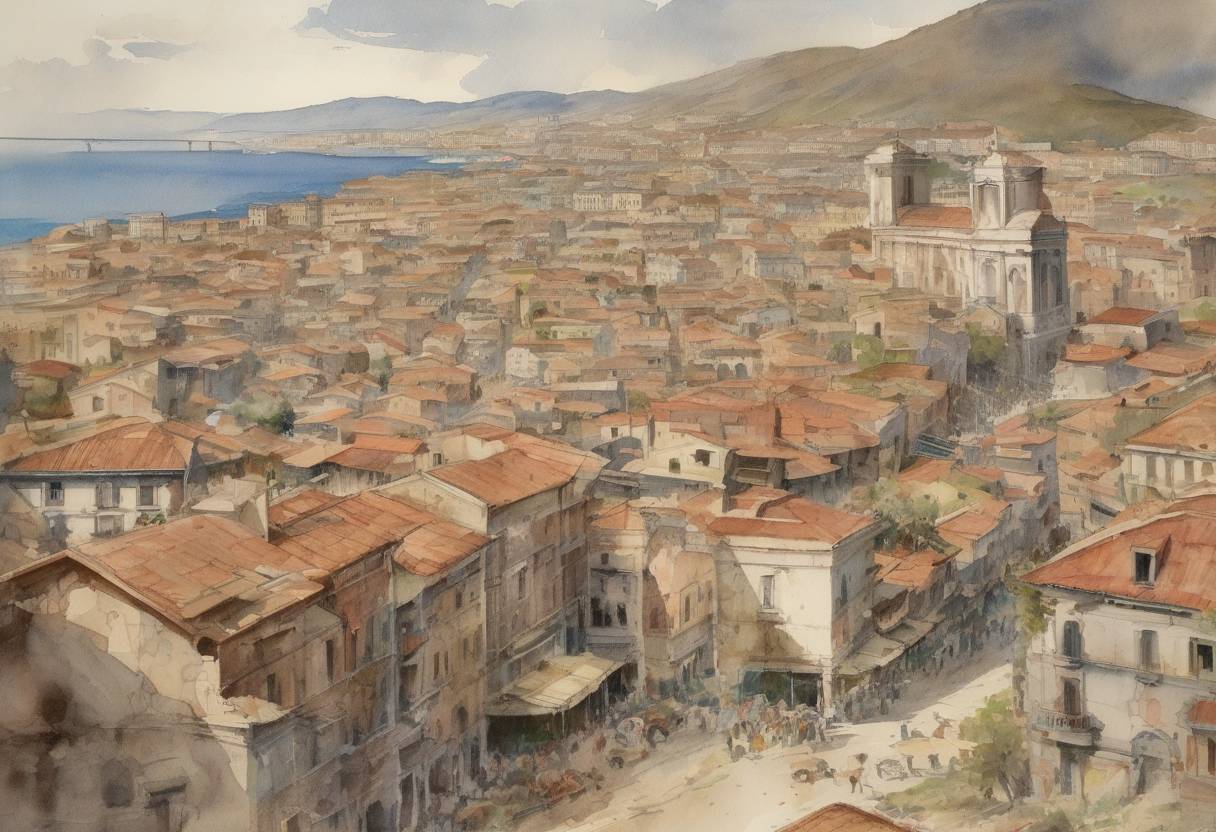
Watercolor painting based depiction of A major earthquake struck Messina, Italy, and the surrounding region, resulting in the deaths of approximately 100,000 people. (1908)

The 1908 Messina Earthquake

On December 28, 1908, a catastrophic earthquake struck the city of Messina in Sicily, Italy, and the surrounding region, including the city of Reggio Calabria on the Italian mainland. This seismic event is one of the deadliest earthquakes in European history, resulting in the deaths of an estimated 100,000 people.

Context and Background

The early 20th century was a period of significant geological activity in the Mediterranean region. The area around the Strait of Messina, which separates Sicily from mainland Italy, is particularly prone to seismic activity due to the complex tectonic interactions between the African and Eurasian plates.

The Earthquake

  • Date and Time: The earthquake occurred in the early morning hours of December 28, 1908, at approximately 5:20 AM local time.
  • Magnitude: The earthquake is estimated to have had a magnitude of 7.1 on the Richter scale.
  • Epicenter: The epicenter was located in the Strait of Messina, close to the cities of Messina and Reggio Calabria.

Impact

  • Destruction: The earthquake caused widespread devastation in Messina and Reggio Calabria. Buildings were not constructed to withstand such a powerful quake, leading to massive structural failures.
  • Casualties: Approximately 100,000 people lost their lives, making it one of the deadliest natural disasters in Europe. The high death toll was exacerbated by the time of day, as many people were asleep and unable to escape collapsing buildings.
  • Tsunami: The earthquake also triggered a tsunami, with waves reported to be up to 12 meters (39 feet) high, which further contributed to the destruction and loss of life.

Aftermath

  • Rescue and Relief Efforts: The response to the disaster was hampered by the scale of destruction and the limited infrastructure of the time. International aid was sent, with ships from several countries, including Russia, the United States, and the United Kingdom, arriving to assist in rescue operations.
  • Reconstruction: The rebuilding of Messina and Reggio Calabria was a long and arduous process. New building codes were implemented to improve earthquake resistance, and the cities were gradually reconstructed over the following decades.

Historical Significance

The 1908 Messina earthquake highlighted the vulnerability of urban areas to natural disasters and underscored the need for improved building standards and emergency preparedness. It remains a poignant reminder of the destructive power of earthquakes and the importance of resilience in urban planning.

This event also had a lasting impact on the collective memory of Italy, influencing both cultural and scientific approaches to disaster management and response in the years that followed.