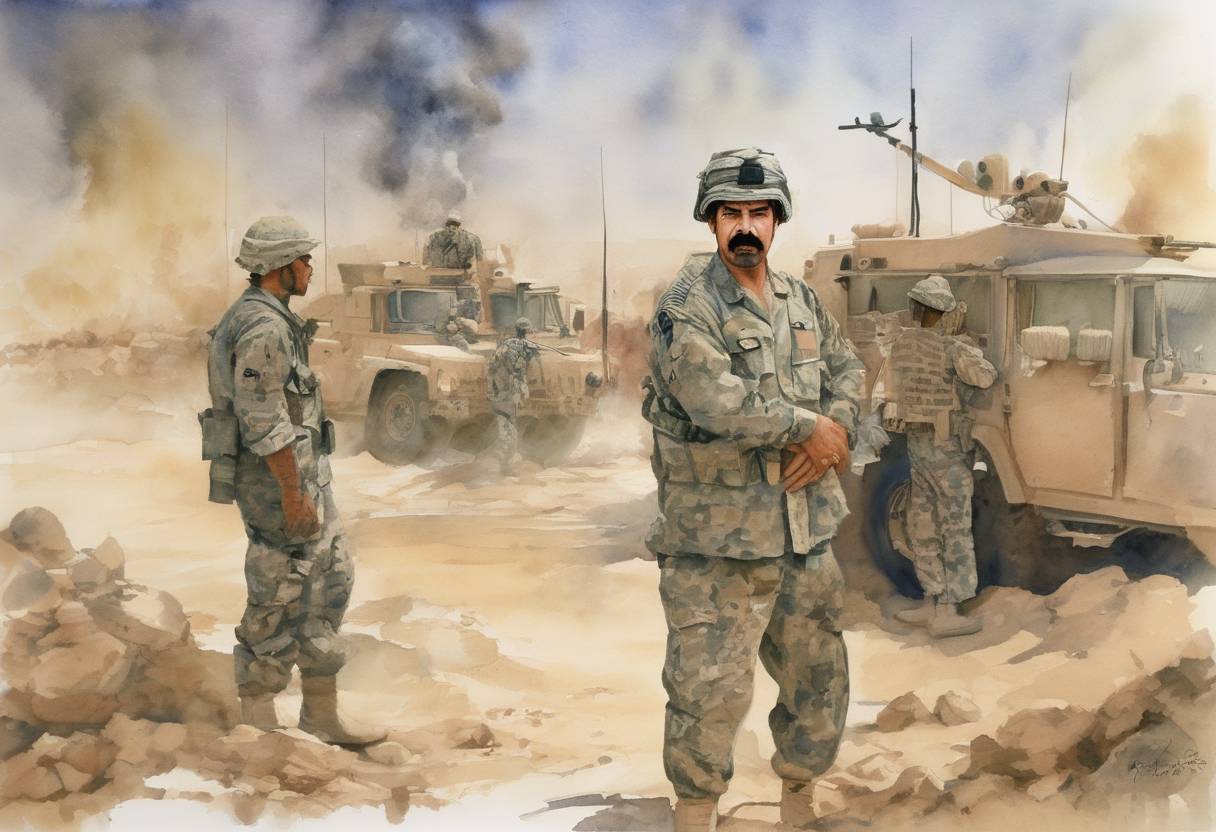
Capture of Saddam Hussein
On December 13, 2003, the United States announced the capture of former Iraqi President Saddam Hussein, a significant milestone in the Iraq War. The announcement was made public on December 14, 2003. Saddam Hussein was found hiding in a small underground bunker near his hometown of Tikrit, in a location known as ad-Dawr.
Context Leading Up to the Capture
- Iraq War Background: The Iraq War began in March 2003, when a coalition led by the United States invaded Iraq, citing the presence of weapons of mass destruction and Saddam Hussein’s regime as threats to international security.
- Fall of Baghdad: By April 2003, Baghdad had fallen, and Saddam Hussein’s government was effectively dismantled. However, Saddam himself had evaded capture, leading to a widespread manhunt.
- Operation Red Dawn: The operation to capture Saddam Hussein was named “Operation Red Dawn.” It was conducted by the U.S. Army’s 4th Infantry Division and Task Force 121, a special operations team.
The Capture
- Location: Saddam was found in a “spider hole,” a small underground hideout, near a farmhouse in ad-Dawr, about 15 kilometers south of Tikrit.
- Conditions: He was discovered with a pistol and $750,000 in cash. Despite being armed, he did not resist capture.
- Physical State: Saddam was described as disheveled and appeared to have been living in rudimentary conditions.
Aftermath and Significance
- Trial and Execution: Following his capture, Saddam Hussein was held by U.S. forces and later handed over to the Iraqi interim government. He was tried for crimes against humanity and executed on December 30, 2006.
- Impact on Iraq War: The capture was a major psychological victory for the coalition forces, but it did not immediately quell the insurgency in Iraq. The country continued to experience significant violence and instability in the years following his capture.
- Historical Significance: Saddam’s capture marked the end of an era in Iraq, closing the chapter on his authoritarian rule, which had lasted from 1979 to 2003. It also underscored the challenges of post-war reconstruction and governance in Iraq.
The capture of Saddam Hussein remains a pivotal moment in the history of the Iraq War, symbolizing the end of his regime and highlighting the complexities of the conflict and its aftermath.