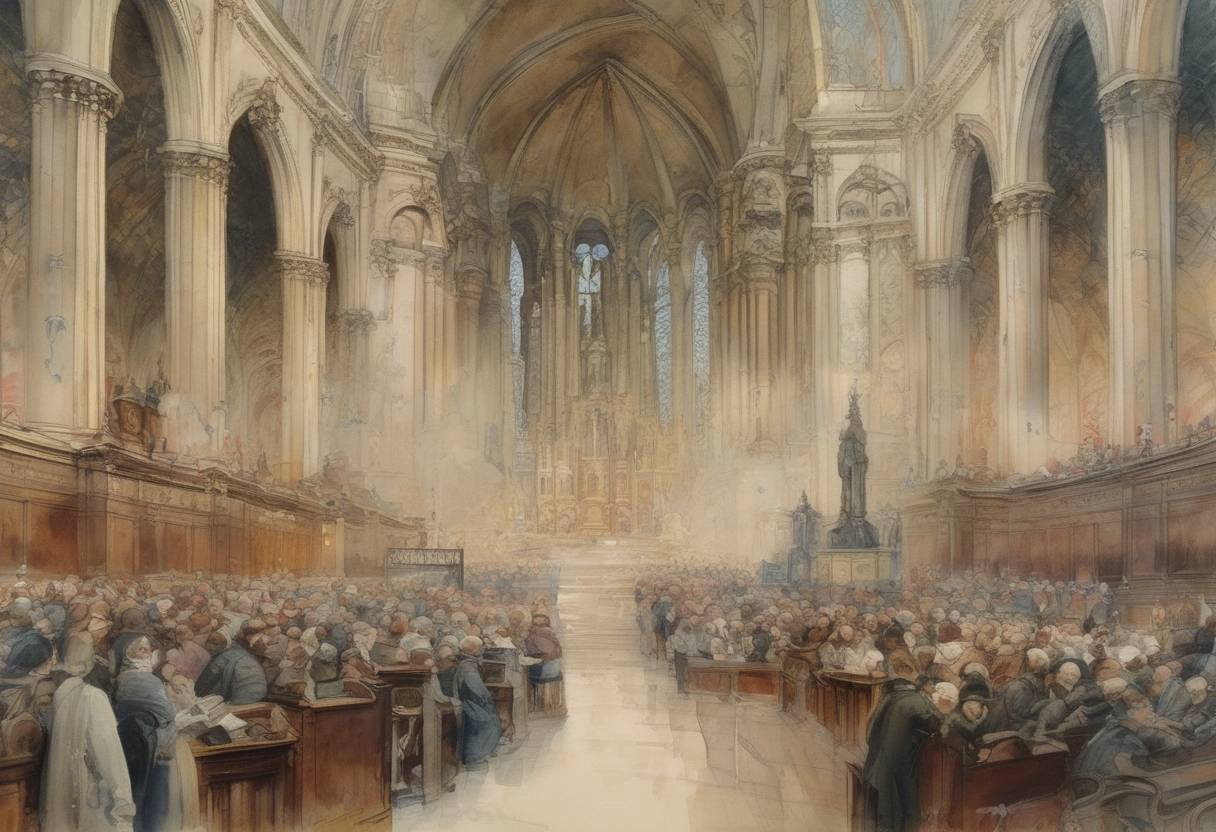
The French Law on the Separation of the Churches and the State (1905)
On December 9, 1905, the French government enacted the “Loi du 9 décembre 1905 concernant la séparation des Églises et de l’État,” commonly known as the Law on the Separation of the Churches and the State. This landmark legislation established the principle of laïcité, or secularism, in France, fundamentally altering the relationship between religion and the state.
Historical Context
The passage of the 1905 law was the culmination of a long-standing struggle between the French state and the Catholic Church, which had been a dominant force in French society for centuries. The roots of this conflict can be traced back to the French Revolution (1789-1799), which sought to diminish the Church’s influence and promote Enlightenment ideals. The Concordat of 1801, established by Napoleon Bonaparte, had previously attempted to reconcile the state and the Church by recognizing Catholicism as the religion of the majority while maintaining state control over religious appointments and funding.
Throughout the 19th century, tensions persisted as successive governments oscillated between conservative and liberal policies regarding the Church. The Third Republic, established in 1870, increasingly embraced secularism, culminating in the 1905 law.
Key Provisions of the Law
The 1905 law consisted of several critical provisions:
Separation of Church and State: The law formally ended the Concordat of 1801, severing the official ties between the French government and religious institutions.
End of State Funding: It prohibited the government from funding religious groups, effectively ending the financial support that had been provided to the Catholic Church and other religious organizations.
Freedom of Religion: The law guaranteed freedom of conscience and the free exercise of religion, allowing individuals to practice their faith without state interference.
Public Order: While ensuring religious freedom, the law also stipulated that religious practices must not disrupt public order.
Ownership of Religious Buildings: The law transferred ownership of religious buildings constructed before 1905 to local governments, which were then responsible for their maintenance.
Consequences and Significance
The implementation of the 1905 law had profound implications for French society:
Cultural Shift: It marked a significant cultural shift towards secularism, reinforcing the idea that religion was a private matter separate from public life.
Church-State Relations: The law redefined the relationship between the state and religious institutions, reducing the political power of the Catholic Church in France.
Model for Secularism: The French model of laïcité has since become a reference point for secularism worldwide, influencing debates on the role of religion in public life.
Ongoing Debates: The principles established by the 1905 law continue to influence French politics and society, particularly in discussions about religious symbols in public spaces and the integration of diverse religious communities.
In summary, the Law on the Separation of the Churches and the State was a pivotal moment in French history, establishing a framework for secular governance that continues to shape the nation’s identity and policies today.