Liberation of Hong Kong from Japanese Occupation
1945 · Hong Kong, Hong Kong
Hong Kong is liberated from Japanese occupation by British forces.
December 24, 1941
Hong Kong surrendered to Japan during World War II after 18 days of fierce fighting.
Hong Kong, Hong Kong | Imperial Japanese Army
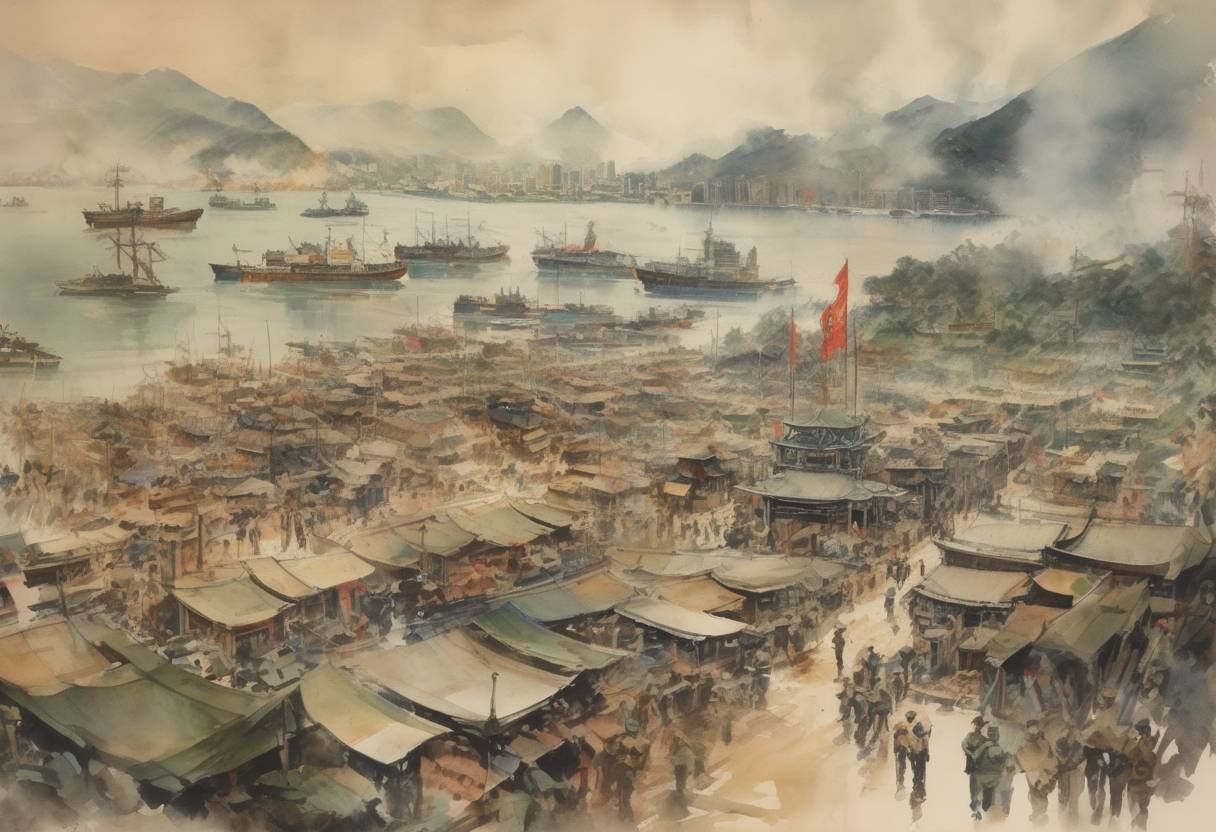
On December 25, 1941, Hong Kong, a British colony at the time, officially surrendered to the Empire of Japan after 18 days of intense combat. This event marked a significant moment in the Pacific Theater of World War II, illustrating the rapid expansion of Japanese military power in the early years of the conflict.
Hong Kong, strategically located on the southern coast of China, was a vital British outpost in Asia. As tensions escalated in the region, the British government anticipated a potential Japanese attack. However, the defense of Hong Kong was not heavily prioritized compared to other strategic locations, such as Singapore. The garrison in Hong Kong was relatively small, consisting of British, Indian, and Canadian troops, alongside local defense forces.
The battle began on December 8, 1941, just hours after the attack on Pearl Harbor, as Japanese forces launched a coordinated assault on British territories in the Pacific. The Japanese 38th Division, commanded by Lieutenant General Takashi Sakai, crossed the border from mainland China into the New Territories of Hong Kong.
Despite fierce resistance from the Allied forces, the Japanese troops advanced rapidly. The defenders were outnumbered and outgunned, facing challenges such as limited supplies and reinforcements. The Japanese forces employed superior air and artillery power, which overwhelmed the defenders.
By December 25, the situation for the Allied forces had become untenable. With dwindling supplies, mounting casualties, and no hope of reinforcement, the British Governor of Hong Kong, Sir Mark Aitchison Young, decided to surrender to prevent further loss of life. The surrender took place at the Peninsula Hotel in Kowloon, marking the beginning of a brutal occupation that would last until 1945.
The fall of Hong Kong was a significant blow to the Allies in the Pacific. It demonstrated the effectiveness of Japanese military strategy and highlighted the vulnerabilities of British colonial defenses in Asia. The occupation of Hong Kong was marked by harsh conditions, including internment of Allied soldiers and civilians, and significant suffering for the local population.
The surrender of Hong Kong on December 25, 1941, known as “Black Christmas,” remains a poignant reminder of the challenges faced during World War II and the resilience of those who endured the occupation. The event also set the stage for future Allied efforts to reclaim territories lost during the early years of the war.
Source: en.wikipedia.org