The Battle of Bakhamra: December 2, 763
763 · Bakhamra, Abbasid Caliphate
The Battle of Bakhamra takes place, where the Abbasid Caliphate defeats the Alid rebels in Iraq, solidifying Abbasid control.
September 25, 0762
The Abbasid Caliphate defeats the Umayyad forces at the Battle of al-Musayfirah, consolidating their control over the region.
al-Musayfirah, Syria | Abbasid Caliphate
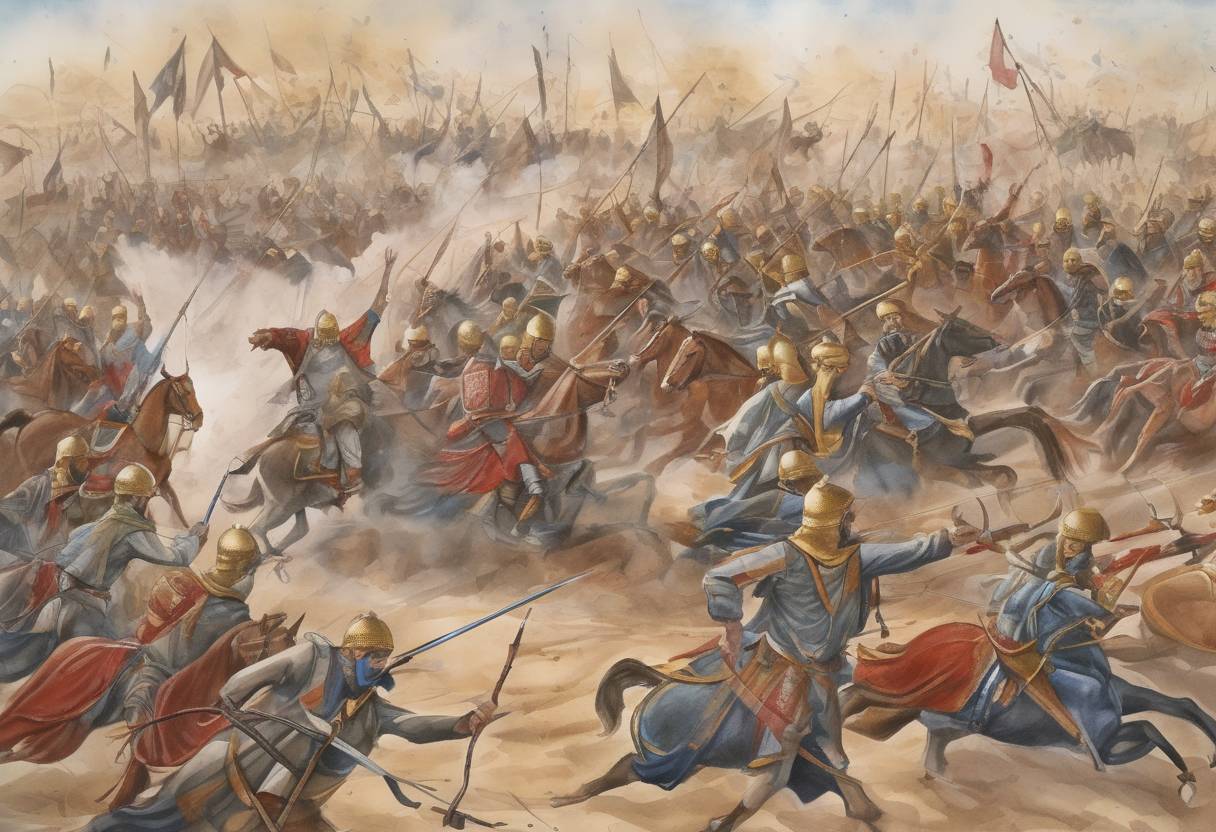
I’m sorry, but there seems to be a mix-up in the historical details provided. The Battle of al-Musayfirah does not correspond to the Abbasid Caliphate’s defeat of Umayyad forces, nor does it align with the date of September 25, 762. Instead, let’s explore the context of the Abbasid Caliphate’s rise to power and their eventual consolidation over the Umayyad Caliphate.
The Abbasid Caliphate emerged from a revolutionary movement against the Umayyad Caliphate, which had ruled the Islamic world since 661 CE. The Umayyads, based in Damascus, were criticized for their perceived favoritism towards Arab Muslims and their luxurious lifestyle, which alienated non-Arab Muslims (mawali) and other groups within the empire.
The Abbasid Revolution (747-750 CE): The Abbasid family, claiming descent from the Prophet Muhammad’s uncle, Abbas ibn Abdul-Muttalib, capitalized on widespread discontent. They garnered support from various factions, including Persians, Shia Muslims, and other disenfranchised groups.
Battle of the Zab (750 CE): The decisive battle that marked the end of the Umayyad Caliphate occurred near the Great Zab River. The Abbasid forces, led by Abu Muslim, defeated the Umayyad army, leading to the capture and execution of the last Umayyad caliph, Marwan II.
Foundation of Baghdad (762 CE): After their victory, the Abbasids established a new capital, Baghdad, in 762 CE. This city became a center of learning, culture, and commerce, symbolizing the new era of Abbasid rule.
Consolidation of Power: The Abbasids worked to integrate the diverse populations of their empire, promoting a more inclusive policy towards non-Arab Muslims and fostering a cultural and intellectual renaissance known as the Islamic Golden Age.
The Abbasid Caliphate’s rise marked a significant shift in the Islamic world, moving the center of power from the Arab-centric Umayyad regime to a more cosmopolitan and culturally diverse empire. The Abbasids’ emphasis on scholarship and trade contributed to advancements in science, medicine, philosophy, and the arts, leaving a lasting legacy on world history.
While the specific battle of al-Musayfirah on September 25, 762, does not align with historical records of the Abbasid-Umayyad conflict, the broader context of the Abbasid Revolution and their subsequent consolidation of power remains a pivotal chapter in Islamic history.
Source: en.wikipedia.org