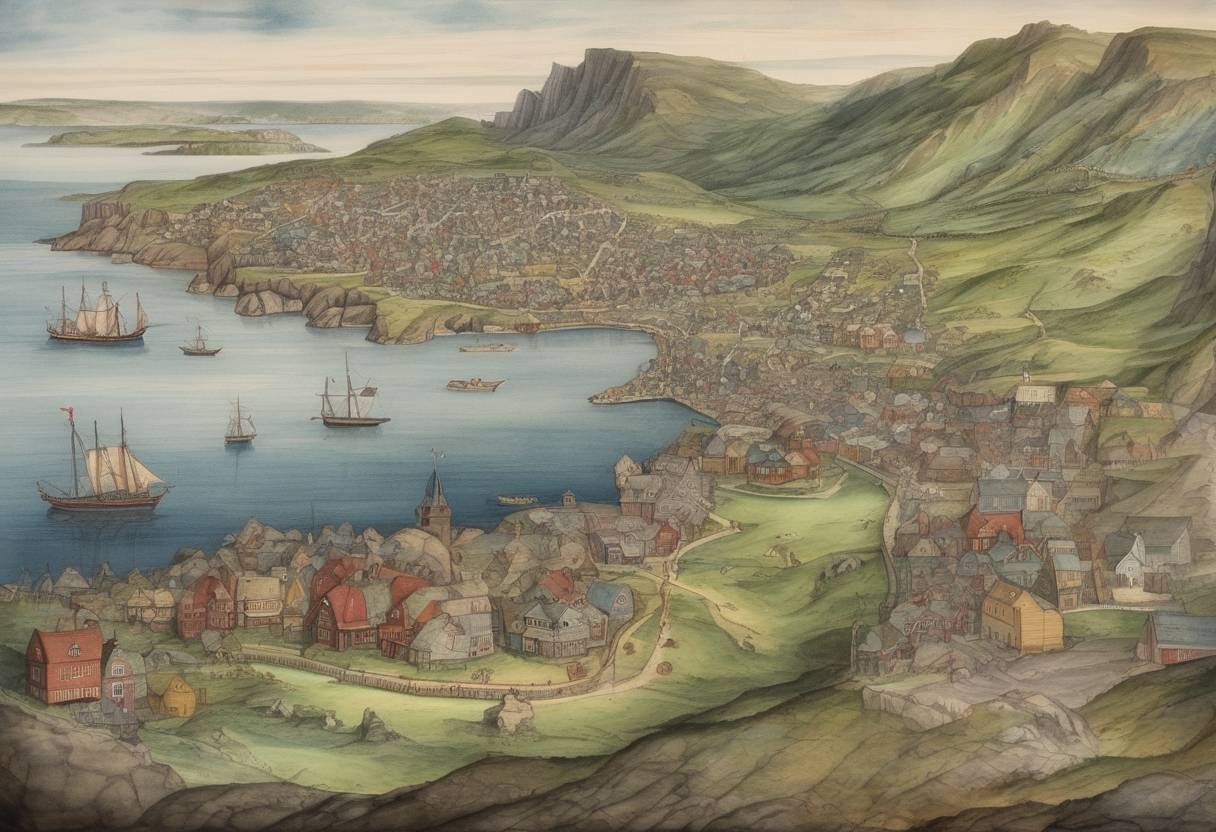
Humphrey Gilbert Claims Newfoundland for England - August 5, 1583
On August 5, 1583, Sir Humphrey Gilbert, an English explorer and half-brother to Sir Walter Raleigh, claimed the island of Newfoundland for the English crown. This event is often marked as the beginning of the British Empire, as it represented one of the earliest English attempts at establishing a colonial presence in the New World.
Background
- Humphrey Gilbert: A soldier and navigator, Gilbert was granted a royal patent by Queen Elizabeth I in 1578, which authorized him to explore and colonize territories in the New World not already claimed by Christian nations.
- Motivations: The English were motivated by the potential for new resources, trade routes, and the spread of Protestantism. The competition with Spain and Portugal, who had already established significant colonies, also spurred English exploration.
The Voyage
- Departure: Gilbert set sail from Plymouth, England, in June 1583 with a fleet of five ships, including the flagship HMS Delight.
- Challenges: The journey was fraught with difficulties, including storms and the loss of one ship, the Bark Raleigh, which returned to England early in the voyage.
Claiming Newfoundland
- Arrival: Gilbert arrived in St. John’s, Newfoundland, in early August 1583. The area was already frequented by European fishermen, primarily from Portugal, Spain, and France.
- Ceremony: On August 5, 1583, Gilbert formally claimed the land for England by erecting a pillar with the arms of England engraved upon it. He declared the land to be under the sovereignty of Queen Elizabeth I.
- Significance: This act marked the first English claim to land in North America, laying the groundwork for future English colonization efforts.
Aftermath
- Return Journey: The return voyage was disastrous. Gilbert’s fleet encountered severe storms, and his ship, the HMS Squirrel, was lost at sea, resulting in his death.
- Legacy: Despite the failure of the expedition to establish a permanent settlement, Gilbert’s claim was significant in the history of British colonial expansion. It set a precedent for future English claims and settlements in North America, including the successful establishment of Jamestown in 1607.
Historical Significance
- Beginning of the British Empire: While the immediate impact was limited, Gilbert’s claim is often seen as the symbolic start of the British Empire, which would grow to become one of the largest empires in history.
- Colonial Competition: This event underscored the competitive nature of European colonial ambitions in the New World, setting the stage for centuries of exploration, conflict, and colonization.
Sir Humphrey Gilbert’s claim of Newfoundland was a pivotal moment in the history of English exploration and colonialism, marking the nascent stages of what would become a vast and influential empire.