Capture of Ulundi: The End of the Anglo-Zulu War
1879 · Ulundi, South Africa
Anglo-Zulu War: The Zululand capital of Ulundi is captured by British forces, effectively ending the war.
January 22, 1824
The Ashanti Empire defeats British forces in the Battle of Nsamankow during the First Anglo-Ashanti War.
Nsamankow, Ghana | Ashanti Empire
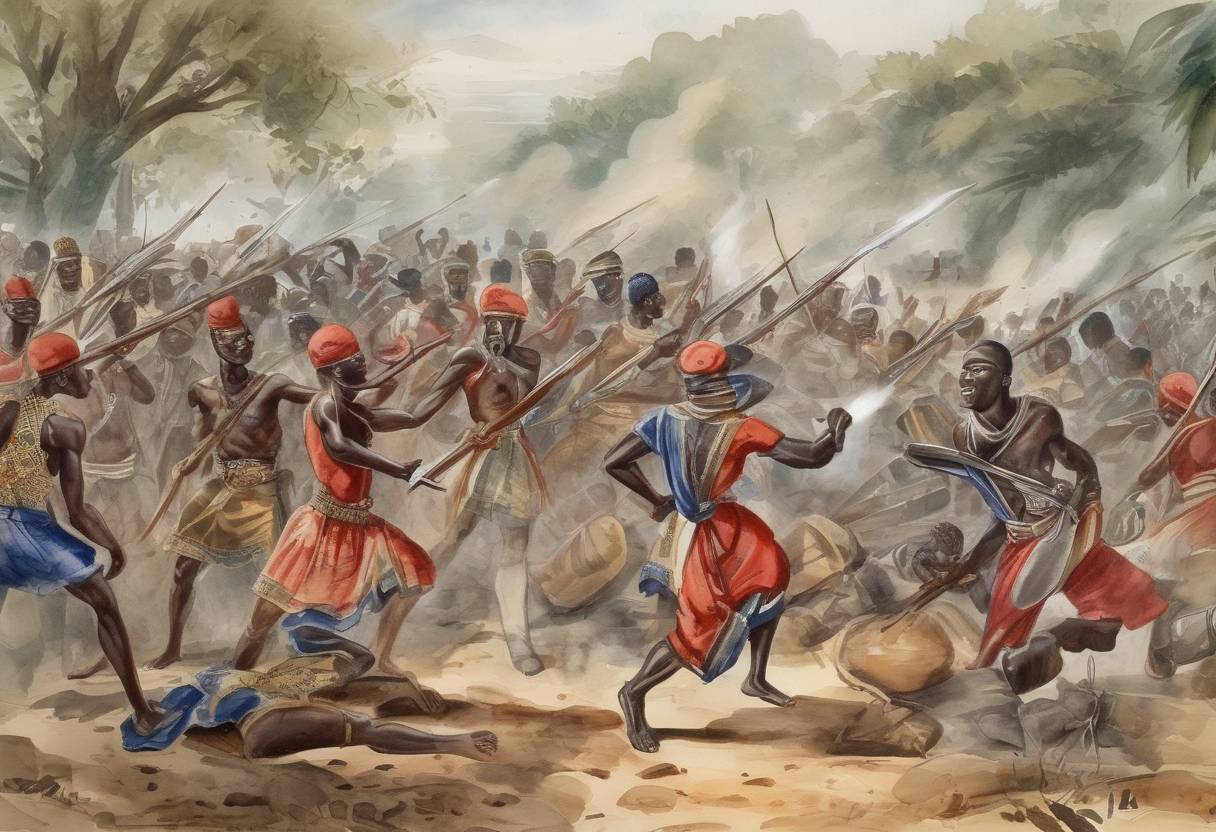
On January 22, 1824, the Ashanti Empire achieved a significant victory against British forces in the Battle of Nsamankow, a pivotal event during the First Anglo-Ashanti War (1823–1831). This battle underscored the Ashanti’s military prowess and marked a critical moment in the early 19th-century conflicts between the British Empire and the Ashanti Kingdom in what is now modern-day Ghana.
The First Anglo-Ashanti War was primarily driven by economic and territorial tensions. The Ashanti Empire, a powerful West African state, sought to expand its influence and control over the lucrative trade routes in the region. The British, on the other hand, aimed to protect their trading interests along the Gold Coast and sought to curb Ashanti expansion.
Tensions escalated when the Ashanti moved southward, threatening British-controlled territories and their allies. The British, under the command of Sir Charles MacCarthy, sought to assert their dominance and protect their interests by engaging the Ashanti forces.
The British forces, numbering around 500, were significantly outnumbered by the Ashanti army, which was estimated to be several thousand strong. The Ashanti utilized their knowledge of the local terrain to their advantage, employing guerrilla tactics and ambushes.
During the battle, the British forces were overwhelmed by the Ashanti’s strategic maneuvers and superior numbers. Sir Charles MacCarthy was killed in the conflict, and his forces suffered heavy casualties. The defeat was a severe blow to British morale and their military presence in the region.
The Ashanti victory at Nsamankow had several important consequences:
The Battle of Nsamankow remains a significant event in the history of the Ashanti Empire and its interactions with European colonial powers. It exemplifies the complexities of colonial-era conflicts in Africa and the resilience of indigenous states in the face of imperial expansion.
Source: en.wikipedia.org