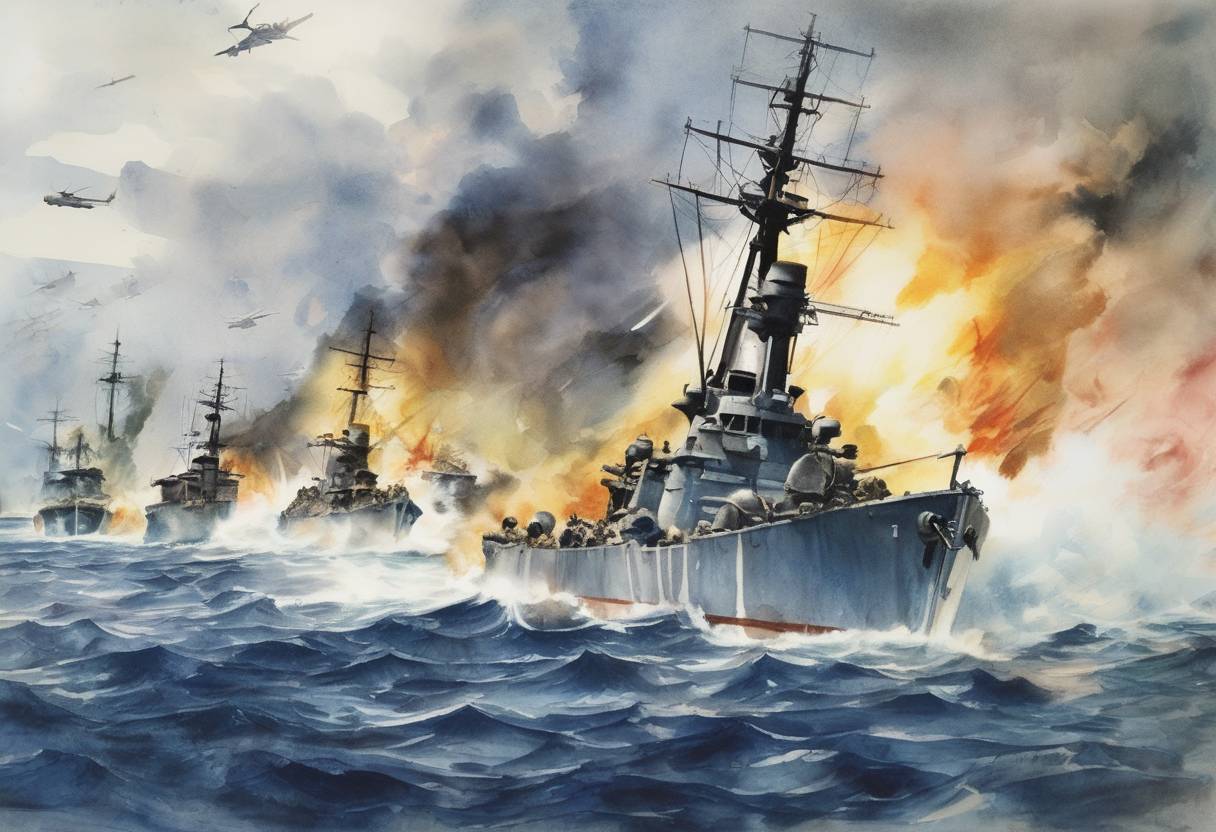
The Battle of Leyte Gulf: Conclusion on October 25, 1944
The Battle of Leyte Gulf, which concluded on October 25, 1944, stands as one of the largest naval battles in history and a pivotal moment in the Pacific Theater of World War II. This battle was crucial in weakening the Japanese Navy and securing a decisive Allied victory.
Background
The battle was part of the Allied campaign to liberate the Philippines, which had been under Japanese control since early in the war. The Philippines’ strategic location made it a critical target for the Allies, as its liberation would sever Japanese supply lines and provide a base for further operations in the Pacific.
Key Events Leading Up to the Battle
- Operation King Two: The Allied invasion of Leyte, known as Operation King Two, began on October 20, 1944. General Douglas MacArthur led the campaign, fulfilling his famous promise to return to the Philippines.
- Japanese Response: In response, the Japanese launched Operation Sho-Go, a complex plan to engage and destroy the U.S. fleet by luring it away from Leyte Gulf and attacking the landing forces.
The Battle
The Battle of Leyte Gulf consisted of four main engagements:
The Battle of the Sibuyan Sea (October 24, 1944): U.S. naval forces attacked the Japanese Center Force, sinking the battleship Musashi and forcing a temporary retreat.
The Battle of Surigao Strait (October 25, 1944): The last battleship-to-battleship action in history, where the U.S. Seventh Fleet defeated the Japanese Southern Force, effectively destroying it.
The Battle off Cape Engaño (October 25, 1944): U.S. carrier forces attacked the Japanese Northern Force, which was used as a decoy. The Japanese lost four aircraft carriers, significantly diminishing their naval aviation capabilities.
The Battle off Samar (October 25, 1944): A small U.S. task force, known as “Taffy 3,” bravely held off the much larger Japanese Center Force, preventing it from reaching the landing beaches at Leyte.
Aftermath and Significance
- Decisive Allied Victory: The battle resulted in a decisive victory for the Allies. The Japanese Navy suffered significant losses, including four aircraft carriers, three battleships, and numerous cruisers and destroyers.
- Strategic Impact: The battle effectively eliminated the Japanese Navy as a major fighting force, allowing the Allies to continue their advance in the Pacific with reduced opposition.
- Philippines Liberation: The victory at Leyte Gulf paved the way for the liberation of the Philippines, which was completed in 1945.
Broader Historical Significance
The Battle of Leyte Gulf marked a turning point in the Pacific War. It demonstrated the effectiveness of Allied naval power and strategy, and it underscored the declining capabilities of the Japanese military. The battle’s outcome accelerated the eventual Allied victory in the Pacific, contributing to the end of World War II.
In conclusion, the Battle of Leyte Gulf was a monumental engagement that showcased the strategic prowess of the Allied forces and significantly altered the course of the war in the Pacific.