597 · Iona, Kingdom of Dál Riata
Death of Saint Columba, an Irish abbot and missionary credited with spreading Christianity in Scotland.
August 22, 0565
The first known sighting of the Loch Ness Monster was reported by Saint Columba, who allegedly encountered a 'water beast' in the River Ness in Scotland.
River Ness, Scotland | Christian Church
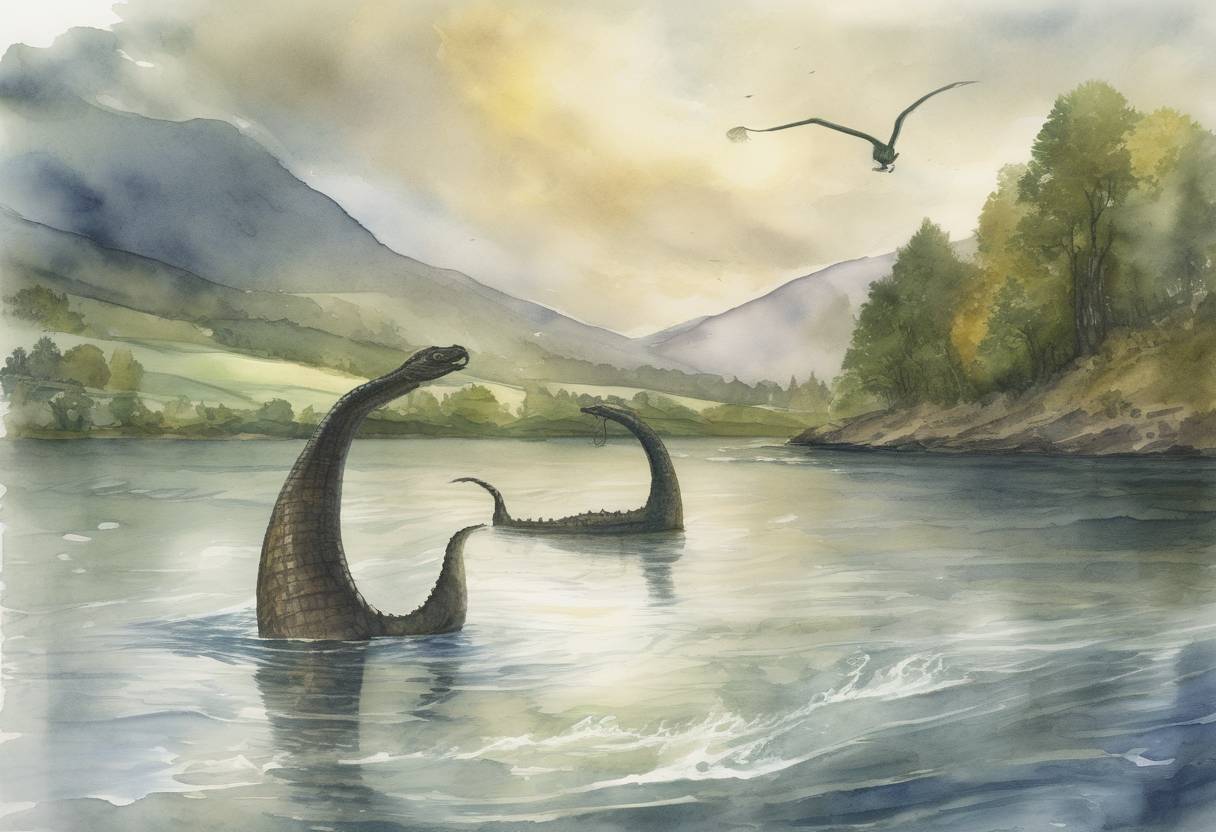
On August 22, 565, a significant event in the lore of the Loch Ness Monster was recorded, involving Saint Columba, an Irish missionary credited with spreading Christianity in Scotland. This account is one of the earliest known references to a mysterious creature in the waters of the River Ness, which feeds into Loch Ness.
Saint Columba, born in 521 in what is now County Donegal, Ireland, was a prominent figure in early medieval Christianity. He founded the abbey on the island of Iona, which became a center of religious learning and missionary activity. His life and deeds were chronicled by Adomnán, the ninth abbot of Iona, in a hagiography titled “Vita Columbae” (The Life of Columba), written about a century after Columba’s death.
According to Adomnán’s account, Saint Columba encountered the creature while traveling through the Scottish Highlands. The story describes how Columba came across a group of Picts burying a man who had been attacked by a “water beast” while swimming in the River Ness. The beast had reportedly dragged the man underwater, leading to his death.
In a dramatic turn, Columba sent one of his followers to swim across the river. As the beast approached the swimmer, Columba made the sign of the cross and commanded the creature to “go no further, nor touch the man.” Miraculously, the beast halted and retreated, sparing the swimmer’s life. This event was seen as a testament to Columba’s faith and divine protection.
The account of Saint Columba’s encounter with the “water beast” is often cited as the first recorded sighting of what would later be known as the Loch Ness Monster. While the story is steeped in religious and legendary elements, it has contributed to the enduring fascination with the Loch Ness Monster, a creature that has become a cultural icon and a subject of numerous investigations and folklore.
The legend of the Loch Ness Monster has persisted through the centuries, with numerous reported sightings and investigations, particularly in the 20th century. The tale of Saint Columba’s encounter adds a historical and mythical dimension to the creature’s lore, blending religious narrative with the mystery of the natural world.
While the existence of the Loch Ness Monster remains unproven, the story of Saint Columba’s encounter continues to capture the imagination, serving as a reminder of the rich tapestry of history, myth, and belief that shapes our understanding of the past.
Source: en.wikipedia.org