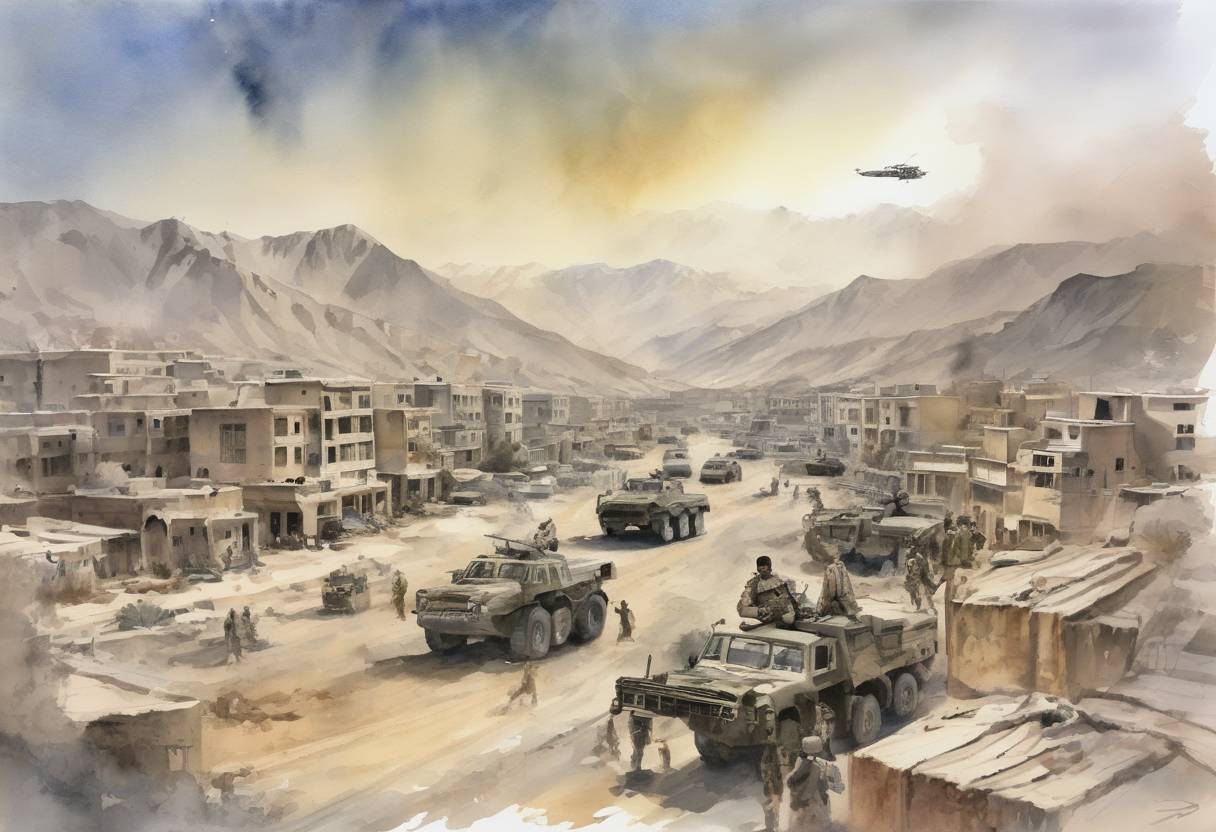
Capture of Kabul by the Northern Alliance - November 14, 2001
On November 14, 2001, the Northern Alliance, with the crucial support of U.S. airstrikes, successfully captured Kabul, the capital city of Afghanistan, from Taliban control. This event marked a significant turning point in the early stages of the War in Afghanistan, which began in response to the September 11 terrorist attacks in the United States.
Background
The Northern Alliance: A coalition of Afghan groups opposed to the Taliban, the Northern Alliance was composed of various ethnic factions, including Tajiks, Uzbeks, and Hazaras. It had been resisting Taliban rule since the mid-1990s.
U.S. Involvement: Following the 9⁄11 attacks, the U.S. launched Operation Enduring Freedom on October 7, 2001, aiming to dismantle al-Qaeda and remove the Taliban from power for harboring Osama bin Laden and his followers.
Key Events Leading to the Capture
U.S. Airstrikes: Beginning in early October 2001, the U.S. conducted extensive airstrikes targeting Taliban positions, infrastructure, and supply lines. This aerial campaign significantly weakened the Taliban’s military capabilities.
Ground Offensive: The Northern Alliance, bolstered by U.S. air support and special forces, launched a ground offensive against Taliban forces. The combination of air power and ground assaults proved effective in rapidly advancing towards Kabul.
Taliban Retreat: Facing overwhelming military pressure, the Taliban forces began retreating from Kabul. By November 13, they had largely abandoned the city, allowing the Northern Alliance to enter without significant resistance.
Capture of Kabul
On November 14, 2001, the Northern Alliance entered Kabul, effectively taking control of the city. This marked the end of Taliban rule in the capital, which they had held since 1996.
The capture of Kabul was a symbolic victory, demonstrating the rapid progress of the U.S.-backed campaign and significantly boosting the morale of anti-Taliban forces.
Aftermath and Consequences
Political Transition: Following the fall of Kabul, efforts began to establish a new Afghan government. The Bonn Agreement, signed in December 2001, led to the formation of an interim administration under Hamid Karzai.
Continued Conflict: Despite the loss of Kabul, the Taliban regrouped in rural areas and continued to wage an insurgency against the new Afghan government and coalition forces, leading to a prolonged conflict.
International Involvement: The capture of Kabul solidified international support for rebuilding Afghanistan, with numerous countries contributing to reconstruction and stabilization efforts.
Broader Historical Significance
The capture of Kabul was a pivotal moment in the War in Afghanistan, illustrating the effectiveness of combined air and ground operations. It set the stage for the establishment of a new Afghan government but also highlighted the challenges of achieving lasting peace and stability in the region. The event underscored the complexities of international military interventions and their long-term implications for both Afghanistan and global geopolitics.