1854 · , Atlantic Ocean
The first great ocean liner, SS Arctic, sank on this day after a collision with the French ship Vesta, resulting in significant loss of life.
November 29, 1781
The crew of the British slave ship Zong murdered 133 Africans by dumping them into the sea to claim insurance.
, Atlantic Ocean | Zong slave ship
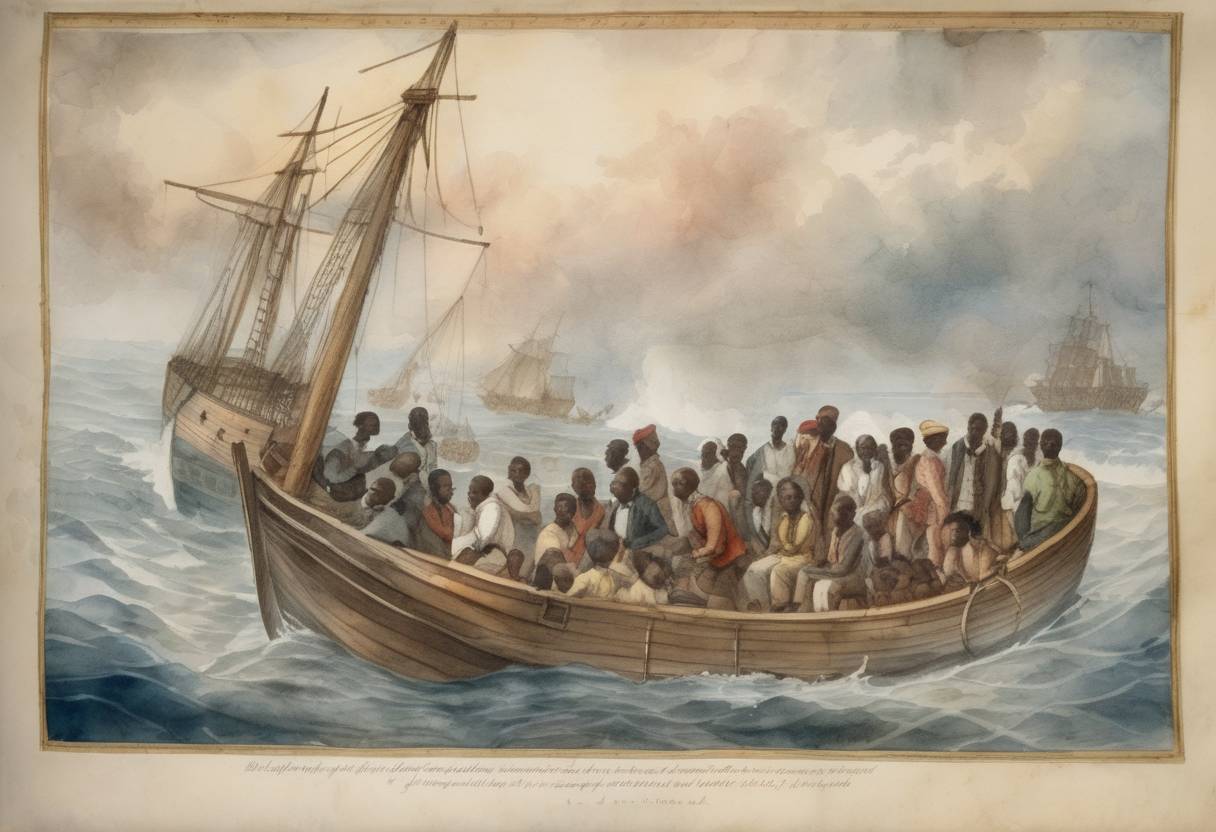
On November 29, 1781, a tragic and brutal event unfolded aboard the British slave ship Zong, which has since become a significant moment in the history of the transatlantic slave trade and the abolitionist movement. The Zong massacre involved the deliberate killing of 133 enslaved Africans, who were thrown overboard into the sea by the ship’s crew.
The Zong was a slave ship owned by a Liverpool syndicate, and it set sail from the coast of Africa in late August 1781, bound for Jamaica. The ship was overcrowded, carrying more enslaved Africans than it could safely accommodate, which was a common practice aimed at maximizing profits from the slave trade.
During the voyage, the ship encountered navigational errors and became lost, leading to a prolonged journey. As a result, water supplies dwindled, and disease spread among the enslaved Africans and crew. On November 29, 1781, Captain Luke Collingwood ordered that 54 Africans be thrown overboard to conserve water and to ensure the survival of the remaining crew and captives. Over the following days, an additional 79 Africans were cast into the sea, bringing the total number of murdered individuals to 133.
The rationale behind this horrific act was financial. The ship’s owners sought to claim insurance money for the loss of the enslaved Africans, arguing that the killings were necessary to save the rest of the “cargo” and crew. Under the maritime insurance laws of the time, the loss of enslaved people due to “perils of the sea” could be claimed, whereas deaths due to natural causes could not.
The case went to trial in March 1783, not as a murder trial, but as an insurance dispute. The owners of the Zong sought compensation from their insurers for the loss of the enslaved Africans. The court initially ruled in favor of the ship’s owners, but the case was appealed. During the appeal, the Solicitor General, John Lee, infamously argued that the case was akin to a loss of horses or other goods, highlighting the dehumanization inherent in the slave trade.
The Zong massacre became a rallying point for abolitionists in Britain. Granville Sharp, a prominent abolitionist, attempted to bring murder charges against the crew, but was unsuccessful. However, the case drew public attention and outrage, contributing to the growing abolitionist movement in Britain.
The incident underscored the brutal realities of the slave trade and the inhumanity with which enslaved Africans were treated. It played a crucial role in galvanizing public opinion against the slave trade, eventually leading to the passage of the Abolition of the Slave Trade Act in 1807.
The Zong massacre remains a poignant reminder of the atrocities committed during the transatlantic slave trade. It highlights the intersection of economic interests and human rights abuses, and its legacy continues to inform discussions on slavery, human rights, and justice today.
Source: en.wikipedia.org