The Burning of Washington: August 24, 1814
1814 · Washington, D.C., United States
During the War of 1812, British forces capture Washington, D.C., and set fire to many public buildings, including the White House and the Capitol.
July 25, 1814
The Battle of Lundy's Lane, one of the bloodiest battles of the War of 1812, was fought in present-day Niagara Falls, Ontario, resulting in a stalemate between American and British forces.
Niagara Falls, Canada | British Army
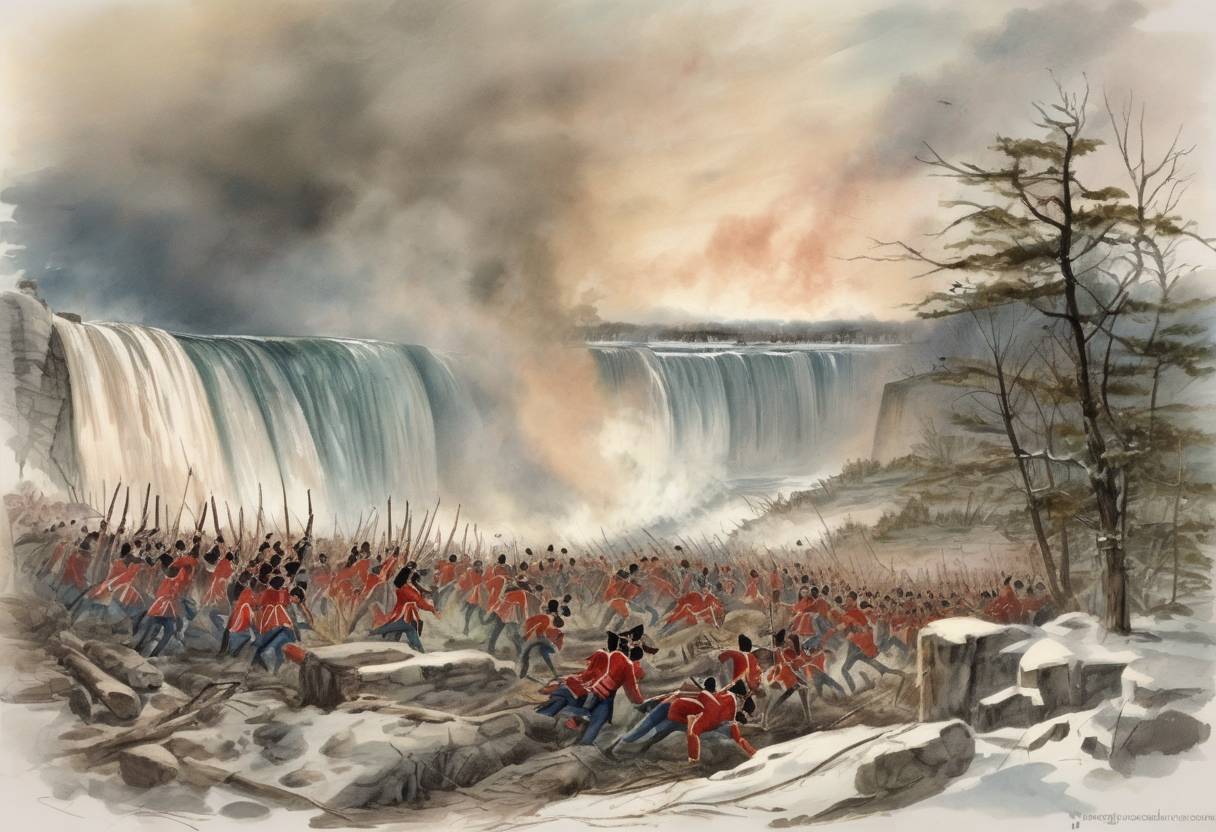
The Battle of Lundy’s Lane, fought on July 25, 1814, stands as one of the bloodiest and most hard-fought engagements of the War of 1812. This battle took place near present-day Niagara Falls, Ontario, and resulted in a tactical stalemate between American and British forces. Despite the lack of a decisive victor, the battle had significant strategic implications for the remainder of the war.
The War of 1812, primarily between the United States and the British Empire, was driven by issues such as trade restrictions, impressment of American sailors, and territorial expansion. By 1814, the conflict had reached a critical phase, with both sides seeking to gain an upper hand in the Great Lakes region.
The Battle of Lundy’s Lane highlighted the challenges of warfare in the densely wooded and rugged terrain of the Niagara region. It underscored the determination and resilience of both American and British forces, despite the war’s overall inconclusive nature. The battle also contributed to the eventual peace negotiations that led to the Treaty of Ghent, signed in December 1814, which ended the War of 1812.
In summary, the Battle of Lundy’s Lane remains a significant event in the history of the War of 1812, illustrating the fierce contest for control in North America and the enduring impact of the conflict on U.S.-Canadian relations.
Source: en.wikipedia.org