Consecration of Pope John IV on December 24, 640
640 · Rome, Byzantine Empire
Pope John IV was consecrated as the Bishop of Rome, succeeding Pope Severinus.
January 2, 0533
Mercurius becomes Pope John II, the first pope to adopt a new name upon elevation to the papacy.
Rome, Roman Empire | Catholic Church
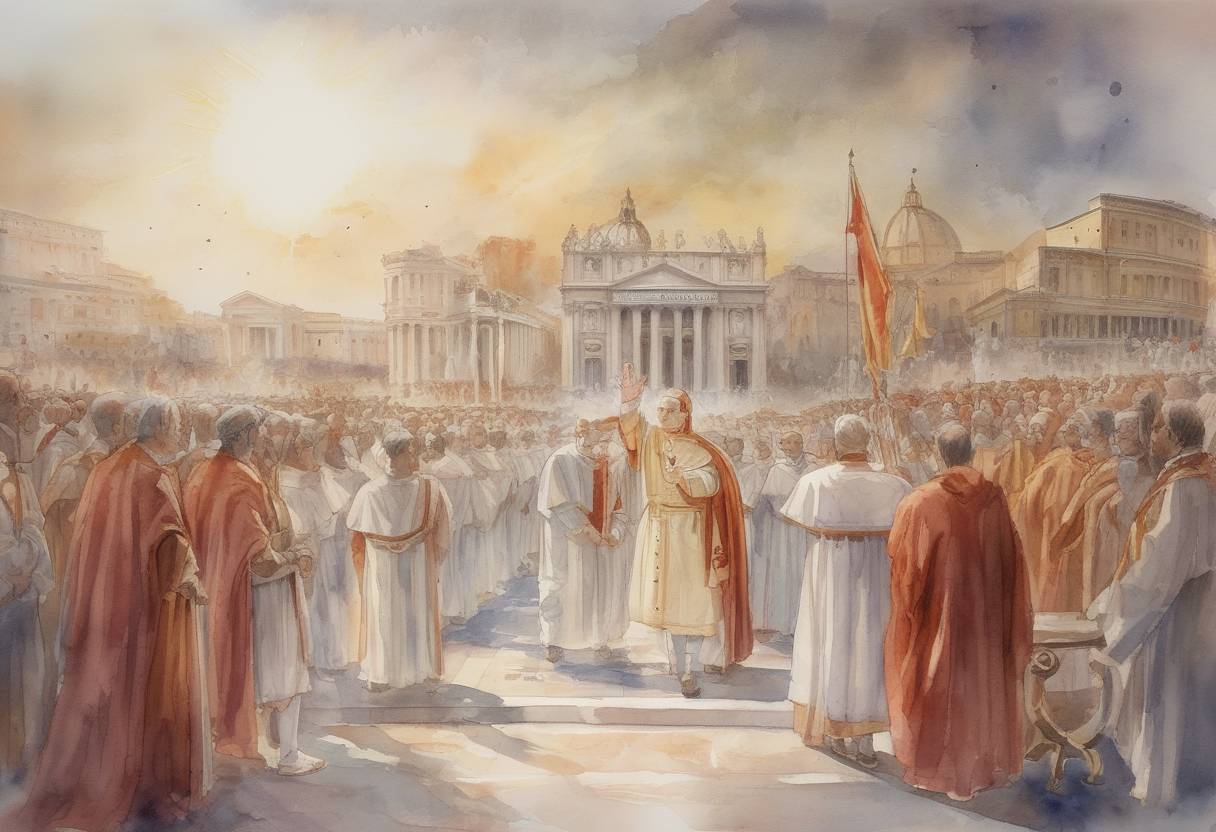
On January 2, 533, Mercurius, a Roman priest, was elevated to the papacy and became Pope John II. This event marked a significant moment in the history of the papacy, as he was the first pope to adopt a new name upon his elevation. This decision set a precedent that has been followed by many of his successors.
Mercurius’ Background: Mercurius was born in Rome, and before his papacy, he served as a priest at the Basilica of St. Clement. His birth name, Mercurius, was derived from the Roman god Mercury, which was considered inappropriate for a pope due to its pagan connotations.
The Papal Name Change: Upon his election, Mercurius chose to adopt the name John II. This decision was likely influenced by the desire to distance the papacy from pagan associations and to align more closely with Christian traditions. The name “John” was chosen in honor of a previous pope, John I, who was martyred in 526.
Theological and Political Climate: The early 6th century was a period of theological disputes and political instability within the Church and the broader Roman Empire. The papacy was a central figure in these conflicts, often mediating between various factions.
Election of John II: The election of Mercurius as pope came after the death of Pope Boniface II. The process was marked by factionalism within the Roman clergy, reflecting the broader tensions of the time.
Precedent Setting: By adopting a new name, John II established a tradition that allowed future popes to choose a name that reflected their spiritual aspirations or honored previous saints and leaders. This practice has become a defining feature of the papal office.
Symbolic Break from Paganism: The name change symbolized a break from pagan traditions and reinforced the Christian identity of the papacy. It underscored the Church’s efforts to distance itself from its pagan past and align more closely with Christian values.
John II’s Papacy: During his papacy, John II dealt with various theological disputes, including the controversy over the teachings of Nestorianism and Monophysitism. He worked to maintain the orthodoxy of the Church and strengthen its influence.
Long-term Impact: The tradition of adopting a new papal name has continued to the present day, with each pope selecting a name that often reflects their vision for their papacy or pays homage to a particular saint or previous pope.
In summary, the elevation of Mercurius to Pope John II on January 2, 533, was a pivotal moment in papal history. It not only marked the beginning of a new tradition but also reflected the broader cultural and religious shifts occurring within the Church and the Roman Empire at the time.
Source: en.wikipedia.org