Establishment of the "Hotline" - June 20, 1963
1963 · Washington D.C., United States
The United States and the Soviet Union agree to establish a direct communications link, known as the "Hotline," to reduce the risk of accidental nuclear war.
February 12, 1924
Calvin Coolidge becomes the first President of the United States to deliver a radio broadcast from the White House.
Washington D.C., United States | U.S. Government
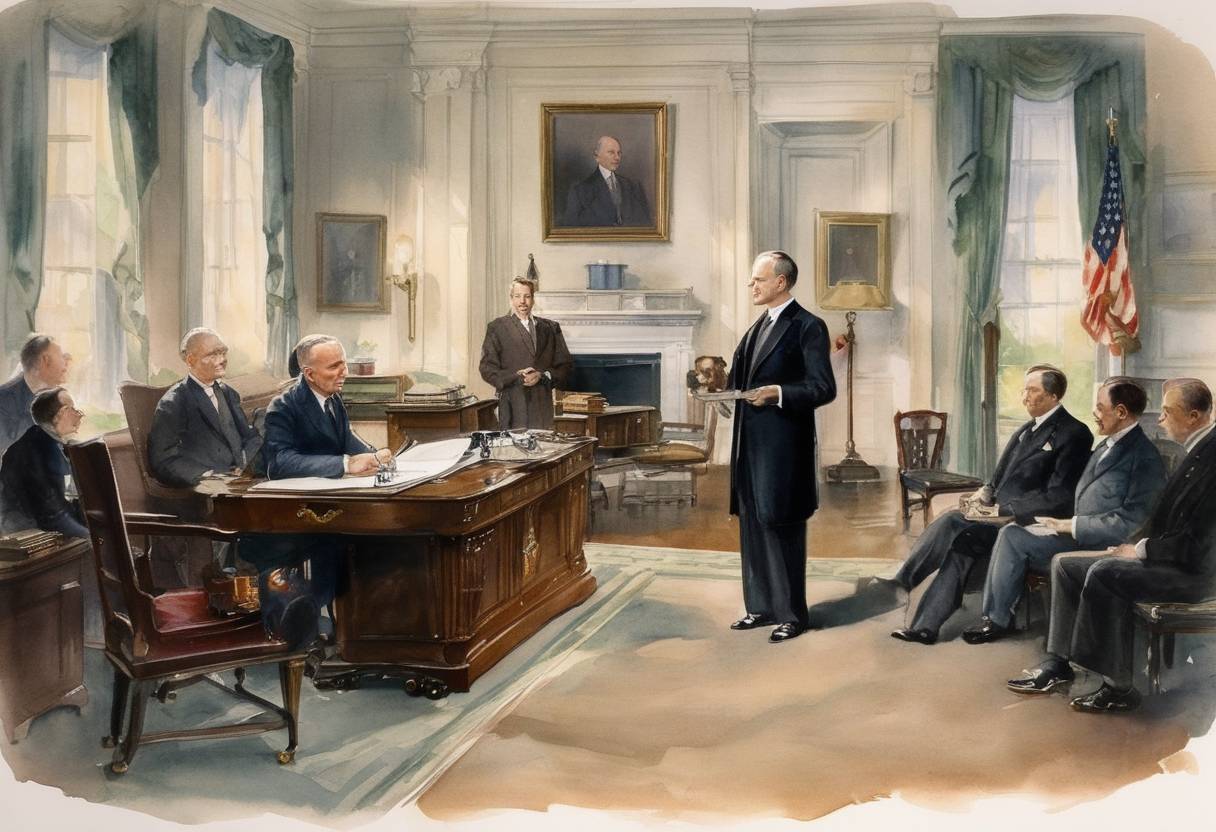
On February 12, 1924, Calvin Coolidge made history by becoming the first President of the United States to deliver a radio broadcast from the White House. This event marked a significant moment in the evolution of presidential communication and the broader landscape of media technology.
Calvin Coolidge: Serving as the 30th President of the United States from 1923 to 1929, Coolidge was known for his quiet demeanor and conservative policies. He assumed the presidency following the sudden death of President Warren G. Harding in 1923.
The Rise of Radio: By the early 1920s, radio was emerging as a powerful medium for mass communication. It allowed for real-time dissemination of information and entertainment to a wide audience, revolutionizing how people received news and engaged with public figures.
Date and Occasion: The broadcast took place on February 12, 1924, coinciding with Abraham Lincoln’s birthday. This choice of date underscored the significance of the event, linking it to the legacy of one of America’s most revered presidents.
Content: In his address, Coolidge spoke about the importance of Lincoln’s contributions to American society and the enduring values of democracy and unity. The speech was designed to resonate with the public, highlighting themes of national pride and historical reflection.
Technical Aspects: The broadcast was facilitated by the Radio Corporation of America (RCA), which had been instrumental in advancing radio technology. The transmission reached an estimated audience of millions, demonstrating the vast potential of radio as a tool for presidential outreach.
Presidential Communication: Coolidge’s radio address set a precedent for future presidents, who increasingly utilized radio to communicate directly with the American people. This shift allowed for a more personal and immediate connection between the presidency and the public.
Media and Politics: The event underscored the growing influence of media technology in politics. It paved the way for subsequent innovations, such as Franklin D. Roosevelt’s “Fireside Chats,” which further solidified radio’s role in political communication.
Cultural Shift: The broadcast reflected broader societal changes, as Americans began to rely more on electronic media for news and information. This transformation would continue to shape the cultural and political landscape throughout the 20th century.
In summary, Calvin Coolidge’s radio broadcast from the White House on February 12, 1924, was a landmark event that highlighted the intersection of technology and politics. It demonstrated the potential of radio to transform presidential communication and set the stage for future developments in media and governance.
Source: en.wikipedia.org