NASA's Mars Odyssey Begins Mapping the Surface of Mars
2002 · Pasadena, United States
NASA's Mars Odyssey begins mapping the surface of Mars.
July 4, 2005
NASA's Deep Impact spacecraft successfully collided with the comet Tempel 1, providing valuable data about the composition of comets.
Pasadena, United States | NASA
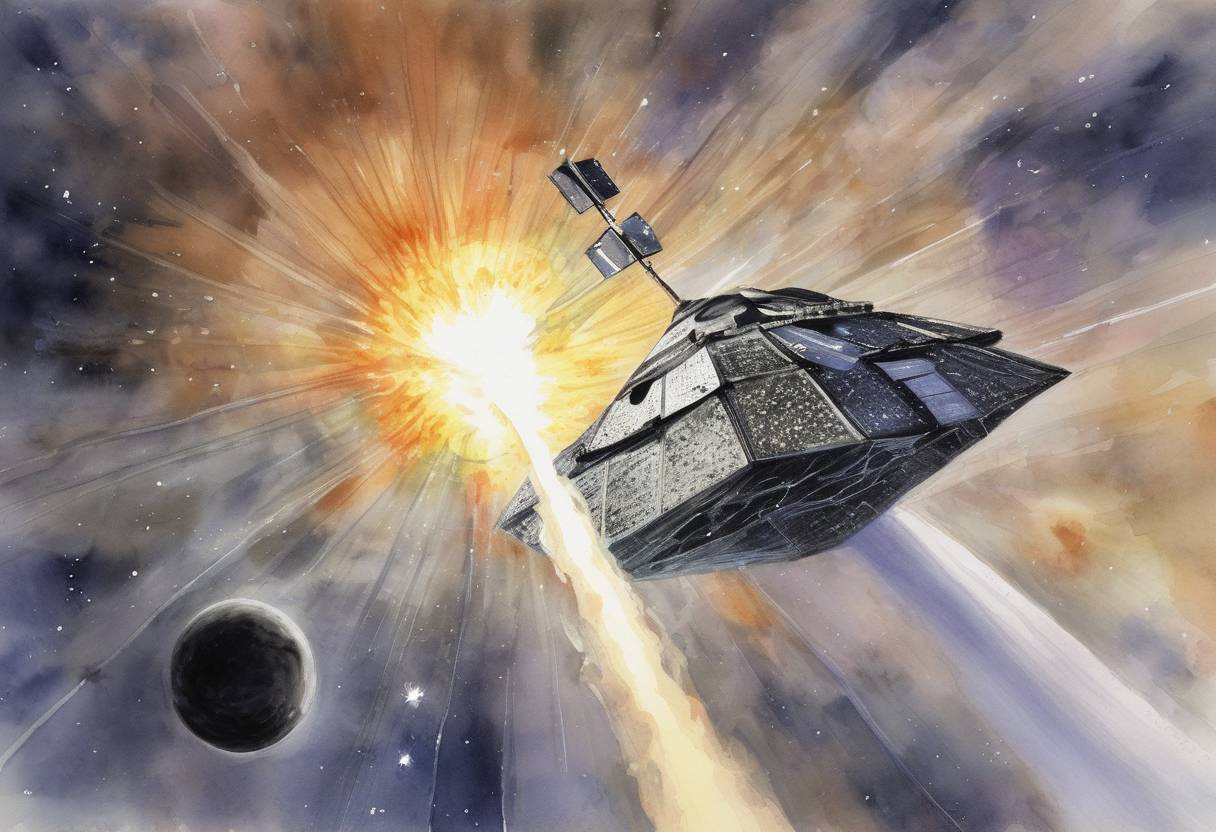
On July 4, 2005, NASA’s Deep Impact spacecraft successfully executed a planned collision with the comet Tempel 1, marking a significant milestone in space exploration and cometary science. This mission provided unprecedented insights into the composition and structure of comets, which are considered to be the primordial building blocks of the solar system.
The Deep Impact mission was launched on January 12, 2005, with the primary objective of studying the interior composition of a comet by deploying an impactor to collide with it. Comet Tempel 1, a periodic comet discovered by Wilhelm Tempel in 1867, was selected as the target due to its accessibility and well-documented orbit.
Spacecraft Composition: The Deep Impact spacecraft consisted of two main components: a flyby spacecraft and an impactor. The flyby spacecraft was equipped with high-resolution cameras and spectrometers to observe the impact and analyze the resulting ejecta.
Impact Event: On July 3, 2005, the impactor was released from the flyby spacecraft, and it traveled independently towards Tempel 1. On July 4, at approximately 05:52 UTC, the impactor collided with the comet at a speed of about 10.3 kilometers per second (23,000 miles per hour).
Ejecta Analysis: The collision created a crater and ejected a plume of material from the comet’s surface. The flyby spacecraft captured images and spectra of the ejecta, allowing scientists to analyze the composition of the comet’s interior.
Comet Composition: The data revealed that Tempel 1’s nucleus contained a mixture of ice, dust, and organic materials. The presence of these materials provided clues about the early solar system’s conditions and the role comets may have played in delivering water and organic compounds to Earth.
Surface and Structure: Observations indicated that the comet’s surface was more porous and less dense than previously thought, suggesting a loosely packed structure.
The Deep Impact mission was a landmark achievement in planetary science, enhancing our understanding of cometary composition and behavior. It demonstrated the feasibility of using impactor technology to study celestial bodies and paved the way for future missions, such as the European Space Agency’s Rosetta mission, which further explored cometary science.
The success of Deep Impact underscored the importance of comets in understanding the history and evolution of the solar system, providing valuable data that continues to inform scientific research today.
Source: www.nasa.gov