Xuanzang's Translation: The Earliest Reliably Dated Chinese Buddhist Written Document
657 · Chang'an, China
The earliest reliably dated Chinese Buddhist written document is composed during the Tang dynasty, a translation by monk Xuanzang.
June 18, 0618
Li Yuan, later known as Emperor Gaozu of Tang, declared himself emperor and established the Tang Dynasty in China, marking the beginning of one of China's most prosperous and culturally significant dynasties.
Chang'an, China | Tang Dynasty
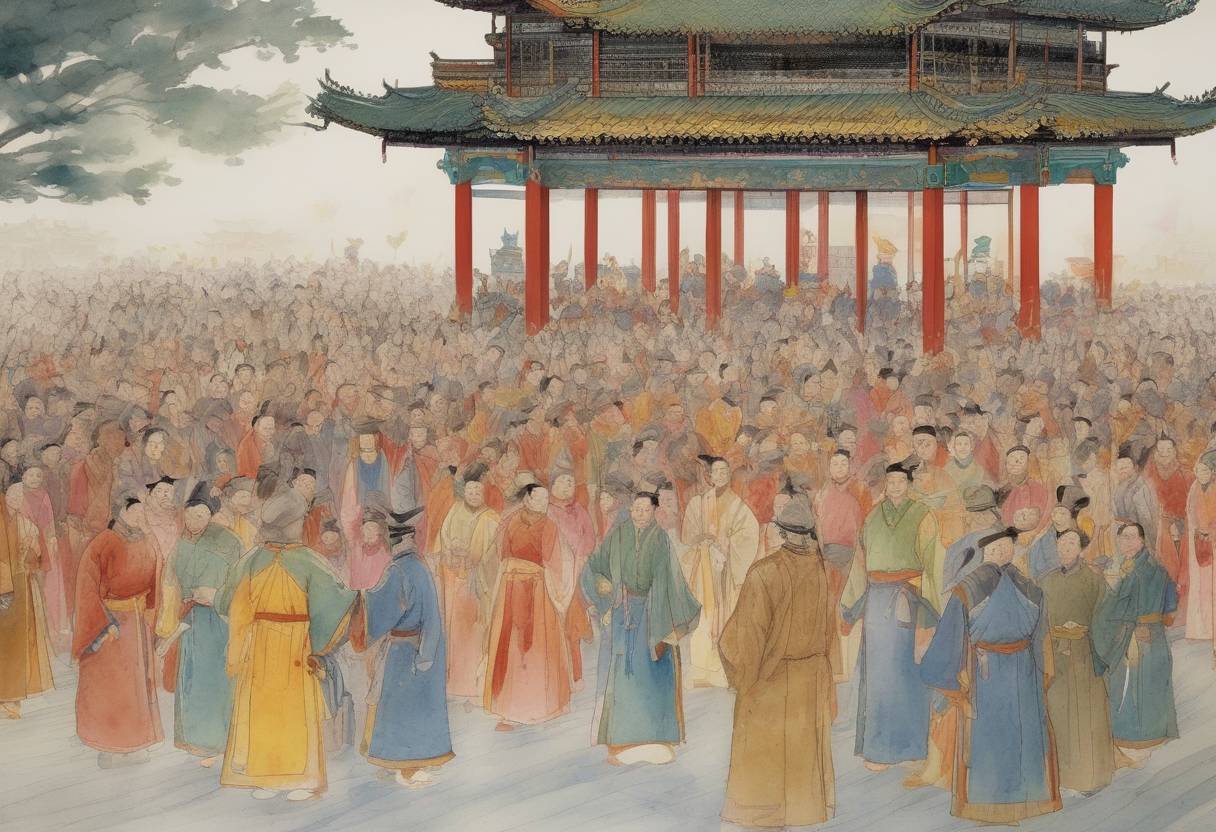
On June 18, 618, Li Yuan, a prominent military leader and nobleman, declared himself Emperor Gaozu of Tang, marking the foundation of the Tang Dynasty in China. This event heralded the beginning of one of China’s most prosperous and culturally significant dynasties, which would last until 907 AD.
The Tang Dynasty’s establishment came at the end of the Sui Dynasty, which had been plagued by internal strife, heavy taxation, and failed military campaigns, particularly against Korea. The Sui Dynasty’s decline created a power vacuum and widespread unrest, setting the stage for Li Yuan’s rise.
Li Yuan, born in 566 AD, was a member of the prestigious Li family and held the title of Duke of Tang. He served as a governor and general under the Sui Dynasty, gaining significant military and administrative experience. As the Sui Dynasty faltered, Li Yuan saw an opportunity to seize power.
Rebellion Against the Sui: In 617, Li Yuan, leveraging his military acumen and political alliances, initiated a rebellion against the Sui Dynasty. He capitalized on the widespread dissatisfaction with Emperor Yang of Sui’s rule.
Capture of Chang’an: Li Yuan’s forces captured the Sui capital, Chang’an (modern-day Xi’an), a strategic and symbolic victory that bolstered his claim to the throne.
Proclamation as Emperor: On June 18, 618, following the assassination of Emperor Yang of Sui, Li Yuan declared himself Emperor Gaozu of the Tang Dynasty. This proclamation marked the official end of the Sui Dynasty and the beginning of Tang rule.
The Tang Dynasty is renowned for its cultural, economic, and political achievements:
Cultural Flourishing: The Tang era is often considered a golden age of Chinese culture, with significant advancements in poetry, painting, and ceramics. The dynasty produced famous poets like Li Bai and Du Fu.
Economic Prosperity: The Tang Dynasty expanded trade routes, including the Silk Road, facilitating cultural and economic exchanges with regions as far as the Middle East and Europe.
Political Stability and Expansion: Under the Tang, China expanded its borders and influence, establishing a centralized bureaucracy that served as a model for future dynasties.
Religious and Philosophical Diversity: The Tang period saw the flourishing of Buddhism, alongside Confucianism and Daoism, contributing to a rich tapestry of religious and philosophical thought.
Emperor Gaozu’s reign laid the foundation for the Tang Dynasty’s future successes. His son, Emperor Taizong, would further consolidate and expand the empire, solidifying the Tang Dynasty’s place as a pivotal era in Chinese history. The Tang Dynasty’s influence extended beyond its borders, impacting neighboring regions and leaving a lasting legacy on Chinese civilization.
The establishment of the Tang Dynasty on June 18, 618, remains a significant milestone in Chinese history, symbolizing a period of renewal and cultural renaissance that would shape the nation’s identity for centuries to come.
Source: en.wikipedia.org