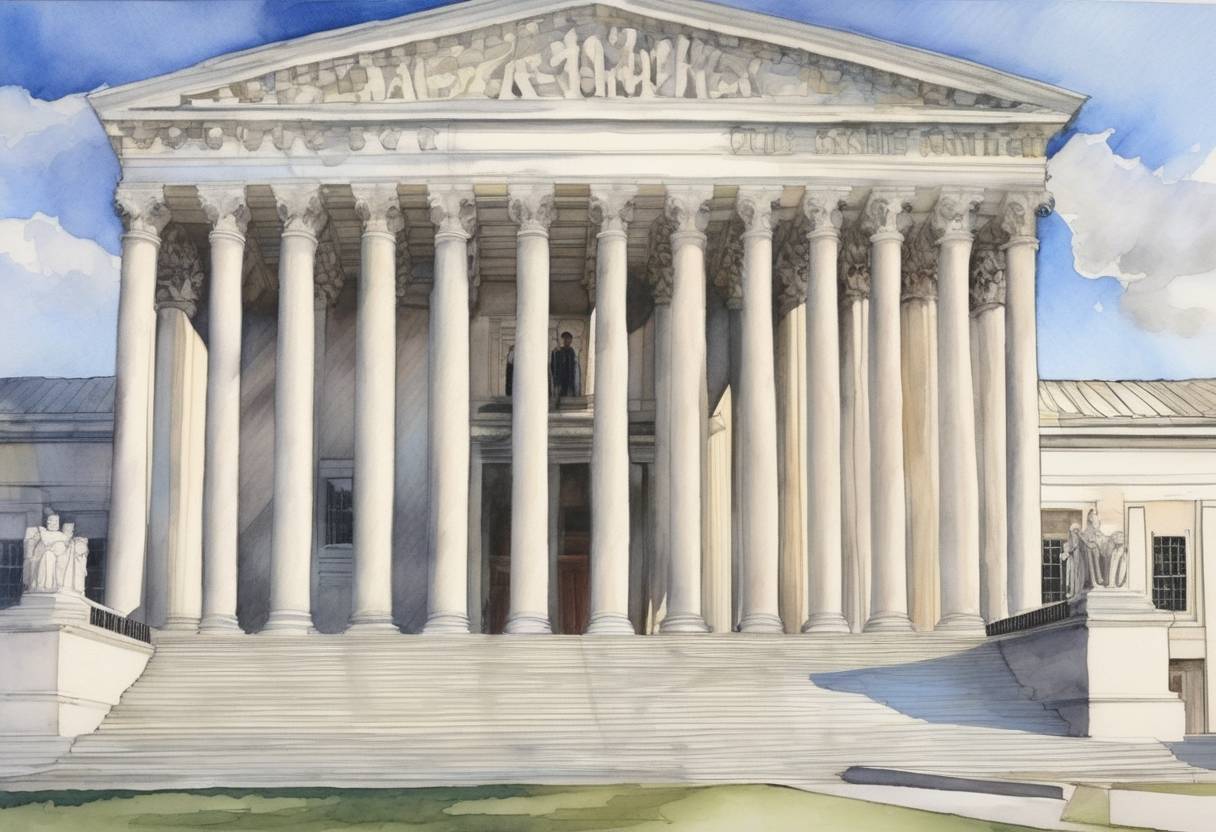
McCreary County v. American Civil Liberties Union of Kentucky
On June 28, 2005, the United States Supreme Court delivered a significant ruling in the case of McCreary County v. American Civil Liberties Union of Kentucky. This decision addressed the constitutionality of displaying the Ten Commandments in public schools and courthouses, focusing on the Establishment Clause of the First Amendment.
Background
The case originated from two Kentucky counties, McCreary and Pulaski, which had displayed framed copies of the Ten Commandments in their courthouses and public schools. These displays were challenged by the American Civil Liberties Union (ACLU) of Kentucky, arguing that they violated the Establishment Clause, which prohibits the government from making any law “respecting an establishment of religion.”
Legal Context
The Establishment Clause is part of the First Amendment to the United States Constitution and has been interpreted to mean that government actions must have a secular purpose and not promote or endorse a particular religion. The Supreme Court has used various tests, such as the Lemon Test from Lemon v. Kurtzman (1971), to evaluate potential violations of this clause.
The Supreme Court’s Decision
In a 5-4 decision, the Supreme Court ruled that the displays in question did indeed violate the Establishment Clause. Justice David Souter delivered the opinion of the Court, emphasizing that the displays lacked a secular purpose and were intended to advance religion, thus failing the Lemon Test.
Key Points of the Ruling
Secular Purpose Requirement: The Court found that the counties’ actions did not have a genuine secular purpose. The initial displays were purely religious, and subsequent modifications did not sufficiently secularize the context.
Historical Context: The Court noted that the historical context and the sequence of events leading to the displays were crucial in determining the intent behind them. The counties’ actions were seen as an endorsement of religion.
Precedent and Implications: This ruling reinforced the principle that government displays must not promote religious doctrine, maintaining a separation between church and state.
Aftermath and Significance
The decision in McCreary County v. ACLU of Kentucky reaffirmed the importance of the Establishment Clause in maintaining religious neutrality in government spaces. It highlighted the Court’s role in scrutinizing government actions that might blur the line between church and state. This case, along with others like Van Orden v. Perry, decided on the same day, continues to influence debates and legal interpretations regarding religious displays on public property.
The ruling underscored the delicate balance the Court must maintain in interpreting the First Amendment, ensuring that government actions do not favor one religion over another or religion over non-religion.