Nepotianus Proclaims Himself Roman Emperor - June 3, 350
350 · Rome, Roman Empire
Nepotianus, a member of the Constantinian dynasty, proclaims himself Roman Emperor, entering Rome with a group of gladiators.
September 9, 0337
Constantine II, Constantius II, and Constans I succeed their father Constantine the Great as co-emperors of the Roman Empire, marking the beginning of the division of the empire among his sons.
Rome, Roman Empire | Roman Empire
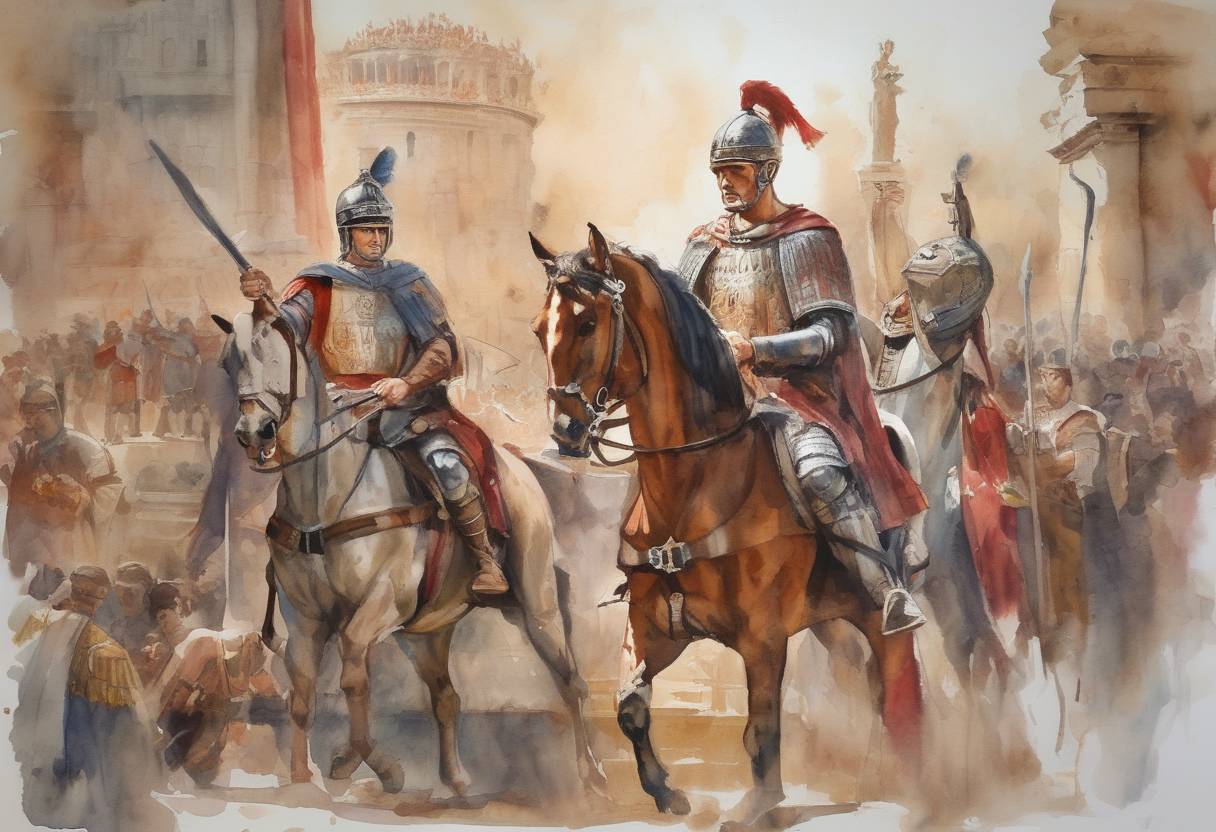
On September 9, 337, the Roman Empire witnessed a significant transition in leadership following the death of Constantine the Great. His three sons—Constantine II, Constantius II, and Constans I—ascended to power as co-emperors, marking a pivotal moment in the history of the Roman Empire. This event not only signified the continuation of the Constantinian dynasty but also laid the groundwork for the eventual division of the empire.
Constantine the Great, who reigned from 306 to 337, was a transformative figure in Roman history. He is best known for being the first Roman emperor to convert to Christianity and for founding the city of Constantinople (modern-day Istanbul), which became a new capital for the empire. His reign brought significant religious, military, and administrative reforms.
Upon his death on May 22, 337, the empire was left to his three sons, who were appointed as Caesars during his lifetime. The division of power among them was a strategic move to maintain control over the vast territories of the Roman Empire.
The division of the empire among Constantine’s sons was formalized on September 9, 337. Each son was given control over different regions:
Constantine II: He was given control over the western provinces, including Gaul, Hispania, and Britannia. As the eldest son, he held a position of seniority among his brothers.
Constantius II: He took charge of the eastern provinces, including the wealthy and strategically crucial regions of the Eastern Roman Empire. His territories included Asia Minor, Syria, and Egypt.
Constans I: Initially, he was given control over Italy, Africa, and the Illyrian provinces. However, tensions soon arose between him and Constantine II over territorial disputes.
The division of the empire among Constantine’s sons was not without conflict. The arrangement led to a series of power struggles and civil wars:
In 340, Constantine II attempted to invade Italy, which was under Constans’ control. This conflict resulted in Constantine II’s death, leaving Constans to rule the western provinces.
Constans’ reign was marked by internal strife and dissatisfaction, leading to his assassination in 350 by the usurper Magnentius.
Constantius II eventually emerged as the sole ruler of the Roman Empire after defeating Magnentius in 353. His reign was characterized by efforts to consolidate power and address religious controversies, particularly the Arian controversy within Christianity.
The succession of Constantine the Great’s sons and the subsequent division of the empire had lasting implications:
It highlighted the challenges of maintaining a unified Roman Empire across vast territories with diverse populations and interests.
The division set a precedent for future partitions of the empire, contributing to the eventual establishment of the Eastern and Western Roman Empires.
The reigns of Constantine’s sons, particularly Constantius II, played a crucial role in shaping the religious landscape of the empire, as they navigated the complex dynamics of early Christianity.
In summary, the succession of Constantine the Great’s sons as co-emperors marked a significant moment in Roman history, characterized by both cooperation and conflict, and set the stage for future developments in the empire’s structure and governance.
Source: en.wikipedia.org