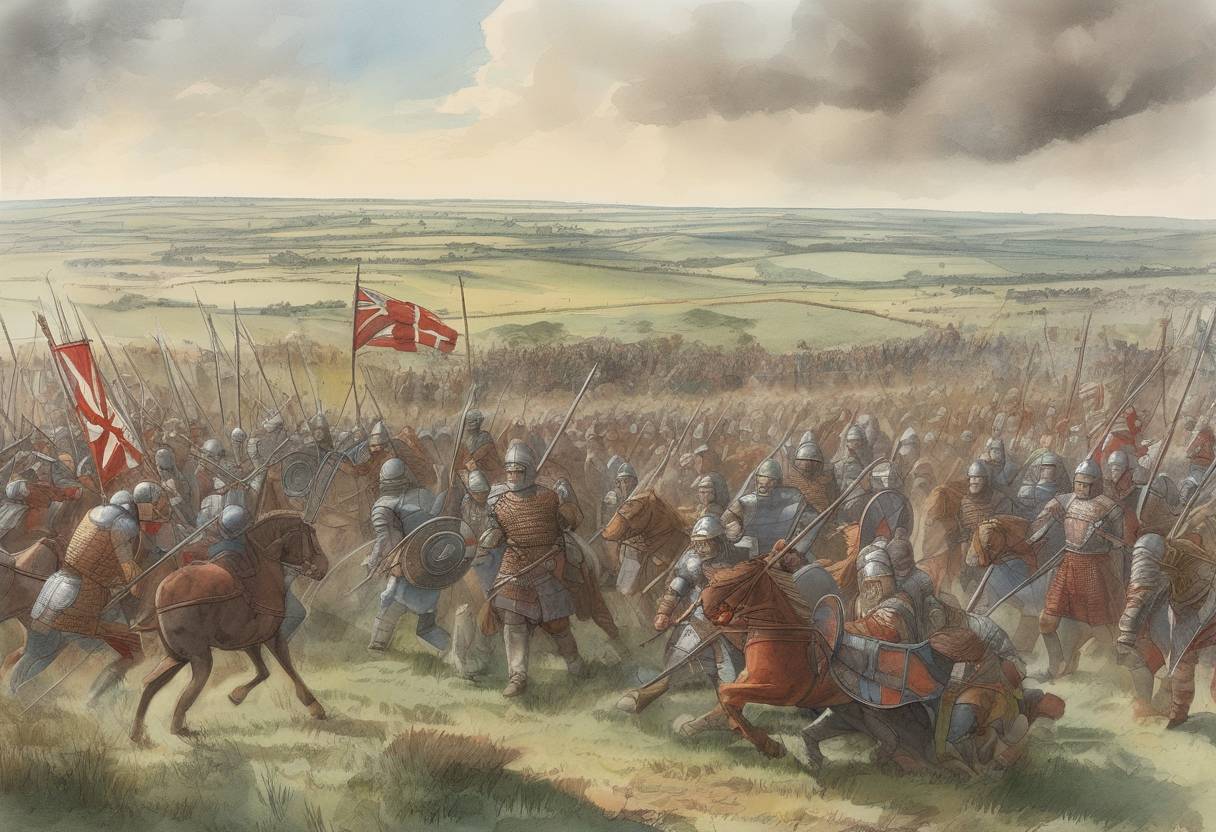
The Battle of Marton: April 23, 871
The Battle of Marton, fought on April 23, 871, was a significant engagement during the Viking invasions of England. This battle was part of a series of conflicts between the Anglo-Saxon kingdoms and the Danish Vikings, who were aggressively expanding their territories in England during the late 9th century.
Historical Context
The late 9th century was a tumultuous period for the Anglo-Saxon kingdoms, particularly Wessex, which was under constant threat from Viking incursions. The Great Heathen Army, a coalition of Norse warriors, had landed in England in 865 and had been campaigning across the country, capturing territories and establishing a foothold.
King Æthelred of Wessex and his younger brother, Alfred, who would later be known as Alfred the Great, were leading the defense against these invasions. The brothers had already faced the Vikings in several battles, including the Battle of Ashdown earlier in 871, where they achieved a notable victory.
The Battle
The Battle of Marton (also known as the Battle of Meretun) took place in what is believed to be present-day Wiltshire. The exact location of the battle remains uncertain, with some historians suggesting it occurred near modern-day Marden or Martin.
The Anglo-Saxon Chronicle, a primary source for this period, provides limited details about the battle. It records that the forces of Wessex, led by King Æthelred and Alfred, engaged the Viking army. The battle was fiercely contested, with both sides suffering heavy casualties. Ultimately, the outcome was inconclusive, with neither side achieving a decisive victory.
Aftermath and Significance
Despite the lack of a clear victor at Marton, the battle was part of a broader struggle that had significant implications for the future of England. The year 871 was marked by numerous battles between the Anglo-Saxons and the Vikings, with the latter gaining ground in several engagements.
King Æthelred died shortly after the Battle of Marton, possibly due to wounds sustained in battle or illness. His death led to Alfred ascending the throne of Wessex. As king, Alfred would go on to implement significant military and administrative reforms, ultimately leading to his reputation as one of England’s greatest monarchs.
Alfred’s leadership and strategic acumen eventually turned the tide against the Vikings, culminating in the Treaty of Wedmore in 878, which established a boundary between the Anglo-Saxon and Viking-controlled territories, known as the Danelaw.
Conclusion
The Battle of Marton was a critical moment in the ongoing conflict between the Anglo-Saxons and the Vikings. While it did not produce a decisive outcome, it was part of the series of events that shaped the future of England. The resilience and leadership demonstrated by Alfred during and after these battles laid the groundwork for the eventual unification of England and the establishment of a more centralized and fortified kingdom.