Christopher Columbus' Second Voyage: Departure on September 24, 1493
1493 · Cádiz, Spain
Christopher Columbus embarked on his second voyage to the New World, departing from Cádiz, Spain, with a fleet of 17 ships.
December 5, 1492
Christopher Columbus became the first European to set foot on the island of Hispaniola, which is now divided into Haiti and the Dominican Republic.
Hispaniola, Haiti/Dominican Republic | Spanish Crown
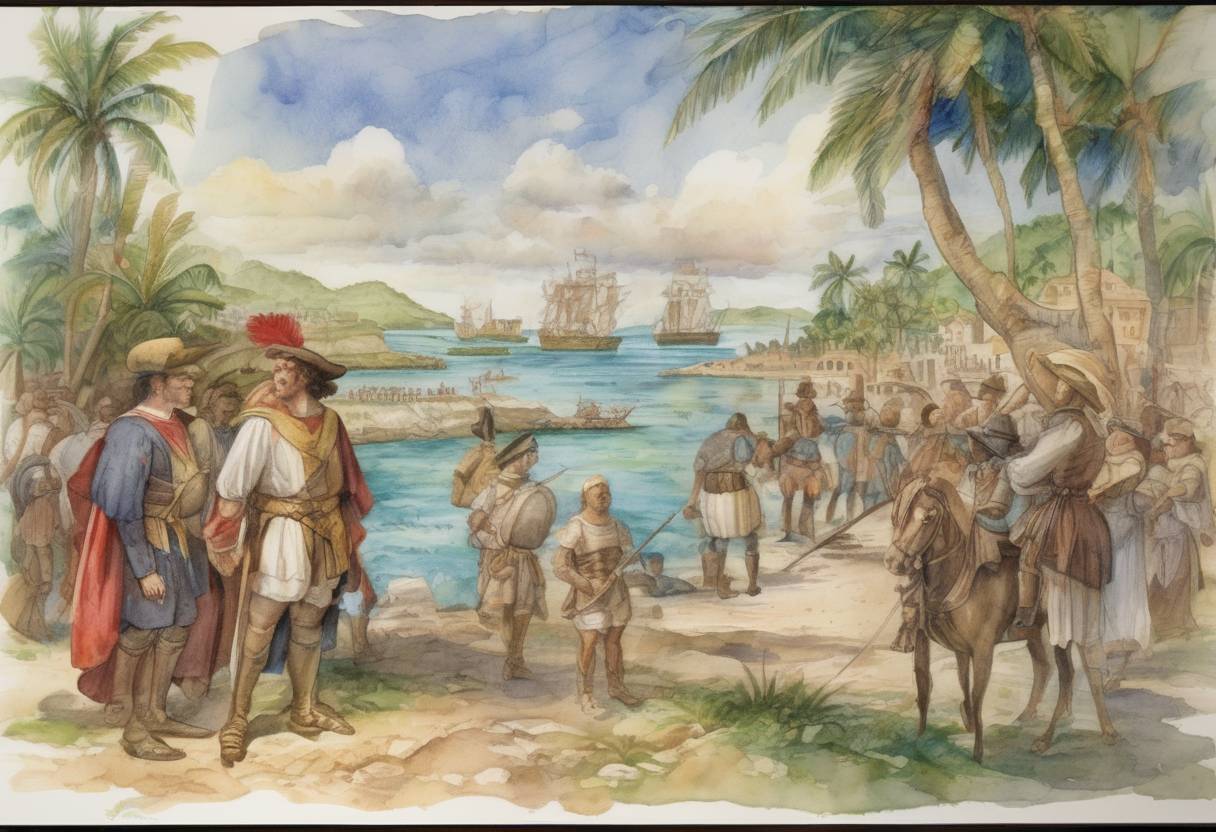
On December 5, 1492, Christopher Columbus became the first European to set foot on the island of Hispaniola, an event that marked a significant moment in the Age of Exploration. This island is now divided into the modern-day nations of Haiti and the Dominican Republic.
The Voyage: Columbus’s journey to the New World began on August 3, 1492, when he set sail from Spain with three ships: the Niña, the Pinta, and the Santa María. His goal was to find a westward route to Asia, but instead, he stumbled upon the Americas.
Previous Discoveries: Before reaching Hispaniola, Columbus had already landed in the Bahamas on October 12, 1492, which he named San Salvador. He then explored parts of Cuba, which he mistook for mainland China.
Landing: Columbus arrived at the northern coast of Hispaniola on December 5, 1492. He was struck by the island’s beauty and the hospitality of the indigenous Taíno people.
Naming the Island: Columbus named the island “La Isla Española,” which later evolved into “Hispaniola.” The name reflected the Spanish crown’s claim over the newly discovered lands.
First European Settlement: Columbus established the first European settlement in the Americas on Hispaniola, called La Navidad. However, this settlement was short-lived due to conflicts and mismanagement.
Impact on Indigenous Peoples: The arrival of Columbus and subsequent European colonization had devastating effects on the indigenous Taíno population. They suffered from diseases brought by Europeans, forced labor, and violent conflicts, leading to a dramatic decline in their numbers.
Colonial Legacy: Hispaniola became a crucial base for further Spanish exploration and conquest in the New World. It played a significant role in the Spanish Empire’s expansion throughout the Caribbean and the Americas.
Age of Exploration: Columbus’s voyages opened the door to the widespread European exploration and colonization of the Americas, fundamentally altering the course of world history.
Cultural Exchange: The encounter between Europeans and the indigenous peoples of the Americas led to a profound cultural exchange, often referred to as the Columbian Exchange, which included the transfer of plants, animals, technologies, and ideas.
Controversial Legacy: Columbus’s legacy is complex and controversial. While he is credited with opening the Americas to European exploration, his expeditions also initiated centuries of colonization and exploitation of indigenous peoples.
In summary, Columbus’s landing on Hispaniola on December 5, 1492, was a pivotal event that set the stage for the European colonization of the Americas, with lasting impacts on the indigenous populations and the course of global history.
Source: www.history.com