Magic Johnson's Jersey Retirement
1992 · Los Angeles, United States
The Los Angeles Lakers retired Magic Johnson's number 32 jersey.
November 7, 1991
Magic Johnson announced his retirement from the NBA after testing positive for HIV, raising awareness about the disease.
Los Angeles, United States | National Basketball Association
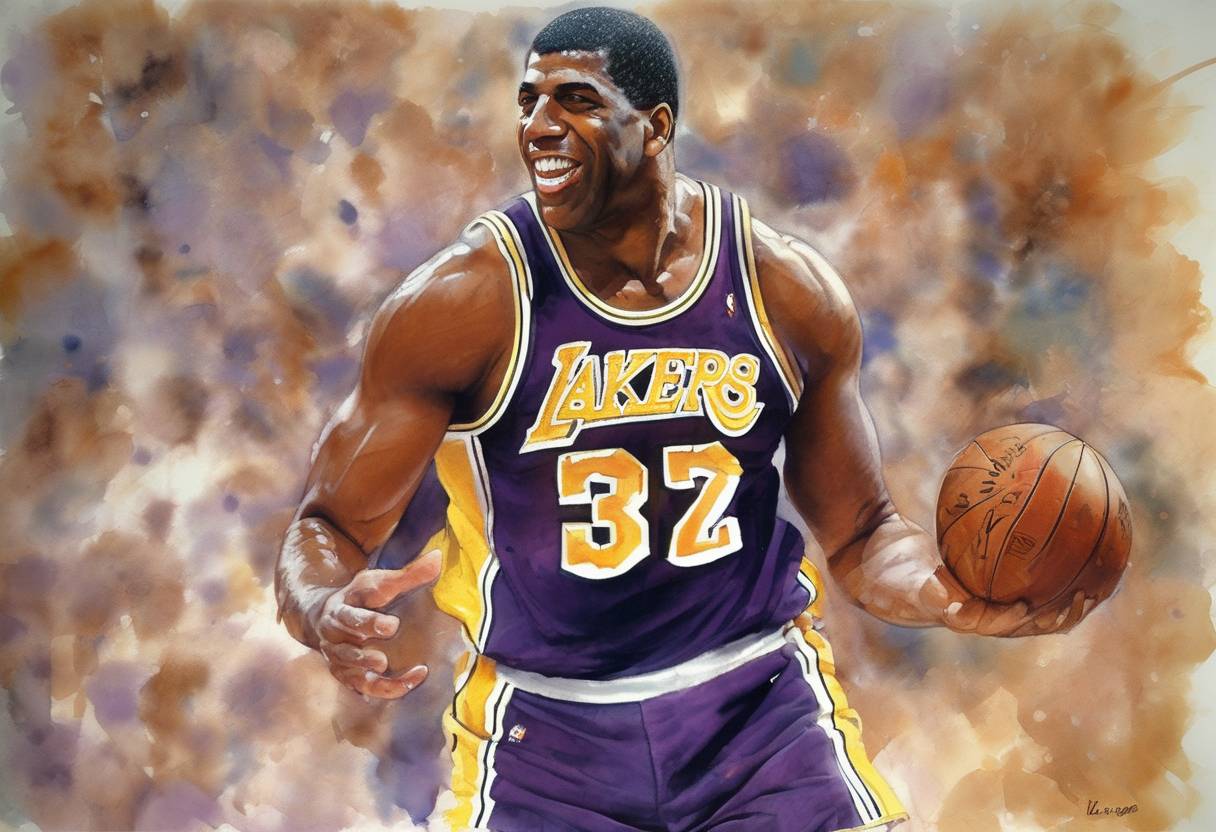
On November 7, 1991, Earvin “Magic” Johnson, one of the most celebrated players in the history of the National Basketball Association (NBA), announced his retirement from professional basketball after testing positive for the Human Immunodeficiency Virus (HIV). This moment not only marked a significant turning point in sports history but also played a crucial role in raising awareness about HIV/AIDS.
Magic Johnson, a point guard for the Los Angeles Lakers, was renowned for his exceptional skills, leadership, and charismatic presence on the court. Over his 12-year career, he led the Lakers to five NBA championships and earned three NBA Most Valuable Player (MVP) Awards. His rivalry with Larry Bird of the Boston Celtics was legendary, captivating basketball fans worldwide.
The announcement took place at a press conference in Los Angeles, where Johnson, then 32 years old, revealed his HIV-positive status. He stated his intention to retire immediately from the NBA to focus on his health and to help educate others about the disease. Johnson’s disclosure was groundbreaking, as HIV/AIDS was largely misunderstood and stigmatized at the time, often associated with the LGBTQ+ community and intravenous drug users.
Magic Johnson’s announcement had a profound impact on public perception of HIV/AIDS. As a heterosexual, high-profile athlete, his openness challenged stereotypes and misconceptions about the disease. Johnson became an advocate for HIV/AIDS awareness, using his platform to promote education, prevention, and research.
Public Awareness: Johnson’s announcement brought unprecedented attention to HIV/AIDS, encouraging conversations and increasing awareness about the disease’s transmission and prevention.
Advocacy and Education: Following his retirement, Johnson founded the Magic Johnson Foundation, which focuses on HIV/AIDS education and prevention, as well as other community-based initiatives.
Return to Basketball: Despite his retirement, Johnson made a brief return to the NBA, playing in the 1992 All-Star Game, where he was named MVP, and later attempted a comeback during the 1995-1996 season.
Magic Johnson’s announcement is considered a pivotal moment in the history of HIV/AIDS awareness. It highlighted the importance of education and compassion in combating the epidemic and demonstrated the power of celebrity influence in addressing public health issues. Johnson’s courage in sharing his diagnosis helped to reduce stigma and inspired many to advocate for better understanding and treatment of HIV/AIDS.
In summary, Magic Johnson’s retirement on November 7, 1991, was not just a significant event in sports history but also a crucial moment in the fight against HIV/AIDS, leaving a lasting legacy of awareness and advocacy.
Source: en.wikipedia.org