The Naval Battle of La Rochelle: June 22, 1372
1372 · La Rochelle, France
The naval Battle of La Rochelle took place during the Hundred Years' War, resulting in a decisive Castilian victory over the English fleet.
June 24, 1340
The Battle of Sluys takes place during the Hundred Years' War, resulting in a significant naval victory for the English fleet over the French.
Sluys, Netherlands | English Navy
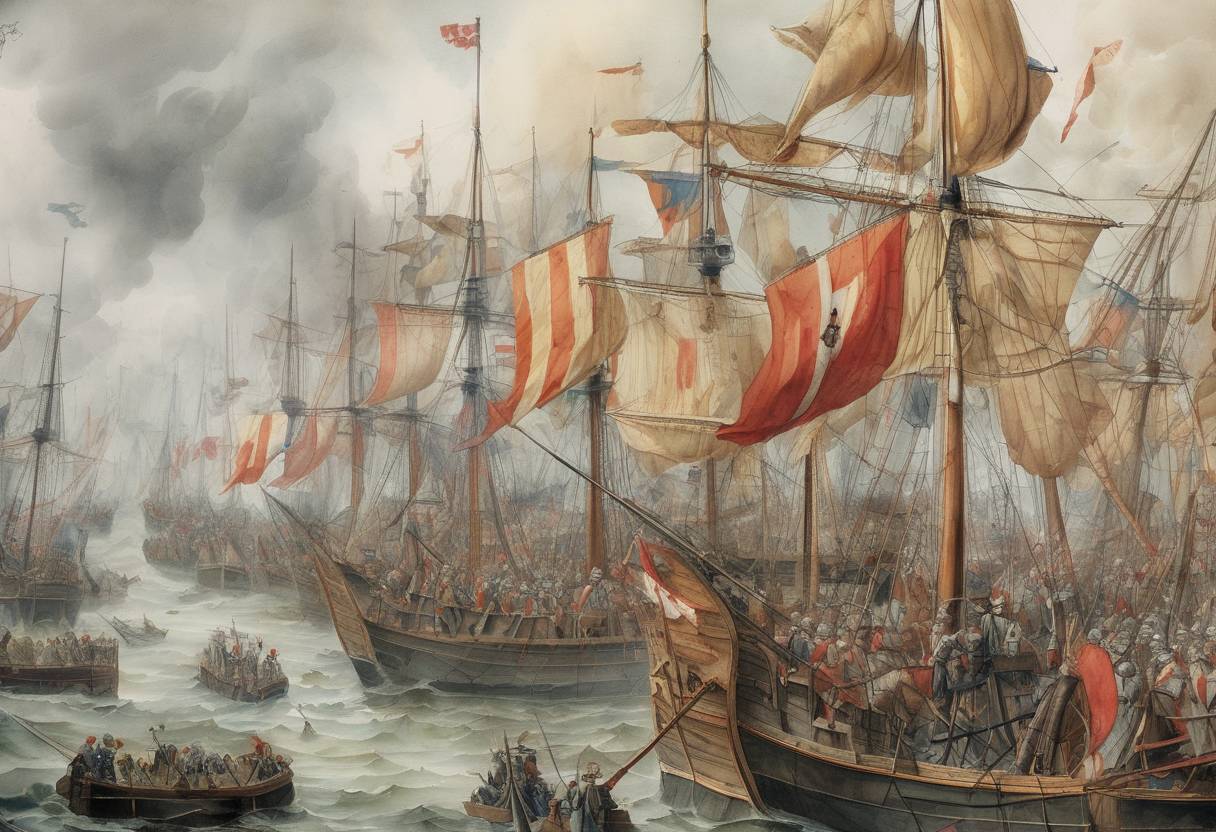
The Battle of Sluys, fought on June 24, 1340, was a pivotal naval engagement during the early stages of the Hundred Years’ War, marking a significant victory for the English fleet over the French. This battle played a crucial role in establishing English naval dominance and set the stage for subsequent military campaigns during the protracted conflict between England and France.
The Hundred Years’ War (1337-1453) was a series of conflicts waged between the Kingdom of England and the Kingdom of France, primarily over claims to the French throne and territorial disputes. By 1340, tensions had escalated, and both nations were preparing for large-scale military engagements.
King Edward III of England, asserting his claim to the French crown, sought to secure control of the English Channel to facilitate the movement of troops and supplies to the continent. The French, under King Philip VI, aimed to thwart English ambitions by maintaining naval superiority.
Location: The battle took place near the port of Sluys, located in present-day Zeeland, Netherlands. The French fleet was anchored in a defensive position within the harbor.
Forces Involved: The English fleet, commanded by King Edward III himself, consisted of approximately 150 ships. The French fleet, led by Admiral Hugues Quiéret and Nicolas Béhuchet, comprised around 190 vessels.
Tactics and Engagement: The French had chained their ships together in a defensive line, intending to create a formidable barrier. However, this tactic limited their maneuverability. The English, taking advantage of favorable winds and tides, launched a direct assault. English longbowmen played a crucial role, raining arrows upon the French decks, while English ships engaged in close combat.
Outcome: The battle resulted in a decisive English victory. The French fleet suffered heavy losses, with many ships captured or destroyed, and a significant number of French sailors killed or taken prisoner. The English losses were comparatively minimal.
The victory at Sluys had several important consequences:
Naval Dominance: The battle established English control over the English Channel, ensuring the safe passage of troops and supplies to the continent, which was vital for subsequent military operations.
Boost to English Morale: The triumph bolstered English morale and solidified King Edward III’s reputation as a capable military leader.
Strategic Advantage: The victory allowed England to maintain pressure on France, facilitating future campaigns on French soil.
Long-term Impact: The battle underscored the importance of naval power in medieval warfare and highlighted the effectiveness of English naval tactics, particularly the use of longbowmen in naval engagements.
The Battle of Sluys was a significant early victory for England in the Hundred Years’ War, setting the stage for further conflicts and shaping the course of the war for decades to come.
Source: en.wikipedia.org