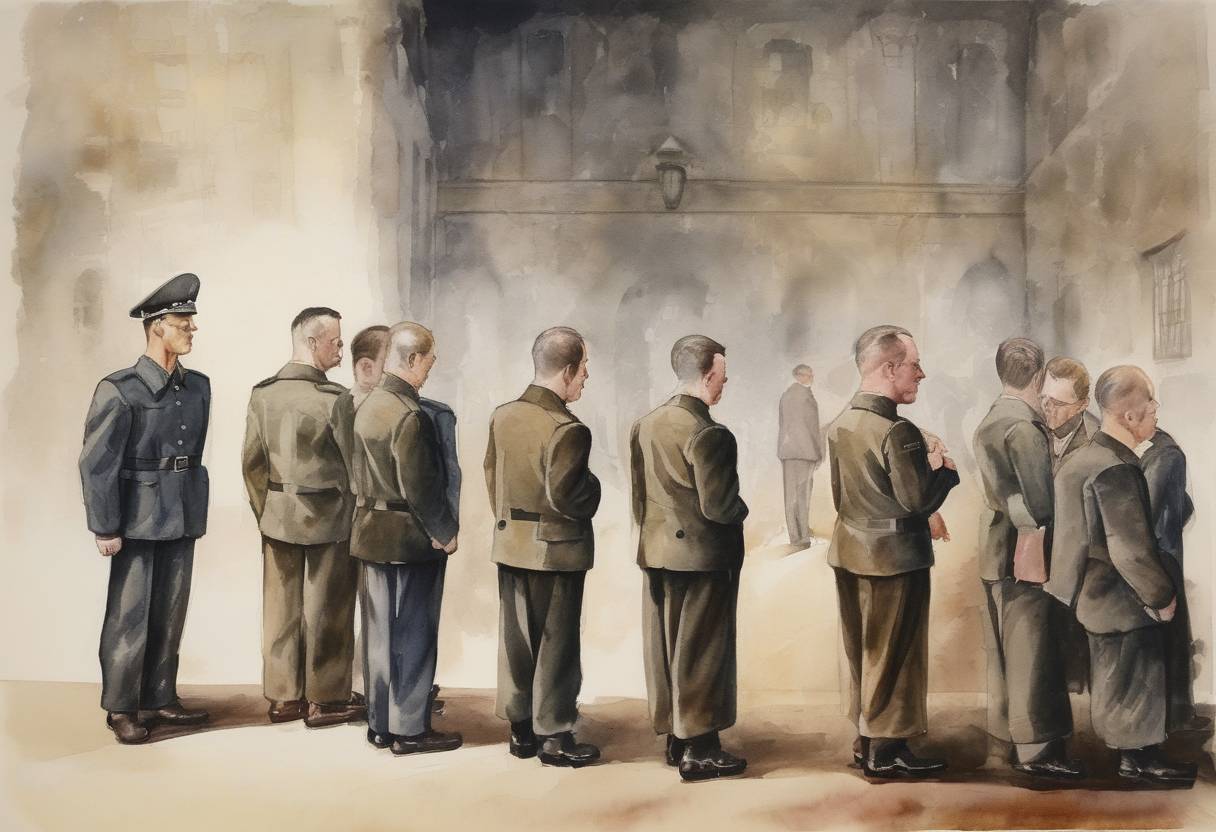
Execution of Ten Nazi War Criminals: October 16, 1946
On October 16, 1946, ten prominent Nazi war criminals were executed following the Nuremberg Trials, a series of military tribunals held to bring Nazi leaders to justice for war crimes committed during World War II. This event marked a pivotal moment in the establishment of international law and post-war justice.
Background
The Nuremberg Trials were conducted by the Allied powers—United States, Soviet Union, United Kingdom, and France—between November 20, 1945, and October 1, 1946. The trials aimed to prosecute prominent leaders of Nazi Germany who were responsible for the Holocaust and other war crimes. The most notable of these trials was the International Military Tribunal (IMT), which tried 24 of the most significant Nazi officials.
The Executed War Criminals
The ten individuals executed on October 16, 1946, were:
- Hans Frank - Governor-General of occupied Poland, responsible for the exploitation and murder of Polish civilians and Jews.
- Wilhelm Frick - Minister of the Interior, instrumental in drafting and implementing Nazi racial laws.
- Alfred Jodl - Chief of the Operations Staff of the Armed Forces High Command, signed orders for military operations and war crimes.
- Ernst Kaltenbrunner - Highest-ranking SS leader to be tried, involved in the implementation of the Final Solution.
- Wilhelm Keitel - Head of the German Armed Forces High Command, signed orders for the execution of hostages and other war crimes.
- Joachim von Ribbentrop - Foreign Minister, involved in the planning and execution of aggressive wars.
- Alfred Rosenberg - Chief Nazi ideologist, played a central role in the development of Nazi racial policies.
- Fritz Sauckel - Plenipotentiary for Labor Deployment, responsible for the forced labor of millions.
- Arthur Seyss-Inquart - Reich Commissioner for the Netherlands, oversaw the deportation of Dutch Jews to concentration camps.
- Julius Streicher - Publisher of the anti-Semitic newspaper “Der Stürmer,” incited hatred and violence against Jews.
Execution and Aftermath
The executions were carried out by hanging at the Nuremberg Prison. Hermann Göring, another high-ranking Nazi official sentenced to death, committed suicide the night before the executions. The bodies of the executed were cremated, and their ashes were scattered in the Isar River to prevent any memorialization.
The Nuremberg Trials set a precedent for the prosecution of war crimes and crimes against humanity. They established the principles of accountability for leaders and the rejection of the defense of “just following orders.” The trials also laid the groundwork for future international courts, such as the International Criminal Court (ICC).
Historical Significance
The execution of these ten war criminals was a significant step in addressing the atrocities committed during World War II. It underscored the international community’s commitment to justice and the rule of law. The Nuremberg Trials remain a landmark in the development of international criminal law and continue to influence legal proceedings against war crimes and genocide today.