Founding of St. Louis - March 9, 1764
1764 · St. Louis, United States
The St. Louis area is founded by Pierre Laclède Liguest and Auguste Chouteau in present-day Missouri, United States.
May 7, 1718
The city of New Orleans is founded by the French Mississippi Company, named after Philippe II, Duke of Orléans.
New Orleans, United States | French Mississippi Company
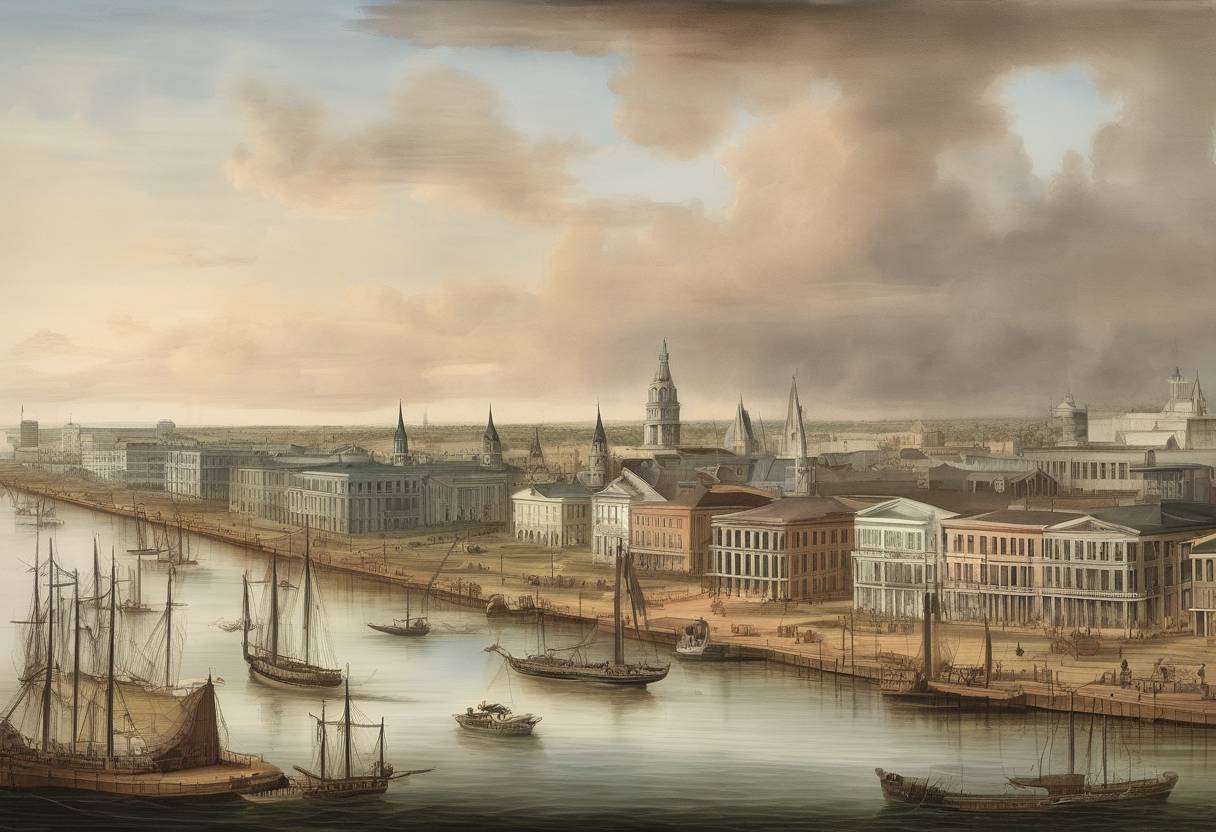
On May 7, 1718, the city of New Orleans was founded by the French Mississippi Company, under the direction of Jean-Baptiste Le Moyne de Bienville. This event marked a significant moment in the colonial history of North America, as New Orleans would grow to become a major port and cultural hub.
French Colonial Expansion: In the early 18th century, France was actively expanding its territories in North America. The Mississippi Company, also known as the Company of the West, was established by the French government to exploit the resources of the Louisiana territory.
Jean-Baptiste Le Moyne de Bienville: A key figure in the establishment of New Orleans, Bienville was a French colonial governor and explorer. He recognized the strategic importance of the location near the mouth of the Mississippi River for trade and defense.
Location: The site chosen for New Orleans was a crescent-shaped bend in the Mississippi River, which provided a natural levee and protection from flooding. This location was also advantageous for controlling access to the interior of North America via the river.
Naming: The city was named in honor of Philippe II, Duke of Orléans, who was the regent of France at the time. This naming was a gesture of loyalty and gratitude towards the French crown.
Strategic Importance: New Orleans quickly became a crucial port for the French colonial empire, facilitating trade and military operations. Its location allowed for control over the Mississippi River, which was vital for transportation and commerce.
Cultural Melting Pot: Over the years, New Orleans developed a unique cultural identity, influenced by French, Spanish, African, and later American cultures. This diversity is reflected in its architecture, cuisine, music, and traditions.
French and Spanish Rule: New Orleans remained under French control until 1763, when it was ceded to Spain following the Treaty of Paris. It was returned to France briefly in 1800 before being sold to the United States in the Louisiana Purchase of 1803.
Growth and Development: Throughout the 19th and 20th centuries, New Orleans grew into a major American city, known for its vibrant culture and as a key economic center in the southern United States.
The founding of New Orleans on May 7, 1718, set the stage for its development into one of the most iconic and culturally rich cities in the United States, with a legacy that continues to influence the region and the nation as a whole.
Source: en.wikipedia.org