German Troops Enter Athens: April 27, 1941
1941 · Athens, Greece
German troops entered Athens during World War II, marking the beginning of the Axis occupation of Greece.
April 5, 1941
Nazi Germany launched Operation Marita, invading Greece and Yugoslavia during World War II.
, Greece and Yugoslavia | Nazi Germany
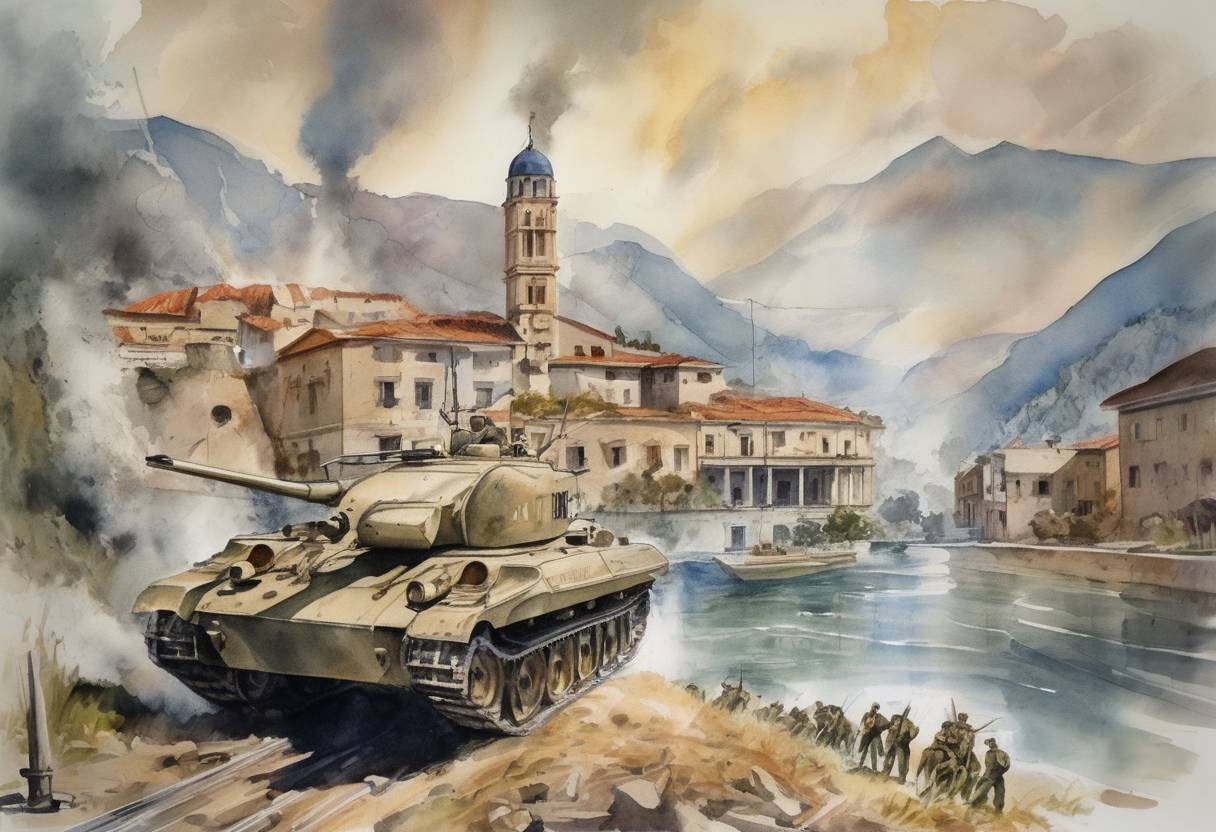
On April 6, 1941, Nazi Germany launched Operation Marita, a military campaign that marked the invasion of Greece and Yugoslavia during World War II. This operation was a significant part of the Axis powers’ efforts to secure their southern flank in Europe and to support Italy, which had previously faced setbacks in the region.
The roots of Operation Marita can be traced back to Italy’s unsuccessful invasion of Greece in October 1940. Mussolini’s forces were met with fierce resistance from the Greek army, which managed to push the Italians back into Albania. This failure prompted Hitler to intervene, as he was concerned about the potential for British influence in the Balkans and the threat it posed to the Axis powers’ strategic interests.
In addition, Yugoslavia’s political situation had become unstable after a coup d’état on March 27, 1941, which overthrew the pro-Axis government. The new Yugoslav government, although initially seeking neutrality, was perceived by Hitler as a threat to German plans in the Balkans.
Yugoslavia: The German invasion of Yugoslavia began with a swift and overwhelming attack. The Luftwaffe launched a massive aerial bombardment on Belgrade, the Yugoslav capital, causing significant destruction and civilian casualties. German ground forces, supported by Hungarian and Italian troops, quickly advanced into Yugoslav territory. The Yugoslav army, poorly equipped and lacking coordination, was unable to mount an effective defense. Within 11 days, Yugoslavia capitulated on April 17, 1941.
Greece: Simultaneously, German forces crossed the Bulgarian border into Greece. The Greek army, already engaged on the Albanian front against Italy, was stretched thin. Despite the assistance of British Commonwealth forces, including troops from Australia and New Zealand, the Germans rapidly advanced through the country. The strategically important Metaxas Line, a series of fortifications along the Greek-Bulgarian border, was bypassed by German forces. Athens fell on April 27, 1941, and the Greek mainland was fully occupied shortly thereafter.
The successful execution of Operation Marita had several significant consequences:
Axis Control of the Balkans: The swift defeat of Yugoslavia and Greece secured the Balkans for the Axis powers, allowing Germany to focus on its upcoming invasion of the Soviet Union, Operation Barbarossa, which commenced in June 1941.
Impact on Greece: The occupation of Greece led to a harsh regime under German, Italian, and Bulgarian control, resulting in severe economic hardship and widespread resistance movements.
Yugoslav Resistance: The occupation of Yugoslavia sparked a fierce and prolonged resistance movement, with various factions, including the Partisans led by Josip Broz Tito, engaging in guerrilla warfare against Axis forces.
Strategic Setback for the Allies: The fall of Greece and Yugoslavia was a setback for the Allies, as it limited their influence in the Balkans and allowed the Axis powers to consolidate their position in southeastern Europe.
Operation Marita demonstrated the effectiveness of Blitzkrieg tactics and underscored the strategic importance of the Balkans in the broader context of World War II. The campaign also highlighted the challenges faced by the Axis powers in maintaining control over occupied territories, as resistance movements would continue to pose significant challenges throughout the war.
Source: en.wikipedia.org