Liberation of Rome: June 5, 1944
1944 · Rome, Italy
Allied forces liberate Rome during World War II, marking the first Axis capital to fall to the Allies.
September 8, 1943
Italy surrenders to the Allies during World War II.
Rome, Italy | Allied Forces
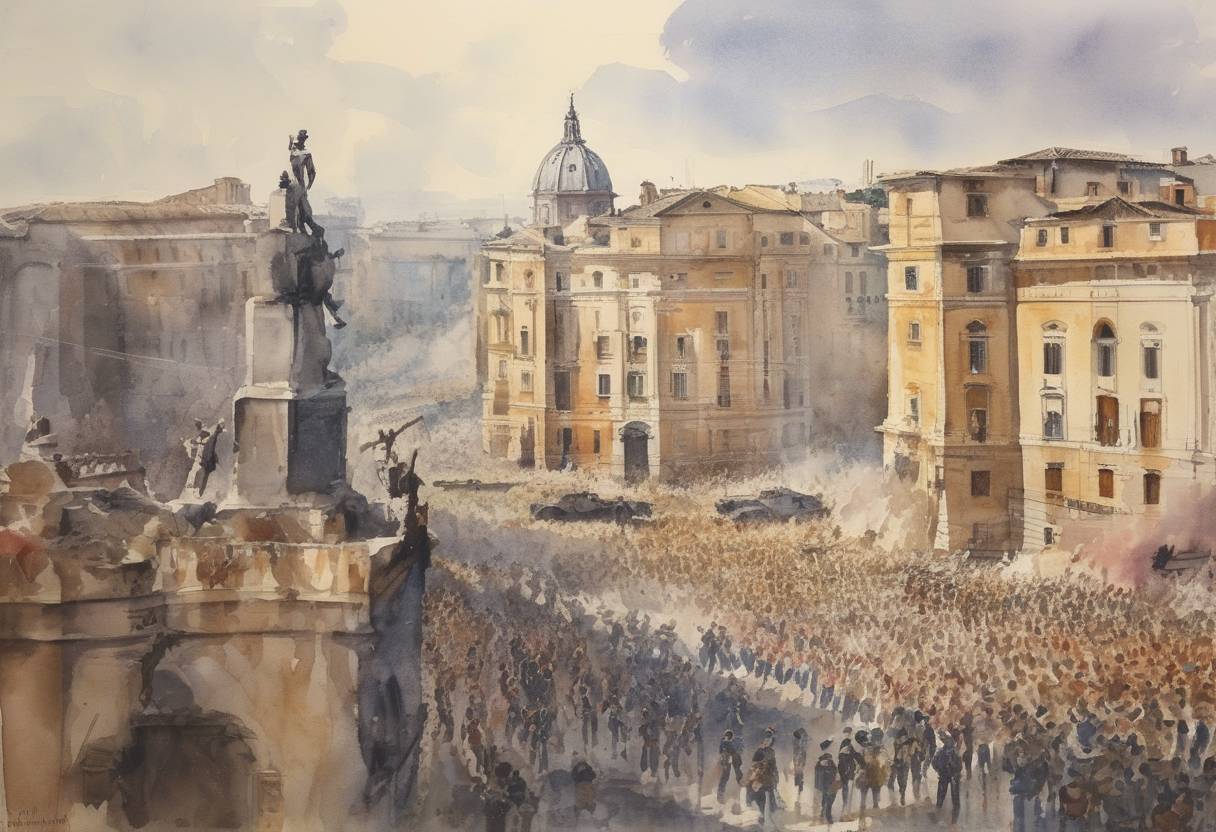
On September 8, 1943, a pivotal moment in World War II occurred when Italy formally surrendered to the Allied forces. This event marked a significant turning point in the war, as it led to the collapse of the Axis powers’ influence in Southern Europe and opened a new front against Nazi Germany.
Mussolini’s Downfall: Prior to the surrender, Italy had been under the fascist regime of Benito Mussolini, who had aligned the country with Nazi Germany. However, by 1943, Italy was suffering from military defeats and economic hardships. On July 25, 1943, Mussolini was deposed and arrested following a vote of no confidence by the Grand Council of Fascism, leading to the appointment of Marshal Pietro Badoglio as the head of the Italian government.
Allied Invasion of Sicily: The Allied invasion of Sicily, codenamed Operation Husky, began on July 9, 1943, and was a critical campaign that led to the fall of Mussolini. The successful invasion by American and British forces demonstrated the weakening Axis hold in Italy and increased pressure on the Italian government to seek peace.
Negotiations: Secret negotiations between the Italian government and the Allies began shortly after Mussolini’s ousting. The Allies, led by General Dwight D. Eisenhower, demanded an unconditional surrender.
Armistice Announcement: The armistice was signed on September 3, 1943, but it was publicly announced by General Eisenhower and Italian Marshal Pietro Badoglio on September 8, 1943. The announcement took many by surprise, including German forces stationed in Italy.
German Occupation: Following the announcement, German forces quickly moved to occupy strategic positions in Italy, including Rome, to prevent the Allies from gaining control. This led to the establishment of the Italian Social Republic in the north, a puppet state under Mussolini, who was rescued by German commandos.
Allied Advancement: The surrender allowed the Allies to advance into mainland Italy, beginning with the landings at Salerno on September 9, 1943, as part of Operation Avalanche. This marked the start of a prolonged and grueling Italian Campaign.
Impact on the Axis Powers: Italy’s surrender significantly weakened the Axis powers, forcing Germany to divert troops to Italy to maintain control, which strained their resources on other fronts.
Italian Resistance: The surrender also galvanized the Italian resistance movement, which played a crucial role in fighting against German occupation and aiding the Allies.
Post-War Consequences: The surrender and subsequent events led to the eventual liberation of Italy and the fall of fascism in the country. It also set the stage for Italy’s post-war reconstruction and its eventual alignment with Western democracies during the Cold War.
Italy’s surrender on September 8, 1943, was a critical juncture in World War II, reshaping the dynamics of the conflict in Europe and contributing to the eventual defeat of the Axis powers.
Source: en.wikipedia.org