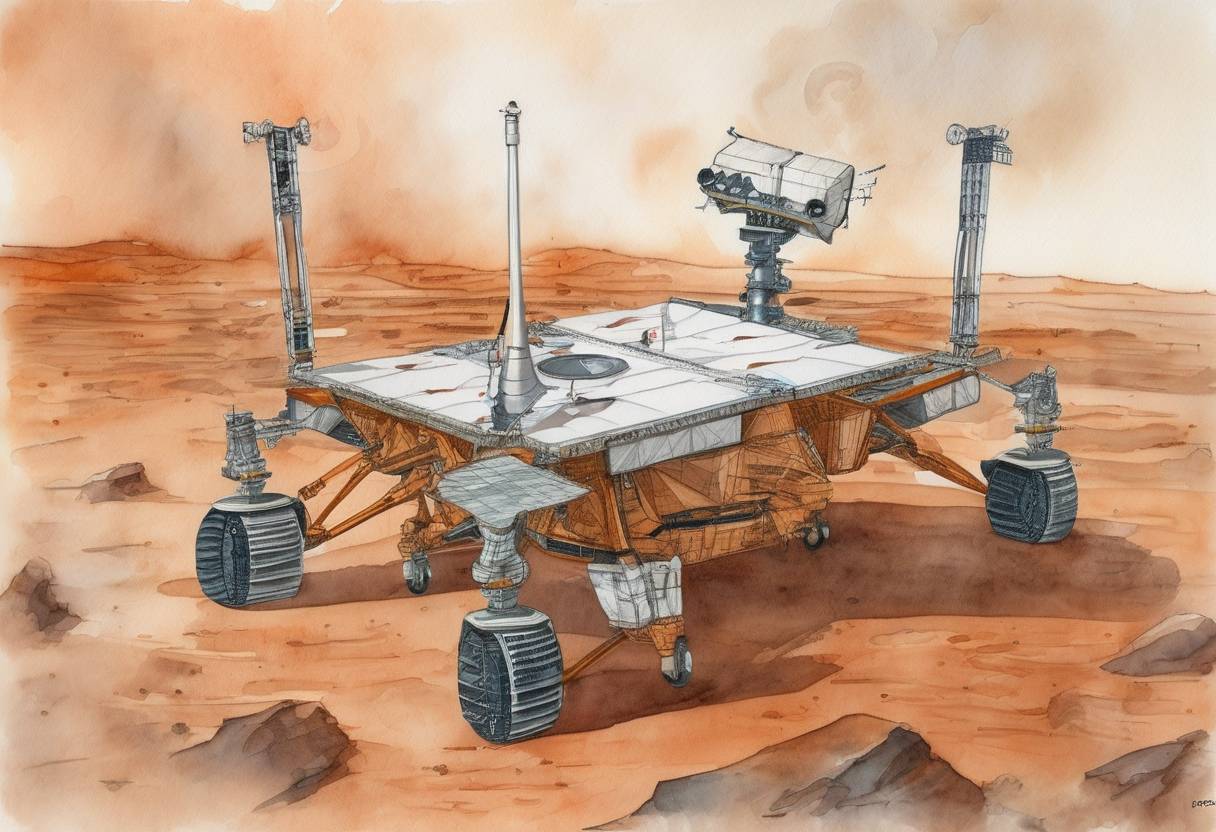
India Launches the Mars Orbiter Mission (Mangalyaan)
On November 5, 2013, India marked a significant milestone in its space exploration endeavors with the launch of the Mars Orbiter Mission (MOM), commonly known as Mangalyaan. This mission represented India’s first interplanetary venture, showcasing the capabilities of the Indian Space Research Organisation (ISRO) on the global stage.
Background and Context
ISRO’s Ambitions: The Mars Orbiter Mission was conceived as a demonstration of ISRO’s ability to design, plan, and execute an interplanetary mission. It aimed to develop the technologies required for interplanetary missions, including spacecraft autonomy, deep space communication, and navigation.
Budget and Planning: Remarkably, Mangalyaan was developed on a modest budget of approximately $74 million, making it one of the most cost-effective Mars missions ever undertaken. The mission was approved by the Indian government in August 2012, with a rapid development timeline leading to its launch in November 2013.
Key Events Leading to the Launch
Launch Vehicle: The mission was launched aboard the Polar Satellite Launch Vehicle (PSLV-C25) from the Satish Dhawan Space Centre in Sriharikota, India. The PSLV had a proven track record, which contributed to the mission’s success.
Mission Objectives: The primary objectives included demonstrating the capability to reach Mars orbit and conducting scientific research. The scientific goals involved studying the Martian surface, morphology, atmosphere, and mineralogy from orbit.
The Launch and Journey
Launch Date: November 5, 2013.
Trajectory and Travel: After launch, Mangalyaan embarked on a 300-day journey to Mars. It utilized a Hohmann transfer orbit to travel from Earth to Mars, involving several critical maneuvers, including a trans-Mars injection.
Achievements and Significance
Mars Orbit Insertion: On September 24, 2014, Mangalyaan successfully entered Mars’ orbit, making India the first Asian nation to reach Martian orbit and the fourth space agency globally to do so, following NASA, the Soviet space program, and the European Space Agency.
Scientific Contributions: The mission provided valuable data on Martian surface features, morphology, and atmosphere. It also helped in understanding the dynamics of the Martian atmosphere and surface.
Global Recognition: Mangalyaan’s success was celebrated worldwide, highlighting India’s growing capabilities in space technology and exploration. It demonstrated that complex space missions could be achieved with budget efficiency.
Aftermath and Legacy
Inspiration for Future Missions: The success of Mangalyaan inspired further advancements in India’s space program, including the Chandrayaan-2 mission to the Moon and plans for future interplanetary missions.
International Collaboration: The mission fostered international collaboration and interest in India’s space capabilities, opening avenues for future partnerships in space exploration.
Mangalyaan remains a testament to ISRO’s ingenuity and resourcefulness, marking a pivotal moment in India’s space exploration history. Its success continues to inspire future generations of scientists and engineers in India and around the world.