Michael Jackson's Acquittal on June 13, 2005
2005 · Santa Maria, United States
Michael Jackson is acquitted of all charges in his child molestation trial, ending a highly publicized case that lasted over four months.
November 20, 2003
Michael Jackson was arrested on charges of child molestation. The case gained significant media attention and led to a highly publicized trial.
Santa Barbara, United States | Santa Barbara County Sheriff's Department
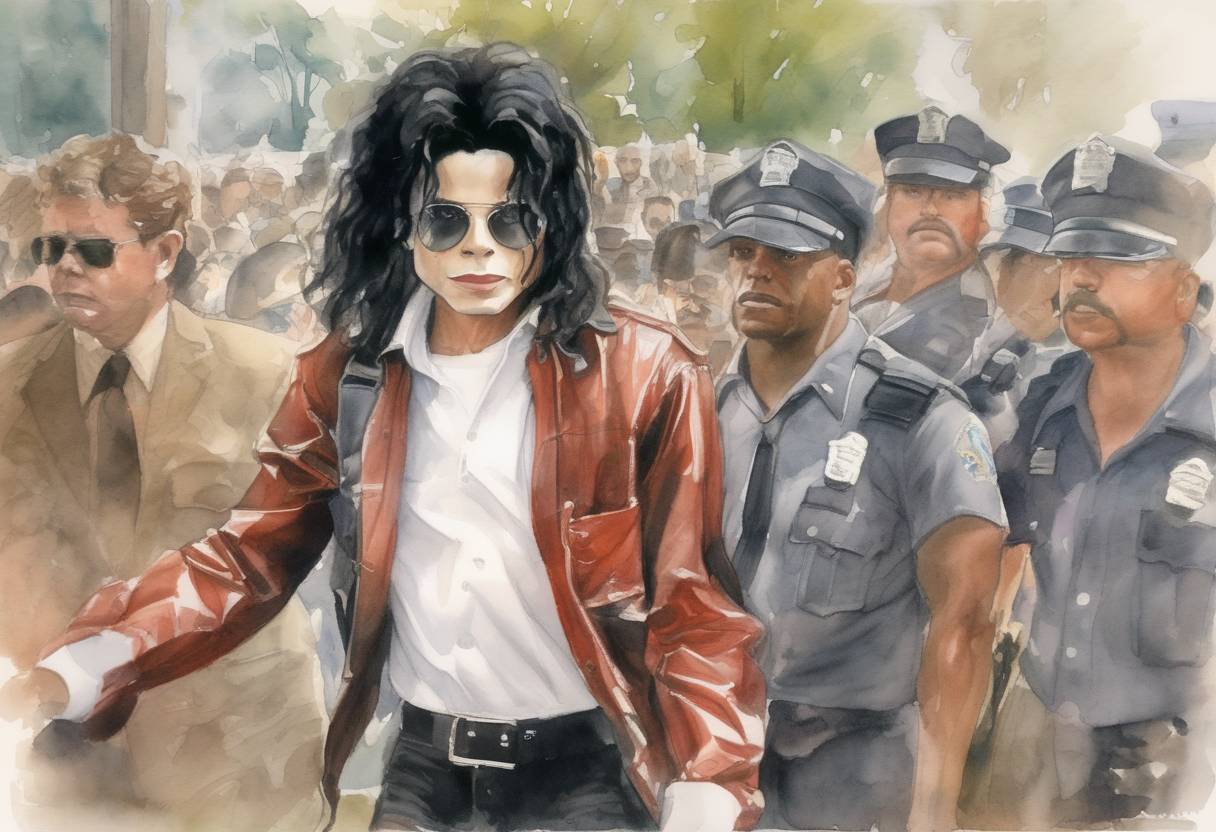
On November 20, 2003, Michael Jackson, the globally renowned pop icon, was arrested on charges of child molestation. This event marked the beginning of a highly publicized legal battle that captivated media and public attention worldwide.
The allegations against Michael Jackson stemmed from accusations made by a 13-year-old boy, Gavin Arvizo, who claimed that Jackson had molested him at the singer’s Neverland Ranch. These accusations were part of a larger investigation that had been ongoing for several months, initiated by a documentary titled Living with Michael Jackson, aired in February 2003. In the documentary, Jackson was seen holding hands with Arvizo and discussing sharing his bed with children, which sparked public controversy and led to increased scrutiny.
On the morning of November 20, 2003, authorities executed a search warrant at Neverland Ranch, and Jackson was subsequently arrested. He surrendered to the Santa Barbara County Sheriff’s Department, where he was booked on multiple counts of child molestation. Jackson was released on a $3 million bail shortly after his arrest.
The arrest led to a highly publicized trial, officially known as The People v. Jackson, which began on January 31, 2005. The trial was a media spectacle, drawing intense coverage from news outlets around the globe. The prosecution presented evidence and testimonies alleging that Jackson had engaged in inappropriate behavior with Arvizo and other young boys.
Jackson’s defense team, led by attorney Thomas Mesereau, argued that the accusations were motivated by financial gain and that Arvizo’s family had a history of making false claims. The defense also highlighted inconsistencies in the testimonies of the accusers.
On June 13, 2005, after a trial that lasted over four months, the jury found Michael Jackson not guilty on all charges. The verdict was a significant relief for Jackson and his supporters, but the trial had lasting effects on his career and public image.
The case highlighted issues surrounding celebrity culture, media influence, and the complexities of legal proceedings involving high-profile individuals. Despite his acquittal, Jackson’s reputation was permanently affected, and he lived a relatively reclusive life until his death in 2009.
The trial of Michael Jackson is often cited as a pivotal moment in the history of celebrity legal cases, illustrating the intense scrutiny and media frenzy that can accompany such events. It also sparked discussions about the responsibilities of the media, the presumption of innocence, and the impact of public opinion on legal outcomes.
Overall, the arrest and subsequent trial of Michael Jackson remain a significant chapter in the history of both the entertainment industry and the legal system, reflecting the complex interplay between fame, justice, and media in contemporary society.
Source: www.nytimes.com