The Great Lisbon Earthquake of 1755
1755 · Lisbon, Portugal
The Great Lisboa earthquake occurred, causing damage in Lisbon and triggering a tsunami.
January 26, 1531
Lisbon, Portugal, was struck by a major earthquake, causing significant destruction and loss of life.
Lisbon, Portugal
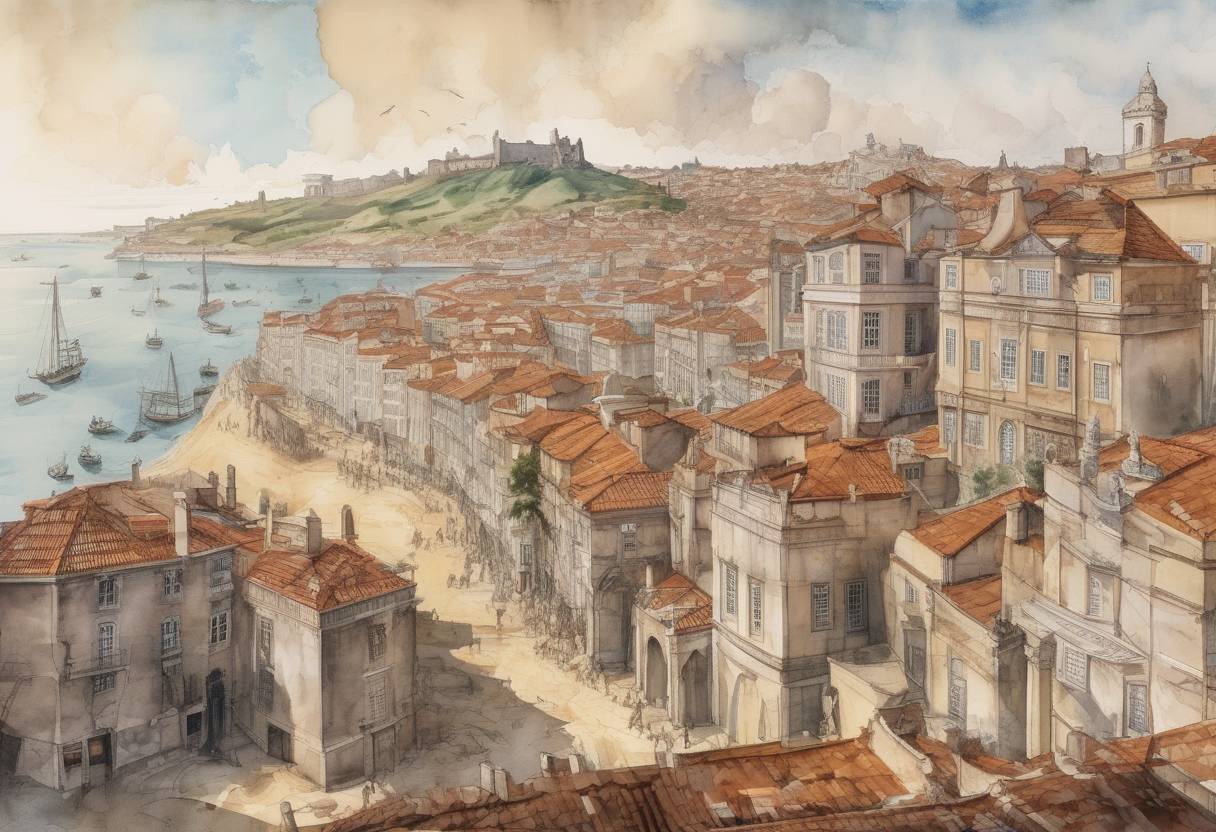
On January 26, 1531, Lisbon, the capital of Portugal, was struck by a devastating earthquake that resulted in significant destruction and loss of life. This event is one of the earliest recorded earthquakes in European history and had profound effects on the city and its inhabitants.
Lisbon, during the early 16th century, was a thriving hub of commerce and exploration. As the capital of the Portuguese Empire, it was a center for trade, particularly in spices and other goods from the newly discovered lands. The city’s prosperity, however, was periodically threatened by natural disasters, with earthquakes being a recurrent hazard due to its location near the seismically active Azores-Gibraltar Transform Fault.
The 1531 earthquake serves as a reminder of the natural challenges faced by Lisbon throughout its history. It underscores the city’s resilience and ability to recover from catastrophic events, a theme that would recur in its later history. The event also contributed to the understanding of seismic activity in the region, influencing future architectural and urban planning decisions.
In summary, the 1531 Lisbon earthquake was a significant historical event that had lasting impacts on the city and its people. It is remembered as a precursor to later seismic events that would shape the history and development of Lisbon.
Source: en.wikipedia.org