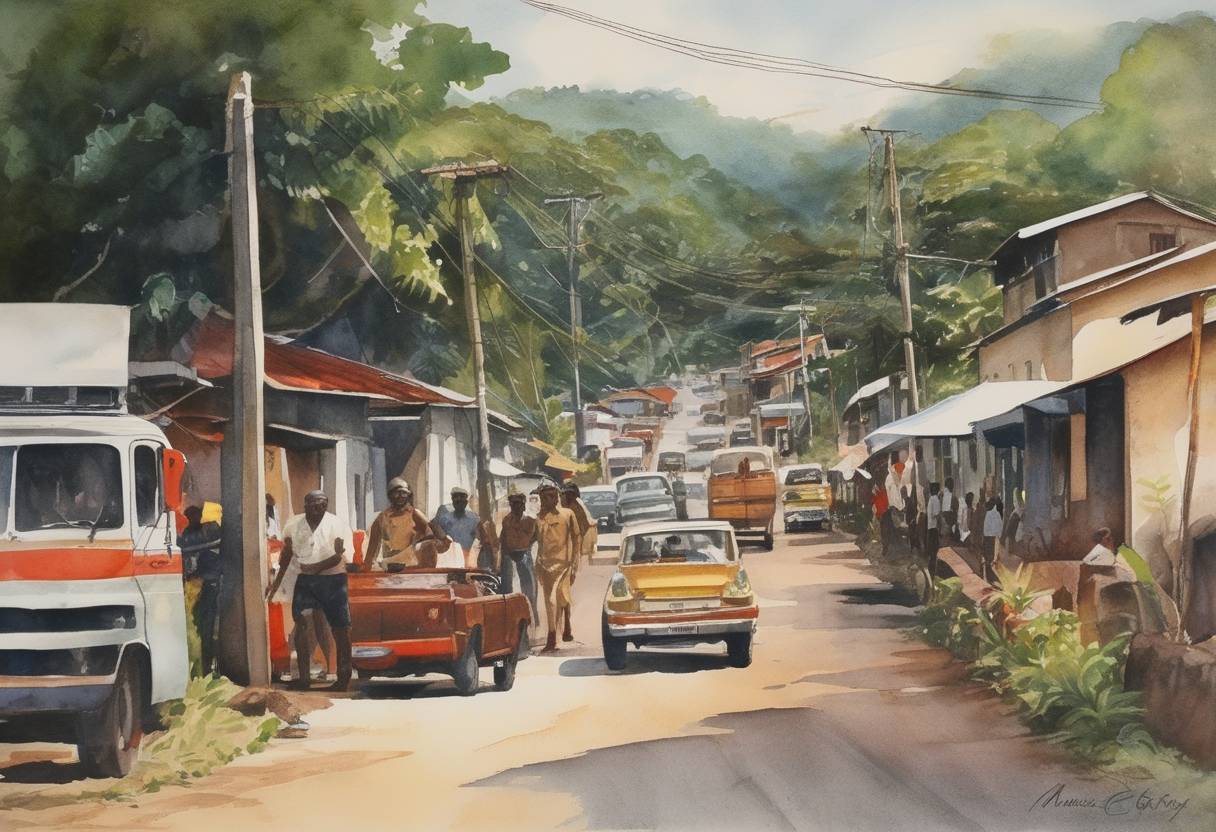
Coup d’état in Grenada: March 13, 1979
On March 13, 1979, a coup d’état dramatically altered the political landscape of Grenada. The New Jewel Movement (NJM), spearheaded by Maurice Bishop, successfully executed a bloodless coup that overthrew the government of Prime Minister Sir Eric Gairy. This pivotal moment marked a significant shift in Grenada’s governance and cemented Bishop’s place as a central figure in the island’s history.
Background
Sir Eric Gairy, Grenada’s first Prime Minister following its independence from the United Kingdom in 1974, was a polarizing figure. His administration faced criticism for authoritarian tendencies, allegations of corruption, and the use of coercion via his private militia, the Mongoose Gang. Political unrest grew as economic challenges and social issues persisted, leading to widespread dissatisfaction.
The New Jewel Movement, founded in 1973, combined elements of socialist ideology and a strong desire for socio-political reform. The NJM criticized Gairy’s governance and called for policies that promoted people’s empowerment, economic equity, and the cessation of human rights abuses.
The Coup
On the morning of March 13, 1979, while Gairy was absent from the island attending a United Nations meeting in New York, the NJM seized this strategic opportunity to act. Armed with support from a civilian population eager for change, NJM forces took control of key strategic sites, including a radio station. They announced the formation of a People’s Revolutionary Government (PRG), with Bishop as its leader.
The takeover was well-coordinated and encountered minimal resistance, largely because of Gairy’s unpopularity and the absence of significant loyalty to his regime. This swift change in government was hailed by many on the island and beyond as a revolutionary triumph.
Aftermath and Historical Significance
The establishment of the People’s Revolutionary Government marked the beginning of a new era in Grenada. Bishop’s government sought to implement radical social reforms, focusing on education, health care, and alignment with socialist nations. The PRG’s policies drew mixed reactions internationally, garnering support from leftist countries while prompting concern from Western nations, particularly the United States.
The NJM’s control, however, was relatively short-lived. The Bishop government’s rule ended in 1983 after internal conflicts within the NJM led to Bishop’s arrest and execution, culminating in a U.S.-led military intervention. Despite this turbulent end, the 1979 coup remains a pivotal event in Grenadian history, reflecting the complexities of post-colonial governance and Cold War geopolitics.