The Battle of the Nile: August 1, 1798
1798 · Aboukir Bay, Egypt
The Battle of the Nile began, a major naval battle between the British Royal Navy and the French Navy during the French Revolutionary Wars.
April 12, 1782
The Battle of Les Saintes takes place, in which British forces defeat the French navy, asserting British naval dominance in the Caribbean.
Off the coast of Dominica, Dominica | British Royal Navy
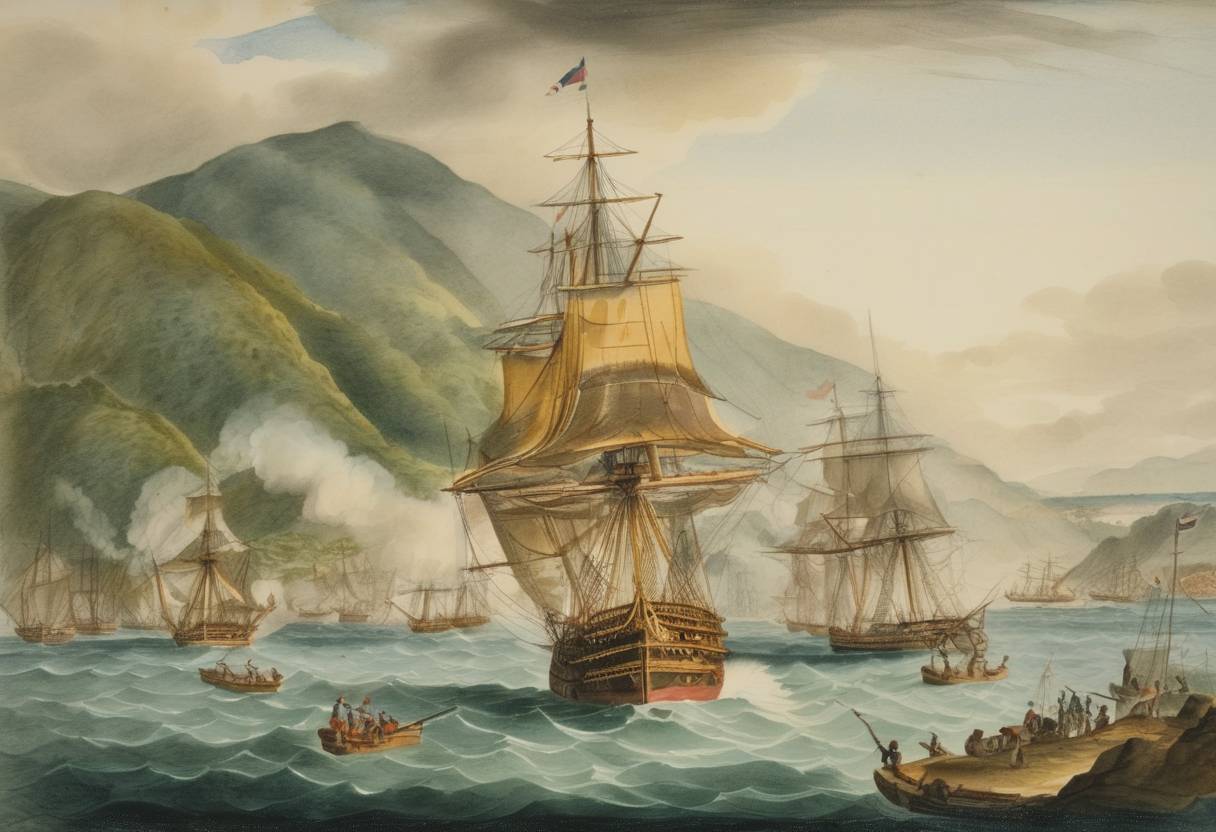
The Battle of the Saintes, a critical naval engagement between British and French forces, occurred during the American Revolutionary War, precisely on April 12, 1782. The battle was fought near the Isles des Saintes, a small group of islands in the Caribbean Sea between the islands of Guadeloupe and Dominica. This conflict played a pivotal role in establishing British naval supremacy in the Caribbean.
In the late stages of the American Revolutionary War, both the British and French sought control over the Caribbean, a region essential for its strategic trade routes and valuable colonies. The French fleet, commanded by Admiral François Joseph Paul de Grasse, aimed to join forces with Spanish troops to launch an assault on Jamaica, a major British stronghold.
Admiral Sir George Rodney led the British fleet upon learning about the French maneuvers. The British naval forces were determined to intercept the French before they could consolidate their power in the Caribbean.
Admiral Rodney employed innovative tactics, notably “breaking the line,” which involved cutting through the enemy’s naval line, isolating segments of the French fleet, and allowing the British to concentrate their firepower effectively.
The battle began in the morning hours when the British fleet engaged the French. The tactic of breaking the line proved highly effective, as it disrupted the French formation and created chaos within their ranks. The British ships delivered devastating broadsides against the French vessels, capturing or severely damaging several.
The battle concluded with a decisive British victory, with significant French losses, including multiple ships captured or destroyed. Admiral de Grasse himself was captured aboard his flagship, the “Ville de Paris.”
The victory at the Saintes had far-reaching consequences:
The triumph at the Saintes underscored the effectiveness of British naval tactics and leadership, reflecting a moment of strategic brilliance in the years-long conflict with France.
Source: www.britannica.com