1993 · Cape Town, South Africa
The first meeting of the South African parliament following its country's first non-racially framed election convenes.
July 9, 1993
The Parliament of South Africa voted to drop racist laws that had underpinned decades of Apartheid, marking an important milestone in the nation's journey towards democracy.
Cape Town, South Africa | Parliament of South Africa
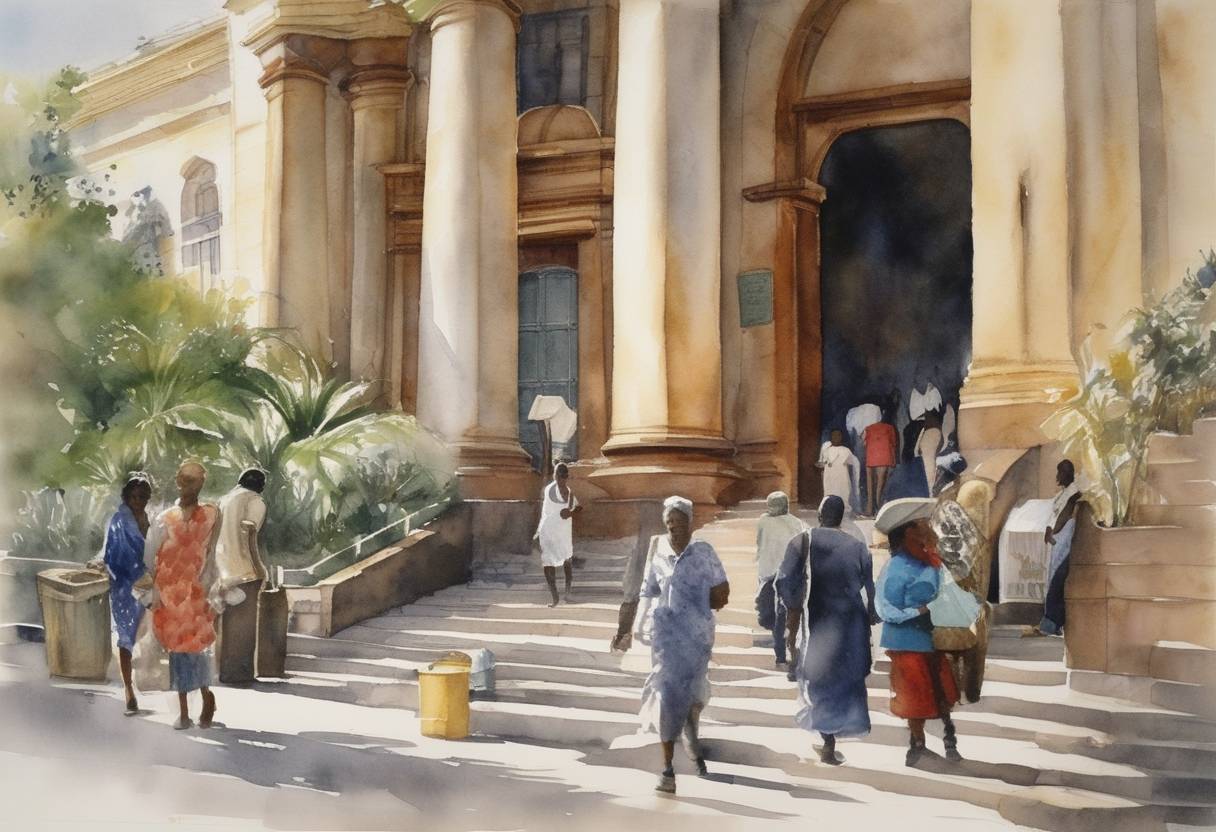
On September 7, 1993, the Parliament of South Africa took a pivotal step towards dismantling the apartheid system by voting to repeal several key pieces of legislation that had legalized racial discrimination for decades. This momentous decision marked a turning point on the nation’s journey towards democracy and was part of a broader negotiation process aimed at establishing a multiracial government.
Apartheid, which means “apartness” in Afrikaans, was a system of institutionalized racial segregation and discrimination that was implemented by the National Party government in 1948. It systematically oppressed the non-white population of South Africa through laws that enforced racial discrimination in all aspects of life, including education, employment, and political representation.
By the late 1980s and early 1990s, international pressure, along with internal resistance and rising unrest, led to a re-evaluation of apartheid policies. In February 1990, President F.W. de Klerk announced the unbanning of anti-apartheid movements and the release of Nelson Mandela, setting the stage for significant political reforms.
The parliamentary session on September 7, 1993, involved debates and votes on several legislative measures aimed at eradicating the legal basis of apartheid. This included the repeal of the infamous Group Areas Act, the Land Acts, and the Population Registration Act, which were among the core policies of apartheid:
Group Areas Act: This law dictated the segregation of residential areas, restricting ownership and occupation based on race. Repealing it was crucial for addressing the deep-seated inequalities in land ownership.
Land Acts: These acts governed land allocation and ownership, stripping non-white South Africans of rights to their ancestral lands and confining them to limited areas.
Population Registration Act: This was the cornerstone of apartheid, requiring every South African to be classified by race at birth.
The repeal of these laws was a significant milestone on the path towards a new constitutional order, paving the way for the first democratic elections in April 1994. These elections saw Nelson Mandela elected as the first black president of South Africa, symbolizing the transition to a non-racial democracy.
The dismantling of apartheid legislation on September 7, 1993, signified not just a legal shift but also a societal transformation in South Africa. It underscored the commitment to healing the divisions of the past and building a future based on equality and unity.
This legal reform played an instrumental role in the broader reconciliation process, addressing decades of injustice and laying the groundwork for the Truth and Reconciliation Commission. The decision of September 7, 1993, thereby holds enduring significance in South Africa’s continued efforts to overcome the legacies of apartheid and foster a more equitable society.
Source: www.parliament.gov.za