The End of the Second Seminole War: August 14, 1842
1842 · Tampa, United States
The Second Seminole War ended with the United States Army declaring victory over the Seminole tribe in Florida.
November 21, 1818
The first Seminole War between the United States and Seminole Native Americans in Florida begins.
Florida, United States
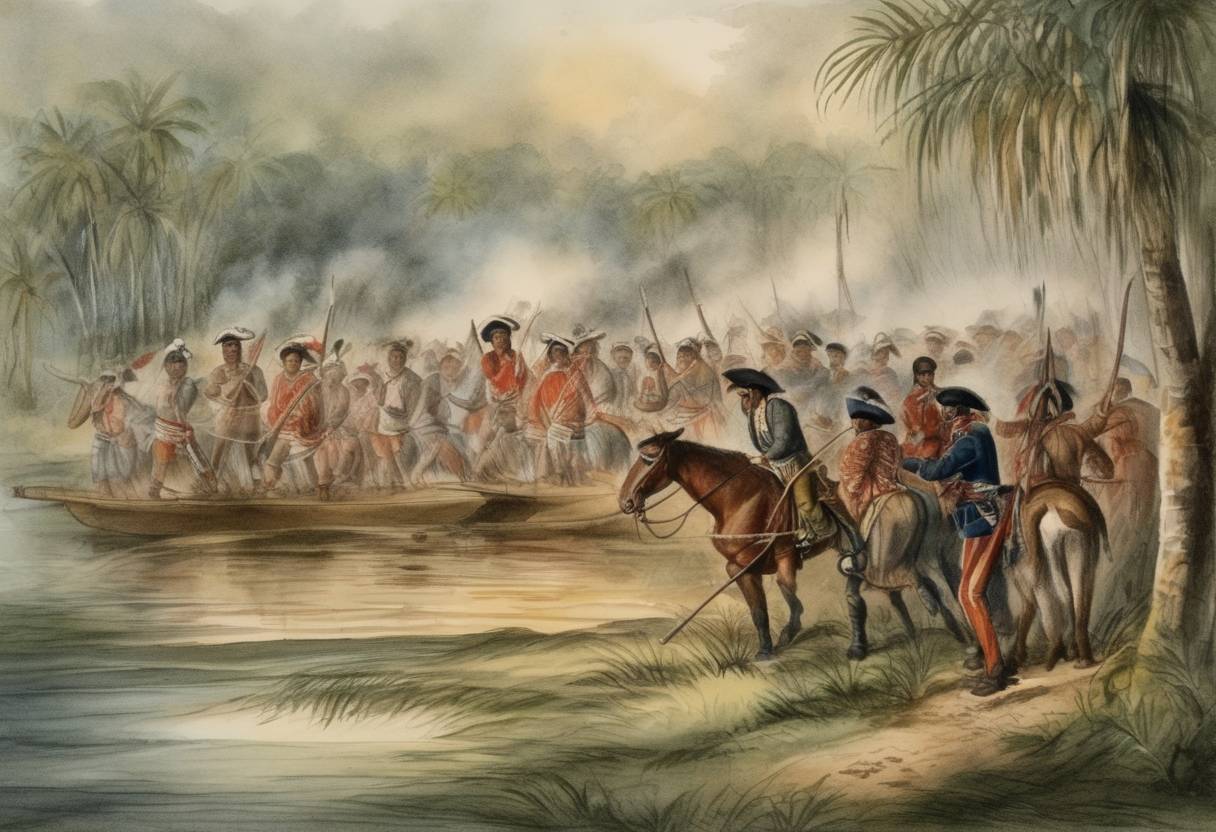
The First Seminole War marks an important chapter in the early 19th-century conflicts between the United States and the Native American tribes. Occurring in modern-day Florida, this conflict involved the Seminole tribe, who had established themselves in Florida following pressure from American settlers and government actions to the north.
The war’s roots lay in several critical factors:
Territorial Expansion: As the U.S. continued to expand its territories under the philosophy of Manifest Destiny, the pressure to acquire lands inhabited by Native American tribes increased. Florida, then controlled by Spain, became a point of interest for American expansionists.
Runaway Slaves: The region served as a sanctuary for escaped slaves, who sought refuge with the Seminoles. This situation was unacceptable to many slave-owning American settlers in the Southern States, contributing to tensions as they viewed these communities as a threat to the institution of slavery.
Border Disputes: The ill-defined borders between Spanish Florida and the U.S. provided a haven for raiding parties and individuals eluding the law, exacerbating the area’s instability.
The First Seminole War began in November 1817, rather than the date stated, 11/21/1818. It was initiated by General Andrew Jackson following a series of raids and counter-raids between American settlers and the Seminoles. Tasked with securing the U.S. southern borders, Jackson led U.S. forces into Florida, ostensibly to quell Seminole raids and address the overarching problems described above.
Jackson’s Campaign: Jackson’s assault on the Seminoles included several aggressive moves. His forces attacked key Seminole settlements and Spanish outposts that were believed to support or harbor Seminole fighters. The destruction of Negro Fort, a base for Seminole and African resistance, marked a significant turning point in the conflict.
Confrontations with Spanish Forces: The invasion saw incursions into Spanish territory, illustrating Jackson’s willingness to risk international conflict to secure American interests.
The war had several repercussions:
Acquisition of Florida: The conflicts pressured Spain into ceding Florida to the United States in the Adams-Onís Treaty of 1819, finalized in 1821, which peacefully transferred the territory without further military intervention.
Impact on Native American Policy: The war and its aftermath marked a critical shift in U.S. policy toward aggressive relocation, setting a precedent for the subsequent Indian Removal policies and further conflicts known as the Seminole Wars.
Legacy of Andrew Jackson: Jackson’s actions during the First Seminole War bolstered his reputation as a staunch defender of American interests, paving the way for his future political career, ultimately leading to his presidency.
The First Seminole War set the stage for ongoing tension and negotiations over Native American territories and rights, shaping much of the United States’ subsequent policy and conflicts in the region.
Source: www.britannica.com