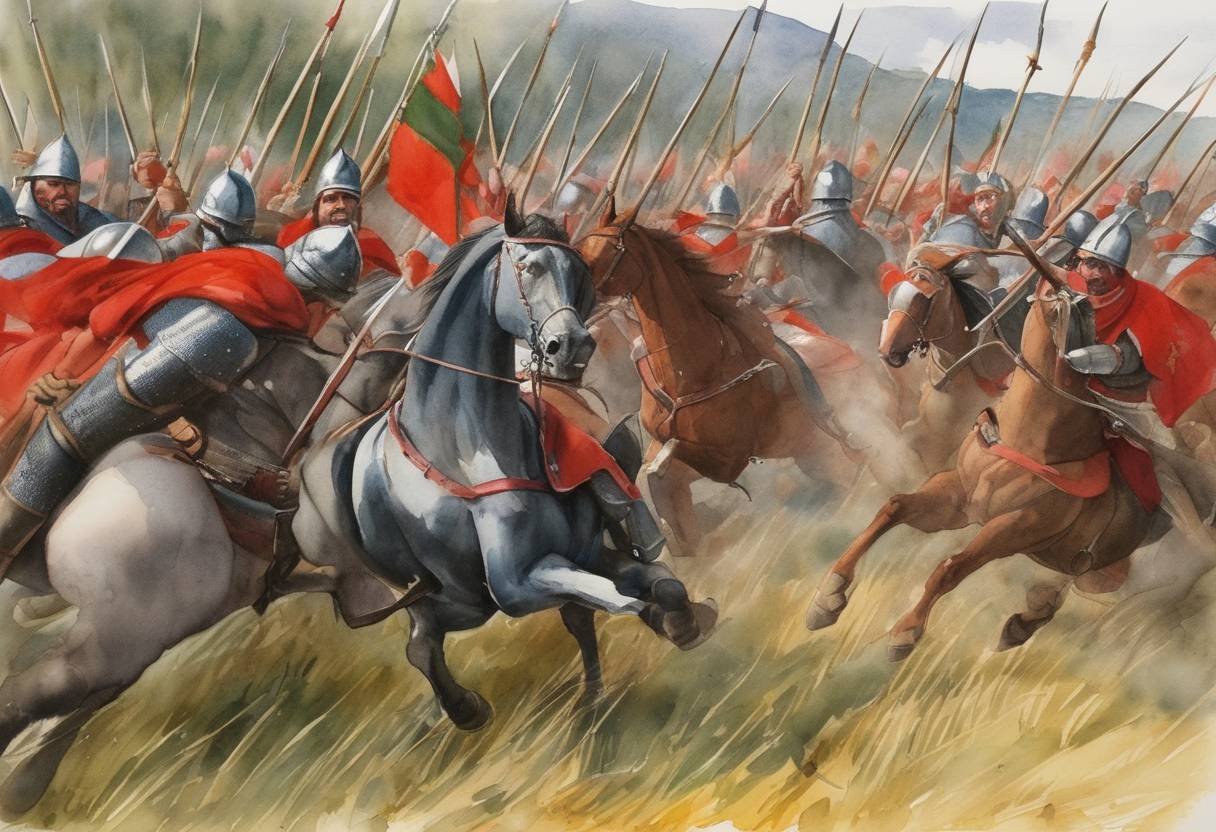
The Battle of Campaldino
Date and Location
- Date: June 11, 1289
- Location: Campaldino, near Poppi in Tuscany, Italy
Belligerents
- Guelphs: Primarily composed of forces from Florence and allied cities.
- Ghibellines: Led mainly by the forces from Arezzo.
Background
The 13th century in Italy was marked by the struggle between the Guelphs and Ghibellines, factions supporting the papacy and the Holy Roman Emperor, respectively. Florence, a staunch Guelph stronghold, frequently clashed with the Ghibelline-aligned city of Arezzo.
Prelude to the Battle
In early 1289, tensions escalated when Arezzo’s Ghibelline forces sought to assert their dominance in Tuscany, threatening the balance of power. The Florentine Guelphs, seeking to curb Arezzo’s influence, formed an alliance with other Guelph cities to launch a counteroffensive.
The Battle
- Forces: The Guelph army was larger and well-coordinated, consisting of approximately 12,000 troops, while the Ghibelline forces numbered around 8,000.
- Tactics: The battle began with a cavalry charge by the Aretine knights, which initially disrupted the Guelph lines. However, the Guelphs’ superior numbers and effective use of infantry eventually overwhelmed the Ghibelline cavalry.
- Notable Figures: Dante Alighieri, the famed Italian poet, is believed to have participated in the battle on the side of the Guelphs.
Outcome
The battle ended in a decisive victory for the Guelphs. The Ghibellines suffered significant losses, with many of their leaders killed or captured.
Aftermath
- The victory cemented Florence’s dominance in Tuscany and marked a significant decline in Ghibelline power in the region.
- The battle further fueled the ongoing conflict between Guelphs and Ghibellines, contributing to the complex political landscape of medieval Italy.
Historical Significance
The Battle of Campaldino is a notable example of the factional conflicts that plagued Italy during the Middle Ages. It underscored the volatility of alliances and the impact of military power struggles on the social and political structures of Italian city-states.