Canada's New Maple Leaf Flag Raised for the First Time
1965 · Ottawa, Canada
Canada's new maple leaf flag is raised for the first time, replacing the Union Jack and the Red Ensign.
June 16, 1891
John Abbott became the third Prime Minister of Canada following the resignation of Sir John A. Macdonald on June 6, 1891. Abbott was the first Canadian prime minister born on Canadian soil.
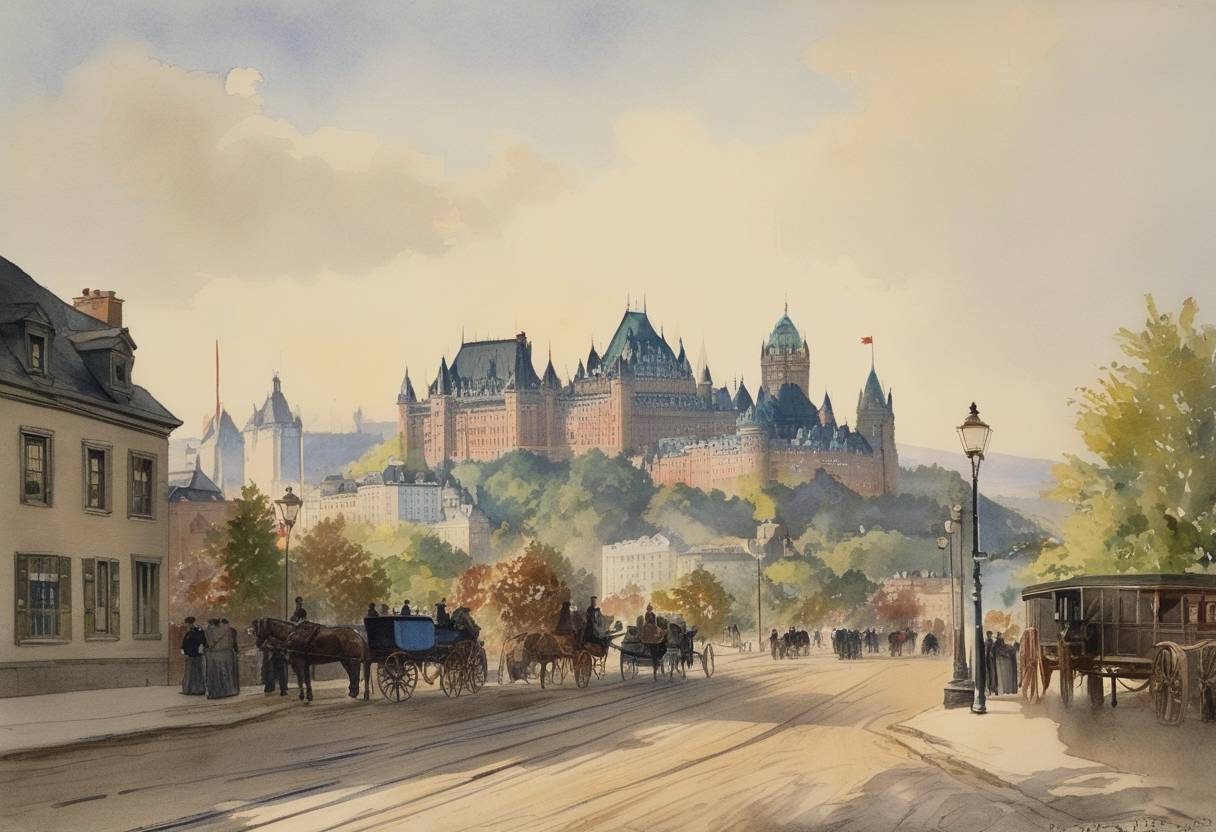
Quebec City, Canada | Government of Canada
On June 16, 1891, John Abbott was appointed the third Prime Minister of Canada, marking a significant transition in Canadian political leadership. Abbott’s ascension to the role followed the death of Sir John A. Macdonald, the country’s first and longest-serving prime minister at the time. Macdonald, a towering figure in Canadian politics, had served as Prime Minister for most of the period since the British North America Act of 1867, which confederated Canada.
John Abbott was a prominent lawyer and politician from Quebec, well-regarded for his legal acumen and political insight. He was originally hesitant to become Prime Minister but was persuaded by his peers due to his moderate views and ability to unify the party. Abbott had previously served in various capacities, including as a member of the Senate of Canada and as the minister of trade and commerce in Macdonald’s cabinet.
Abbott’s appointment was historically significant as he became the first Canadian Prime Minister born on Canadian soil. His tenure as Prime Minister was not lengthy, serving from June 16, 1891, until November 24, 1892, but it was marked by an emphasis on maintaining stability within the government following Macdonald’s death. Given the political tensions of the era, especially related to language and regional divisions, Abbott’s leadership was crucial in sustaining the Conservative Party’s influence in Canadian politics during a period of transition.
Abbott’s brief leadership saw Canada through a critical juncture, stabilizing the government during a period beset by economic and political challenges. Although his time in office was not marked by significant legislative achievements, his role in ensuring a smooth transition after Macdonald’s death earned him respect in Canadian political history. After resigning due to ill health, he was succeeded by Sir John Thompson.
Abbott’s legacy is often viewed within the context of his dedication to service during a pivotal time in Canadian history. As a member of the Conservative Party, he is remembered for his conciliatory approach and judicial temperament, as well as for his significant contributions to Canadian law and politics.
Source: www.thecanadianencyclopedia.ca