The End of the Second Seminole War: August 14, 1842
1842 · Tampa, United States
The Second Seminole War ended with the United States Army declaring victory over the Seminole tribe in Florida.
November 2, 1841
The second Seminole War continues as the Battle of Haulover Creek takes place in Florida between American forces and Seminole warriors.
Haulover Creek, United States | United States Army
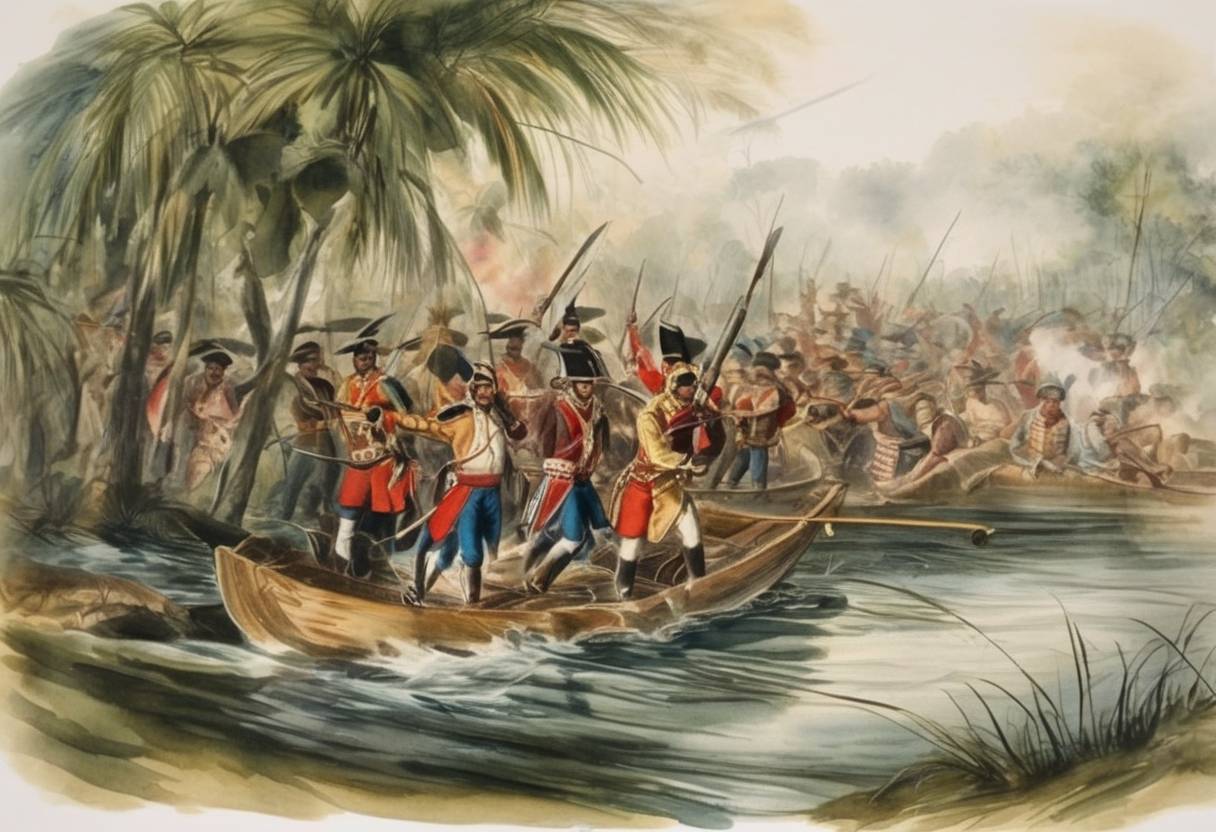
On November 2, 1841, during the prolonged conflict known as the Second Seminole War, the Battle of Haulover Creek took place in what is now modern-day Florida. This conflict was integral to the United States’ longstanding efforts to forcefully relocate the Seminole people, along with various other Native American tribes, to designated areas west of the Mississippi River.
The Second Seminole War (1835-1842) emerged from the resistance of the Seminole tribe against U.S. government efforts to enforce the Treaty of Payne’s Landing (1832), which mandated their removal to Indian Territory (present-day Oklahoma). Tensions between American settlers and the Seminoles had been rising due to encroachments on Seminole lands and disputes over escaped enslaved people who found refuge among the Seminoles.
The confrontation at Haulover Creek was one among many skirmishes during this lengthy and arduous war. The encounter involved a group of Seminole warriors engaging American military forces. Under the harsh conditions of the Florida frontier, both sides were tested in battle through challenging terrains, including dense swamps and thick forests that added complexity to military operations.
While this particular battle did not decisively end the war, it was emblematic of the broader resistance effort by the Seminole people under leaders like Osceola and Sam Jones (also known as Abiaka). Despite facing superior American military forces, they utilized guerrilla tactics, which included ambushes and fighting in marshy terrain, to protract the conflict.
The Second Seminole War would continue until 1842, becoming one of the longest and most costly Indian conflicts in United States history. Its conclusion did not fully achieve the U.S. government’s aims, as a significant number of Seminoles remained in Florida, retreating deeper into the state’s swamps and effectively avoiding forced relocation.
The persistence and resistance of the Seminole people during this period highlight the broader struggles between Native American tribes and the U.S. government, directly contributing to the discussion and policies regarding Native American land and sovereignty in future years. The Seminoles’ resistance in battles such as Haulover Creek is remembered as an enduring symbol of resilience in the face of overwhelming odds.
Source: www.britannica.com